
A rental property can look clean at first glance and still have hygiene problems that are easy to miss. Dust can collect behind appliances, high-touch surfaces may be overlooked, bathrooms can develop hidden mould or residue, and carpets can retain allergens long after they appear visually tidy.
For landlords, property managers, and tenants, cleanliness is therefore about much more than presentation. A properly maintained rental supports Indoor Health, reduces avoidable hygiene risks, protects fixtures and finishes, and creates a more comfortable living environment.
This is where professional Cleaning Services Perth can make a practical difference. Experienced cleaners work systematically rather than simply cleaning whatever is most visible. They understand which areas require greater attention, how different surfaces should be treated, and why cleaning methods need to change according to the property, occupancy and level of use.
Professional cleaning is particularly valuable between tenancies, after maintenance work, before a property is inspected, or when a rental has experienced heavy household use.
This guide explains how professional cleaning contributes to better hygiene in rental properties, what landlords and property managers should look for, and how a structured cleaning approach can support healthier and better-maintained homes.
Why Hygiene Matters in Rental Properties
Rental homes experience a constantly changing pattern of use. One tenant may cook frequently, another may have pets, while another household may have children or regularly entertain guests.
Every occupancy pattern creates different cleaning requirements.
Bathrooms and kitchens typically require frequent attention because moisture, food particles and high-touch surfaces create favourable conditions for bacteria and other contaminants to accumulate. Bedrooms and living areas can also collect dust, hair, allergens and airborne particles.
A property’s condition can also deteriorate gradually. A small amount of residue left on a shower screen may not seem important, but repeated accumulation can become difficult to remove. Similarly, neglected grout, ventilation areas or flooring can become progressively harder to maintain.
Professional cleaning helps interrupt this cycle.
Rather than focusing solely on visible dirt, experienced Cleaners Perth providers generally use a structured process that considers:
- High-touch surfaces
- Wet areas
- Kitchen preparation and food-contact zones
- Floors and carpets
- Dust accumulation
- Ventilation-related areas
- Fixtures and fittings
- Commonly overlooked spaces
- Areas affected by previous occupants
- Post-maintenance dust and debris
The objective is not to make unrealistic claims about creating a completely germ-free home. No ordinary cleaning process can guarantee that. Instead, effective cleaning removes dirt, organic matter and contaminants while reducing conditions that allow unwanted microbial growth and unpleasant odours.
Professional Cleaning and Hygiene Standards
Understanding Hygiene Standards in Rental Homes
Hygiene Standards should be considered as an ongoing maintenance objective rather than a single cleaning event.
A rental property does not stay clean simply because it received a thorough clean before a tenant moved in. Hygiene depends on regular maintenance, appropriate cleaning methods and prompt attention to problems such as moisture, spills, mould growth and damaged surfaces.
A professional cleaner can help establish a repeatable cleaning routine.
For example, a rental property turnover may involve:
- Removing rubbish and loose debris.
- Dusting surfaces from higher areas downward.
- Cleaning and disinfecting appropriate high-touch surfaces.
- Deep cleaning bathrooms and kitchens.
- Cleaning floors according to their material.
- Removing visible residue and buildup.
- Cleaning appliances and fixtures.
- Checking commonly missed areas.
- Addressing odours at their source where possible.
- Completing a final visual quality check.
This systematic approach is more reliable than cleaning according to appearance alone.
How Professional Cleaning Supports Hygiene Compliance
The phrase Hygiene Compliance can sound highly technical, but the practical principle is straightforward: cleaning practices should be appropriate for the property, its use and the relevant expectations placed on the premises.
For residential rentals, cleaning should support a property that is reasonably clean, well maintained and suitable for occupation. Where specific regulations, tenancy requirements, strata rules or specialist circumstances apply, those requirements should be checked separately rather than assuming that general cleaning automatically satisfies every legal obligation.
Professional cleaning can support this process by creating consistency.
For property managers overseeing several rentals, consistency is particularly important. Different cleaners or tenants may otherwise use different standards, resulting in uneven outcomes from one property to another.
A documented cleaning routine can help identify:
- Which rooms require detailed cleaning
- Which surfaces require specialist products
- Which areas receive frequent contact
- Which tasks should occur during every turnover
- Which issues require maintenance rather than cleaning
- Which areas need additional inspection
This distinction is important. Cleaning can remove surface contamination, but it cannot repair leaking plumbing, damaged ventilation, persistent water intrusion or defective building materials.
When cleaners identify such problems, reporting them to the property manager can prevent a small issue from becoming a larger maintenance concern.
Sanitisation: When and Why It Matters
Cleaning Is Not the Same as Sanitisation
One common misconception is that cleaning and sanitisation are interchangeable.
They are not.
Cleaning generally involves removing dirt, dust, residues and other unwanted material from a surface. Sanitisation is intended to reduce microorganisms to a level considered appropriate for a particular situation.
Cleaning should often come first because dirt and organic matter can interfere with the effectiveness of some disinfecting or sanitising processes.
For example, wiping a visibly greasy kitchen bench with a disinfectant does not automatically mean the surface has been properly cleaned. The grease and food residue may need to be removed first.
Professional cleaning teams can therefore select methods according to the surface and task instead of treating every area identically.
Particular attention may be appropriate for frequently touched areas such as:
- Door handles
- Light switches
- Tap handles
- Toilet flush controls
- Cabinet handles
- Appliance controls
- Handrails
- Remote controls
- Frequently handled fixtures
The correct product, contact time and application method also matter. More product does not necessarily mean better results.
Indoor Health and Cleaner Living Spaces
Supporting Indoor Health Through Better Cleaning
Indoor Health is influenced by many factors beyond cleaning, including ventilation, humidity, building materials, allergens, smoking, pests and moisture problems.
Cleaning cannot solve all indoor environmental issues, but it can contribute to a healthier environment by reducing accumulated dust, dirt and residues.
This is particularly relevant for households where occupants are sensitive to dust or allergens.
Consider a rental property with carpeted bedrooms. A tenant may vacuum regularly but still encounter accumulated debris in edges, corners or areas beneath furniture. A periodic deeper clean can help remove material that ordinary surface cleaning does not reach.
Similarly, dust can accumulate on:
- Skirting boards
- Ceiling fans
- Window tracks
- Air vents
- Shelving
- Behind furniture
- Appliance surfaces
These areas are often forgotten because they are not immediately noticeable.
A practical cleaning strategy addresses these locations according to their condition rather than following a one-size-fits-all routine.
Why Eco Friendly Cleaning Perth Can Be a Practical Choice
For many landlords and tenants, environmental considerations are becoming part of property maintenance decisions. This is where eco friendly cleaning Perth approaches can be useful when they are selected appropriately for the job.
Eco-conscious cleaning does not simply mean choosing a product labelled “green.” A responsible approach considers the product’s ingredients, application, quantity, packaging, waste and suitability for the surface being cleaned.
A practical eco friendly cleaning Perth routine may include:
- Using appropriate quantities instead of excessive chemical use
- Selecting lower-impact products where they provide effective results
- Avoiding unnecessary harsh chemicals
- Using reusable cleaning materials where appropriate
- Reducing disposable waste
- Following manufacturer instructions
- Choosing the least aggressive effective method for each surface
There is an important balance here. Environmental preferences should not result in ineffective cleaning. A product should still be suitable for the level of contamination and the material being treated.
For rental properties, this balanced approach can support both environmental responsibility and effective property care.
Professional Cleaning Standards for Rental Turnovers
A tenant changeover is one of the most important moments for property hygiene.
The previous occupant’s cleaning habits, lifestyle and length of tenancy can all influence the property’s condition. Even when a home looks reasonably clean, detailed areas may require attention before another tenant moves in.
Professional Cleaning Standards for a turnover should generally cover more than vacuuming floors and wiping benches.
A thorough turnover may include:
Kitchen
- Benchtops and splashbacks
- Cabinet fronts and handles
- Cooktop and surrounding areas
- Oven where included in the cleaning scope
- Sink and tap fixtures
- Appliance exteriors
- Food residue and grease buildup
- Floors and edges
Bathroom
- Toilet and surrounding surfaces
- Shower screens
- Tiles and grout
- Vanity and basin
- Tapware
- Mirrors
- Floors
- Ventilation areas where accessible
- Soap and mineral residue
Bedrooms and Living Areas
- Floors and carpets
- Skirting boards
- Doors and handles
- Window areas
- Accessible light fittings
- Built-in storage
- Dust-prone surfaces
Commonly Forgotten Areas
- Behind and underneath movable appliances
- Window tracks
- Corners
- Cupboard interiors
- Remote controls
- Switches
- Door frames
- High-level dust accumulation
Not every property requires the same treatment. The cleaning scope should reflect its actual condition.
Property Care: Cleaning Protects More Than Appearance
Property Care and Long-Term Maintenance
Good cleaning contributes to Property Care because dirt and residue can affect materials over time.
Grease can build up on kitchen surfaces. Soap residue can accumulate in bathrooms. Dust can collect around ventilation equipment. Dirt trapped in flooring can contribute to premature wear.
Cleaning does not replace maintenance, but it can help preserve the condition of surfaces.
For landlords, this can have a practical financial benefit. Preventative care may reduce the likelihood that minor buildup becomes difficult or expensive to address.
For example, regularly cleaning bathroom surfaces can help manage residue before it becomes heavily ingrained. Promptly addressing spills can reduce the risk of staining. Keeping floors properly maintained can help preserve their appearance and condition.
The key is consistency.
Real-World Example: Preparing a Rental Between Tenants
Consider a three-bedroom Perth rental after a two-year tenancy.
The property looks generally tidy. The tenant has vacuumed and wiped the main surfaces. However, during a professional turnover clean, the cleaning team identifies accumulated dust around skirting boards, grease around kitchen cabinet handles, residue on bathroom fixtures, dirt in window tracks and dust beneath movable furniture.
None of these issues necessarily indicates that the previous tenant was careless. They are simply areas that ordinary weekly cleaning can miss.
The professional team works through the property systematically.
After cleaning, the home not only looks fresher but is easier to inspect. Maintenance issues are also easier to identify because surfaces are no longer obscured by dust and residue.
This is one of the practical advantages of professional cleaning: cleaning can improve visibility of the property’s actual condition.
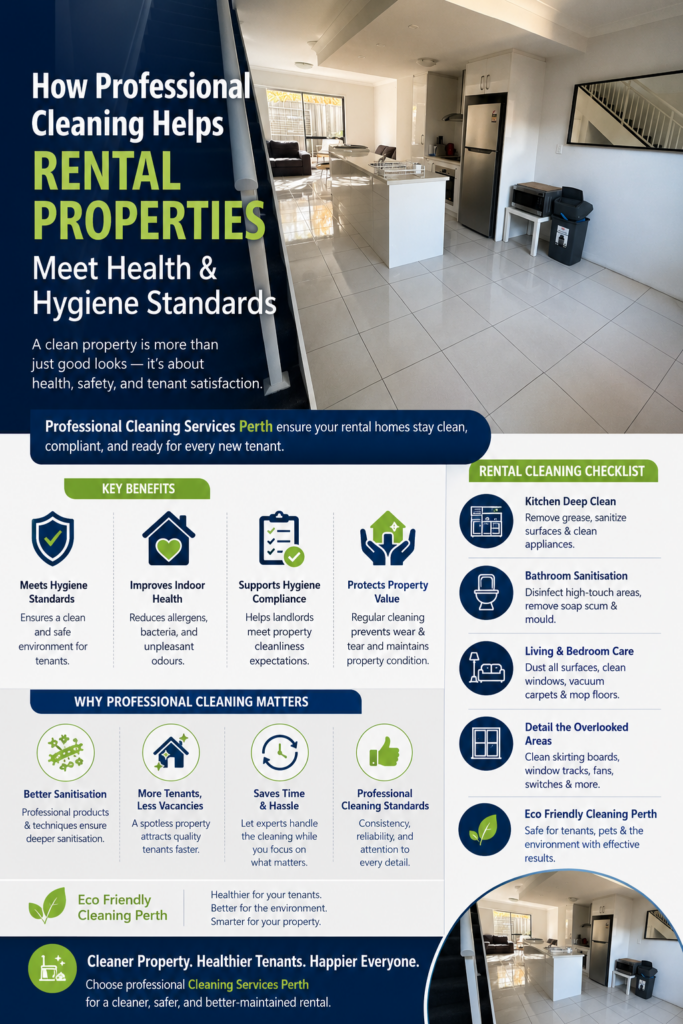
Common Cleaning Mistakes in Rental Properties
Mistake 1: Cleaning Only What Is Visible
Visible surfaces naturally receive the most attention, but hidden and low-traffic areas can accumulate substantial dust and residue.
Better approach: Include a rotating or scheduled deep-cleaning process for overlooked areas.
Mistake 2: Using Too Much Product
More detergent or disinfectant does not automatically produce a cleaner surface. Excess product can leave residue and may damage certain materials.
Better approach: Follow product instructions and select products based on the surface and cleaning task.
Mistake 3: Treating Every Surface the Same
Natural stone, timber, laminate, glass, stainless steel and painted surfaces can react differently to cleaning products.
Better approach: Identify the material before selecting a chemical or cleaning method.
Mistake 4: Confusing Cleaning With Mould Remediation
Surface cleaning can remove some visible mould contamination, but persistent mould may indicate an underlying moisture problem.
Better approach: Investigate the cause of recurring mould, particularly where there are leaks, condensation or inadequate ventilation.
Mistake 5: Ignoring High-Touch Areas
A property may look spotless while frequently handled surfaces receive little attention.
Better approach: Include high-touch points in routine cleaning and sanitisation procedures where appropriate.
Mistake 6: Assuming One Deep Clean Is Enough
A thorough turnover clean does not eliminate the need for ongoing maintenance.
Better approach: Combine periodic professional cleaning with appropriate routine cleaning by occupants or property managers.
Practical Strategies for Landlords and Property Managers
A good rental cleaning strategy should be realistic and repeatable.
1. Create a Property-Specific Cleaning Scope
Different properties have different needs. A furnished apartment, family home and short-term rental should not automatically receive identical cleaning schedules.
2. Prioritise High-Risk Areas
Focus more attention on kitchens, bathrooms, high-touch surfaces, moisture-prone locations and areas with heavy foot traffic.
3. Separate Cleaning From Maintenance
If a cleaner identifies leaking taps, damaged grout, water intrusion, broken exhaust fans or persistent mould, record the issue for appropriate maintenance follow-up.
4. Use Photographic Documentation Where Appropriate
For property managers, photographs can help document the condition of a property before and after significant cleaning or maintenance work. They can also assist communication with owners and contractors.
5. Schedule Periodic Deep Cleaning
Routine cleaning handles everyday accumulation. Periodic professional cleaning can address areas that receive less frequent attention.
6. Consider Occupant Needs
Pets, children, allergies, cooking habits and occupancy levels can all influence cleaning frequency and priorities.
Expert Advice: What Experienced Cleaners Notice First
Experienced cleaning professionals often develop a practical eye for problem areas.
Instead of entering a property and simply asking, “Where is the dirt?”, they may look for signs that explain why dirt is accumulating.
For example:
- Dust collecting around ventilation points may indicate airflow patterns.
- Persistent bathroom residue may suggest insufficient ventilation or frequent moisture exposure.
- Grease around cabinet handles can reveal high-use areas.
- Repeated staining may indicate that the wrong cleaning method has been used previously.
- Mould returning in the same location may point to an unresolved moisture problem.
This is where professional experience adds value.
A cleaner should not diagnose building defects outside their expertise. However, recognising when a cleaning issue may actually be a maintenance issue is an important professional skill.
How Often Should Rental Properties Receive Professional Cleaning?
There is no universal schedule that works for every rental.
Frequency depends on:
- Property size
- Number of occupants
- Turnover rate
- Pets
- Type of flooring
- Kitchen usage
- Bathroom usage
- Indoor air quality concerns
- Previous property condition
- Landlord or property-management requirements
A rental property undergoing frequent tenant turnover may require professional cleaning at each changeover.
A long-term residential rental may benefit from periodic deep cleaning in addition to normal occupant cleaning.
The best schedule is therefore based on actual use and condition rather than an arbitrary calendar.
Questions to Ask Before Hiring Cleaners Perth
When comparing Cleaners Perth, landlords and property managers should look beyond price alone.
Useful questions include:
- What areas are included in the cleaning scope?
- Are kitchens and bathrooms deep cleaned?
- How are different flooring materials treated?
- Are high-touch areas included?
- What products and methods are used?
- Can the cleaning scope be adjusted for a particular property?
- How are maintenance issues identified and reported?
- Are specialised services available when ordinary cleaning is insufficient?
- What happens if an area requires additional attention?
Clear expectations usually produce better results than assuming every provider uses the same definition of “deep cleaning.”
Building a More Reliable Rental Cleaning Routine
The strongest approach is usually a combination of three layers:
Routine cleaning: Everyday removal of dust, spills, rubbish and household residue.
Periodic professional cleaning: More detailed cleaning of areas that accumulate buildup or are difficult to maintain through normal routines.
Maintenance response: Prompt investigation of problems such as leaks, persistent moisture, damaged surfaces and recurring mould.
Together, these layers create a more sustainable property-care system.
Professional Cleaning Services Perth can form an important part of that system, particularly when landlords and property managers need consistency between tenancies or want to maintain a higher standard of cleanliness over the property’s lifespan.
Conclusion:
Good rental hygiene is not about making a property look perfect for a single inspection. It is about maintaining a practical standard that supports cleanliness, occupant comfort, surface care and responsible property management.
Professional Cleaning Services Perth can help achieve that consistency by combining structured cleaning methods with experience in handling different surfaces, high-use areas and difficult buildup.
For landlords and property managers, the most effective strategy is to think beyond appearance. Prioritise Hygiene Compliance, regular Sanitisation where appropriate, Indoor Health, Professional Cleaning Standards and long-term Property Care.
For environmentally conscious households, eco friendly cleaning Perth approaches can also be incorporated where they provide effective results without compromising the quality of cleaning.
Ultimately, the best cleaning strategy is one that matches the property’s real condition, occupancy and maintenance needs. When professional cleaning is combined with routine care and timely maintenance, rental properties are easier to manage, more comfortable to occupy and better positioned for long-term upkeep.
Frequently Asked Questions
1. How does professional cleaning improve hygiene in a rental property?
Professional cleaning provides a systematic approach to removing dust, dirt, food residue, soap buildup and other contaminants from areas that routine cleaning may overlook. It also places greater attention on kitchens, bathrooms, floors, high-touch surfaces and other frequently used areas. The result is a cleaner environment that supports good household hygiene without claiming to make the property completely germ-free.
2. Is professional cleaning necessary between every rental tenancy?
For many rental properties, a professional turnover clean is a practical way to establish a consistent baseline for the next occupant. However, the exact requirement depends on the property’s condition, tenancy arrangements and applicable requirements. A property that appears tidy can still have buildup in bathrooms, kitchens, window tracks and less visible areas, so a structured inspection and cleaning process can be useful before a new tenant moves in.
3. What is the difference between cleaning and sanitisation?
Cleaning focuses primarily on removing dirt, dust, residue and other unwanted material. Sanitisation aims to reduce microorganisms to an appropriate level for a particular situation. Effective hygiene practices use the appropriate process for the surface and circumstances. Cleaning may also need to occur before sanitisation because visible soil and organic material can interfere with some sanitising or disinfecting products.
4. Can eco friendly cleaning Perth methods be effective for rental properties?
Yes, environmentally conscious cleaning methods can be effective when products and techniques are properly selected for the cleaning task. The goal should not simply be to use the product marketed as the “greenest.” Instead, consider whether the product is appropriate for the surface, effective against the type of residue present, used at the correct concentration and applied according to instructions. A balanced approach can reduce unnecessary chemical and material use while still achieving a strong cleaning result.
5. Can professional cleaning prevent mould from returning?
Professional cleaning can remove some surface contamination and help keep areas cleaner, but it cannot guarantee that mould will not return. Recurring mould often requires attention to the underlying cause, such as excess moisture, condensation, leaks or inadequate ventilation. If mould repeatedly appears in the same area after cleaning, the issue should be investigated rather than repeatedly treating only the visible surface.