

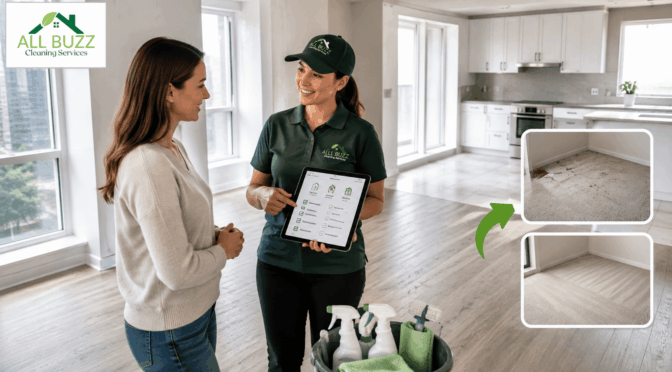
Moving out of a rental property is often when you discover how different “looks clean” is from “is ready for inspection.”
A kitchen bench can be spotless, floors can be freshly vacuumed, and bathrooms can smell clean, yet an inspection can still uncover dust around door frames, grime inside window tracks, grease around exhaust fans, or buildup in places that rarely receive attention during everyday cleaning.
These details matter because a final rental inspection is generally about the overall condition of the property—not simply whether the obvious surfaces have been cleaned.
For tenants preparing for an inspection, End of Tenancy Cleaning Perth is therefore less about making a property look presentable for a few hours and more about systematically addressing the areas that accumulate overlooked dirt during the tenancy.
This is particularly important when preparing for an End of Lease Vacate Clean Perth. Real estate property managers may inspect kitchens, bathrooms, floors, windows, fixtures, doors and other areas against the property’s condition and the tenancy requirements. Small neglected areas can become noticeable when an otherwise clean property is examined closely.
The good news is that most of these cleaning hotspots are predictable.
Once you know where to look, you can work through the property methodically instead of relying on a last-minute wipe-down.
Why Hidden Areas Matter During a Rental Inspection
Everyday cleaning tends to focus on surfaces that are visible and frequently used.
Tenants usually clean:
- Kitchen benchtops
- Bathroom sinks
- Toilets
- Shower screens
- Floors
- Dining tables
- Appliances
- Frequently touched surfaces
These are important, but they are only part of the property.
During a vacate clean, attention should also move to the edges, recesses, tracks, frames, vents and fittings where dust and residue gradually accumulate.
Think about a window track. It may be almost invisible when the window is closed, but opening it can reveal dust, insects, moisture residue and compacted debris.
The same principle applies to door frames. A door may look clean from several metres away while the upper frame has a visible layer of dust.
These aren’t unusual cleaning failures. They are simply areas that don’t receive much attention during routine housekeeping.
For a thorough House Vacate Cleaning Perth approach, the property should be assessed from an inspector’s perspective rather than only from the perspective of everyday living.
Hidden Cleaning Areas: Think Beyond the Obvious
The most useful way to approach an end-of-tenancy clean is to divide the property into visible surfaces and hidden or easily overlooked areas.
Look at the Property From Different Heights
A practical inspection technique is to deliberately change your viewing angle.
Stand normally and inspect the room.
Then:
- Look upwards at door frames and high ledges.
- Look down along skirting boards.
- Open windows and inspect tracks.
- Open cupboards and check internal corners.
- Look behind doors.
- Examine vents and exhaust fans.
- Check around handles, hinges and switches.
This simple exercise often reveals areas that routine cleaning misses.
Don’t Confuse Decluttering With Cleaning
A room can appear exceptionally tidy while still requiring substantial cleaning.
Removing furniture and personal belongings may expose:
- Dust behind cabinets
- Marks on walls
- Hair along skirting boards
- Dirt underneath appliances
- Debris inside cupboards
- Dust around power points
- Accumulation behind doors
This is one reason a final clean is easier when possessions have already been removed.
Door Frames: A Small Detail With a Big Visual Impact
Door frames are among the easiest areas to overlook.
Most people wipe the door itself, particularly around the handle, but the upper frame and narrow edges can collect dust over months or years.
Where Dirt Accumulates
Pay particular attention to:
- The top horizontal section of the frame
- Hinges
- Door edges
- Corners
- The area around handles
- The floor-level section of the frame
- Sliding-door surrounds
Dust can become especially visible on white or light-coloured painted surfaces.
A useful technique is to use a dry microfiber cloth first. This captures loose dust without immediately turning it into damp residue. If the surface requires further cleaning, use an appropriate cleaning solution compatible with the paint or finish.
Avoid soaking painted timber or MDF surfaces. Excess moisture can damage finishes, swell materials or create additional marks.
A Real-World Example
Imagine a tenant has cleaned the entire living room but hasn’t cleaned the tops of the door frames.
From normal standing height, the room looks excellent.
During a closer inspection, however, dark dust lines are visible above several doorways.
The cleaning itself may take only a few minutes per doorway, but those minutes can make a significant difference to the overall impression of the room.
Exhaust Fans: Cleaning Beyond the Bathroom Floor
Exhaust fans are another commonly forgotten hotspot.
Bathrooms, laundries and kitchens can experience high humidity, airborne particles and grease. Exhaust fans gradually collect dust and residue because air continuously passes through them.
What to Check
Depending on the fan design and manufacturer’s instructions, inspect:
- The visible grille
- Outer housing
- Surrounding ceiling area
- Fan cover
- Accessible dust buildup
A dusty exhaust grille can stand out against a freshly cleaned ceiling.
If the cover is removable, only remove it when it is designed to be safely removed and the power has been isolated where appropriate. Never expose yourself to electrical components simply to improve the appearance of a fixture.
For heavily contaminated or difficult-to-access exhaust systems, professional cleaning may be safer than attempting aggressive DIY cleaning.
Why This Area Gets Missed
Exhaust fans are positioned above eye level, so tenants don’t naturally see the accumulated dust.
A useful rule during an End of Tenancy Cleaning Perth project is:
If a fixture is above eye level, deliberately inspect it.
The same principle applies to ceiling corners, air-conditioning vents, high shelves and light fittings.
Window Tracks: The Dirt You See Only When You Look Closely
Windows are frequently cleaned from the inside and outside where accessible, but tracks are often forgotten.
Window tracks can hold an unusual mixture of:
- Dust
- Sand
- Dead insects
- Hair
- Small leaves
- Moisture residue
- General debris
Perth’s climate and outdoor conditions can contribute to dust and fine particles entering through windows, particularly where windows are regularly opened.
How to Clean Window Tracks Properly
Start by removing loose debris.
A vacuum with a narrow attachment can help remove compacted dust without spreading it around the room.
For stubborn buildup:
- Vacuum loose debris first.
- Brush corners and narrow channels.
- Wipe accessible surfaces with a suitable damp cloth.
- Pay attention to drainage openings.
- Dry the area where appropriate.
- Recheck the corners.
Don’t block drainage holes with cleaning products or debris.
Sliding Doors Need Extra Attention
Large sliding doors can have long tracks that collect significant debris.
Because these tracks are often located close to the floor, they can accumulate dirt that becomes obvious when the door is opened during an inspection.
Cleaning the glass while leaving the track dirty is therefore an incomplete window clean.
Kitchen Cleaning Hotspots That Hide Grease and Dust
Kitchens require more than wiping the benchtop.
Grease can travel through the air and settle on nearby surfaces, while crumbs and food particles can accumulate in narrow spaces.
Check Around the Cooktop
Look closely at:
- Cooktop edges
- Splashback joins
- Controls
- Rangehood surfaces
- Rangehood filters, where appropriate
- Wall areas behind appliances
- Cabinet handles
- Cabinet tops
- Corners around the benchtop
The rangehood deserves particular attention because it can accumulate grease and airborne cooking residue.
Always follow the appliance manufacturer’s cleaning instructions, especially for filters and electrical components.
Don’t Forget Inside Cabinets
Empty cabinets make hidden dirt easier to see.
Inspect:
- Shelf corners
- Cabinet bases
- Door edges
- Drawer runners
- Handles
- Internal corners
- Areas beneath sink plumbing
A quick wipe through an empty cabinet is not always enough. Fine dust can remain along the rear edge and corners.
Bathroom Areas That Often Escape Routine Cleaning
Bathrooms are typically inspected carefully because dirt, soap residue, mould-like staining, scale and moisture-related buildup can become visible quickly.
Look Behind Fixtures
Pay attention to:
- Toilet bases
- Behind taps
- Shower screen edges
- Shower-door tracks
- Tile corners
- Silicone joins
- Vanity edges
- Cabinet interiors
- Floor-wall junctions
A bathroom can smell fresh while still having visible residue around fittings.
Exhaust Areas and Ceiling Corners
As mentioned earlier, exhaust fans should be inspected carefully.
Also look at ceiling corners and areas immediately surrounding ventilation points. If there are signs of mould, water damage or persistent moisture, don’t simply cover them with cleaner or paint. The underlying cause may require attention from the appropriate property owner, manager or qualified professional.
Skirting Boards, Corners and Behind Doors
Skirting boards are classic dust collectors.
They are close to the floor, often partially hidden by furniture, and easy to ignore during normal cleaning.
Focus on High-Traffic Areas
Inspect skirting around:
- Beds
- Sofas
- Dining furniture
- Hallways
- Wardrobes
- Kitchen cabinets
- Bathroom vanities
Behind doors is another frequently missed location.
When a door is normally open, the area behind it may effectively disappear from your daily view.
Close every internal door and inspect the newly exposed surfaces.
Cleaning Around Fixtures and Fittings
Fixtures can create small gaps where dust accumulates.
Examples include:
- Light switches
- Power-point surrounds
- Door handles
- Hinges
- Towel rails
- Curtain fittings
- Blind mechanisms
- Cabinet handles
These areas don’t necessarily require aggressive cleaning.
The objective is controlled, careful removal of dust, fingerprints and residue without damaging the fitting.
Electrical fittings deserve particular caution. Never introduce liquid into electrical components.
What Professional Cleaners Often Notice First
Experienced cleaners develop a different way of looking at properties.
They don’t simply ask, “Does this room look clean?”
They ask:
“Where would dust naturally collect here?”
That question changes the cleaning process.
For example, in a bedroom, an experienced cleaner may automatically check:
- Behind the door
- Wardrobe corners
- Skirting
- Window tracks
- Window sills
- Light fittings
- Ceiling corners
In a kitchen, the focus shifts toward grease, cabinet interiors, appliances and narrow gaps.
In a bathroom, attention moves toward scale, residue, ventilation, fixtures and floor edges.
This room-by-room mindset is more reliable than applying the same cleaning routine everywhere.
Common End-of-Tenancy Cleaning Mistakes
1. Cleaning Only What Is Visible
This is probably the most common mistake.
The property may look excellent at first glance, but hidden areas remain untouched.
2. Leaving Cleaning Until the Last Few Hours
Rushing increases the chance of missed areas.
A better approach is to begin with less frequently used spaces and work systematically toward the final inspection.
3. Using Too Much Product
More cleaning chemical does not necessarily mean better cleaning.
Excess product can leave:
- Sticky residue
- Streaks
- Cloudy surfaces
- Strong odours
- Damage to delicate finishes
Use the appropriate product and dilution for the surface.
4. Ignoring Manufacturer Instructions
Appliances, rangehoods, flooring, glass, stone and painted surfaces can have different cleaning requirements.
Aggressive chemicals can cause more damage than the original dirt.
5. Forgetting Outdoor-Adjacent Areas
Window tracks, sliding-door channels and entry areas can collect outdoor dust.
These spaces deserve attention because they connect indoor and outdoor environments.
A Practical Room-by-Room Strategy
If you’re preparing for an End of Lease Vacate Clean Perth, use a systematic sequence rather than moving randomly around the property.
Step 1: Remove Personal Belongings
Cleaning becomes much easier when surfaces, cupboards and floors are accessible.
Step 2: Work From High to Low
Clean high surfaces before floors.
That way, falling dust is removed during the final floor clean rather than creating additional work.
Step 3: Clean Dry Debris First
Vacuum or brush loose dirt before using damp cleaning methods.
Step 4: Focus on Edges
After the main surfaces are clean, inspect:
- Corners
- Edges
- Frames
- Tracks
- Skirting
- Behind doors
Step 5: Inspect in Natural Light
Natural daylight can reveal dust, streaks and marks that artificial lighting hides.
Step 6: Perform a Final Inspection
Walk through the property as though you were seeing it for the first time.
Open doors, windows and cupboards.
Look high.
Look low.
Check corners.
That final pass often catches the details missed during the main clean.
How to Prioritise When Time Is Limited
Sometimes a tenant has only a few hours available.
In that situation, prioritise areas where dirt is both visible and commonly overlooked.
A sensible order is:
- Kitchen grease and appliances
- Bathroom residue and fixtures
- Floors and skirting
- Windows and window tracks
- Door frames and doors
- Cupboards and drawers
- Exhaust fans and vents
- Behind doors
- Other ledges, corners and fittings
This doesn’t replace a complete clean, but it helps allocate limited time intelligently.
What Makes the Best End of Tenancy Cleaning Service Perth Different?
The best end of tenancy cleaning service Perth is not necessarily the one that simply spends the most time making obvious surfaces shine.
A better indicator is whether the cleaning process is systematic.
A professional approach should consider:
- The property’s condition
- The size and layout of the home
- Flooring types
- Kitchen condition
- Bathroom condition
- Windows and tracks
- High and low surfaces
- Fixtures and fittings
- Areas hidden by furniture
- Special cleaning requirements
- Safe product selection
Experience matters because different properties present different cleaning challenges.
A recently renovated apartment may need detailed dust removal from tracks, frames and fittings.
An older rental may require more attention to accumulated grime, cupboards, skirting and bathroom areas.
A family home may have higher levels of traffic-related dirt around floors, doors and high-touch areas.
The cleaning strategy should reflect the property rather than rely on a one-size-fits-all routine.
When DIY Cleaning Makes Sense—and When to Get Help
DIY cleaning can be practical when the property is already well maintained and the tenant has enough time to complete a detailed final clean.
Professional assistance can become more useful when:
- The property is large.
- There is significant accumulated grime.
- The tenant has limited time.
- Windows have difficult-to-reach areas.
- The kitchen contains substantial grease buildup.
- Bathrooms require intensive detailing.
- The property has many rooms and fixtures.
- The tenant wants a structured end-of-tenancy cleaning process.
The important point is to assess the property’s actual condition rather than assume professional cleaning is always necessary—or that DIY cleaning is always sufficient.
Expert Tips for a Smoother Final Inspection
Take Before-and-After Photos
Photographs can help document the property’s condition and your cleaning efforts.
Take clear photos after cleaning, particularly of kitchens, bathrooms, floors and other areas that have received substantial work.
Don’t Create New Damage While Cleaning
This sounds obvious, but rushing can lead to scratched surfaces, damaged seals, excessive moisture or chemical staining.
Test unfamiliar products on an inconspicuous area when appropriate.
Check the Property During Daylight
Sunlight can reveal streaks on windows and dust on dark surfaces.
Don’t Ignore Small Details
Several small missed areas can collectively make a property appear less thoroughly cleaned.
Read Your Tenancy Requirements
Cleaning expectations can vary depending on the tenancy agreement, property condition and applicable requirements.
If you’re uncertain about a particular requirement, check your tenancy documentation or seek appropriate advice rather than relying on assumptions.
Final Takeaway
A successful end-of-tenancy clean is rarely about one dramatic cleaning task.
It is usually the accumulation of dozens of small details: a clean door frame, a debris-free window track, a dust-free exhaust grille, clean skirting, spotless cupboard corners and properly cleaned fixtures.
These are precisely the areas that everyday cleaning tends to overlook.
Whether you’re tackling the work yourself or arranging End of Tenancy Cleaning Perth, the most effective approach is to think like an inspector: check high and low, open everything, inspect edges and tracks, and don’t judge cleanliness from the centre of the room alone.
If you’re comparing options for the best end of tenancy cleaning service Perth, look beyond promises of a “deep clean.” Ask whether the cleaning process specifically addresses hidden areas such as door frames, exhaust fans, window tracks, cupboards, skirting and hard-to-see corners.
That level of attention is what turns a property from merely tidy into genuinely inspection-ready.
Frequently Asked Questions
1. What areas are most commonly missed during an end-of-tenancy clean?
Door frames, window tracks, exhaust fan covers, skirting boards, cupboard corners, areas behind doors and appliance edges are commonly overlooked.
These areas don’t always attract attention during routine cleaning because they are either above eye level, tucked into narrow spaces or hidden by furniture. During a final clean, deliberately opening doors, windows and cupboards can expose these overlooked areas.
2. Should window tracks be included in an End of Lease Vacate Clean Perth?
Yes, window tracks are worth checking and cleaning as part of a thorough vacate clean.
Tracks can accumulate dust, insects, hair, sand and outdoor debris. Large sliding doors can be particularly prone to buildup because their tracks are close to the floor and may receive substantial traffic.
Vacuum loose debris first, then carefully clean the accessible track surfaces without obstructing drainage openings.
3. How should exhaust fans be cleaned before a rental inspection?
Start by checking the manufacturer’s instructions and determining which parts can be safely cleaned.
Visible dust should be removed carefully from the accessible grille and surrounding area. If a cover is designed to be removed, follow the appropriate instructions and ensure electrical safety.
Avoid spraying liquid directly into electrical components. If the fan is heavily soiled or difficult to access safely, professional assistance may be appropriate.
4. Is House Vacate Cleaning Perth different from normal house cleaning?
The main difference is the level of attention and the purpose of the clean.
Routine cleaning focuses on maintaining a comfortable living environment. A vacate clean involves preparing the property after belongings have been removed and paying greater attention to areas that are normally hidden or neglected.
That can include cupboard interiors, window tracks, skirting boards, door frames, behind doors, fixtures, exhaust fans and other detailed areas.
5. What should I check immediately before a final rental inspection?
Do one final walkthrough after all cleaning is complete.
Open cupboards and drawers, inspect window tracks, look along skirting boards, check behind doors, examine door frames and inspect bathroom and kitchen fixtures. Also look at the floors from different angles and check windows for streaks.
A daylight inspection is particularly useful because natural light can expose dust, marks and streaks that aren’t obvious under indoor lighting.