

Tag Archives: Vacate Cleaning Services Perth

Why a Professionally Cleaned Property Makes Tenant Handover Easier in Perth

Moving out of a rental property involves more than packing boxes and returning the keys. The final condition of the property can influence how smoothly the Tenant Handover progresses, particularly when the property is being prepared for a final inspection or its next occupant.

Dust in cupboards, marks on walls, built-up grease in the kitchen, soap residue in bathrooms and neglected floors can make an otherwise well-maintained property appear unfinished. Even when a tenant has looked after the home throughout the tenancy, the final clean often requires a different level of attention.

This is where professional Vacate Cleaning in Perth services can make a practical difference.

A thorough move-out clean helps present the property in a clear, orderly and inspection-ready condition. It can also save time during an already demanding moving process.

For tenants, property owners and property managers, the objective is straightforward: complete the Property Handover with the property clean, presentable and ready for whatever comes next.

Tenant Handover: Why the Final Clean Matters

A tenant handover marks the transition between one tenancy and the next stage of a property’s lifecycle. Depending on the circumstances, the property may need to be inspected, maintained, repaired or prepared for new occupants.

Cleaning is only one part of this process, but it is one of the most visible.

A property can have perfectly functional appliances and fixtures but still look neglected if surfaces are dusty or floors have accumulated dirt. Conversely, a well-cleaned home can make the condition of the property much easier to assess.

Professional cleaning does not hide damage or replace necessary repairs. Its value is that it separates cleanliness issues from genuine maintenance issues.

For example, if a bathroom wall has soap residue and dust around the exhaust fan, cleaning can address the presentation problem. If the wall has damaged grout or a leaking fitting, that is a separate maintenance matter.

Keeping those issues distinct makes the handover process more straightforward.

What Makes Rental Property Cleaning Perth Different From Everyday Cleaning?

Routine household cleaning and end-of-tenancy cleaning are not quite the same.

During a normal tenancy, people tend to clean according to what they use most frequently. Kitchens are wiped down, bathrooms are maintained and floors are vacuumed or mopped. Areas that are hidden or used less often may receive less attention.

At move-out, however, the entire property becomes visible.

This can include areas such as:

  • Inside kitchen cupboards and drawers
  • Behind and underneath appliances where accessible
  • Oven and cooktop surfaces
  • Rangehood and surrounding areas
  • Skirting boards
  • Door frames and handles
  • Light fittings and switches
  • Window sills
  • Bathroom fixtures and fittings
  • Shower screens and tracks
  • Floors and corners
  • Built-in wardrobes
  • Laundry areas
  • Cobweb-prone corners
  • Accessible vents and high surfaces

This broader approach is one reason rental property cleaning Perth is often approached as a detailed project rather than a quick household tidy-up.

Tenant Handover and the Importance of a Systematic Clean

A common mistake is to start cleaning wherever dirt is most noticeable.

A better approach is to work systematically.

Professional cleaners typically think in terms of surfaces, rooms, levels and sequence rather than simply moving from one visible mess to another.

For example, cleaning high surfaces after floors have already been mopped can create unnecessary rework because dust may fall onto the clean floor.

A logical sequence might involve:

  1. Removing rubbish and unwanted items.
  2. Dusting higher surfaces.
  3. Cleaning fixtures and fittings.
  4. Cleaning cupboards and storage areas.
  5. Deep-cleaning kitchen and bathroom surfaces.
  6. Cleaning windows and accessible glass.
  7. Vacuuming thoroughly.
  8. Mopping hard floors.
  9. Completing a final visual inspection.

The exact sequence depends on the property, but the principle is consistent: work methodically rather than reactively.
Tenant Handover and the Importance of a Systematic Clean

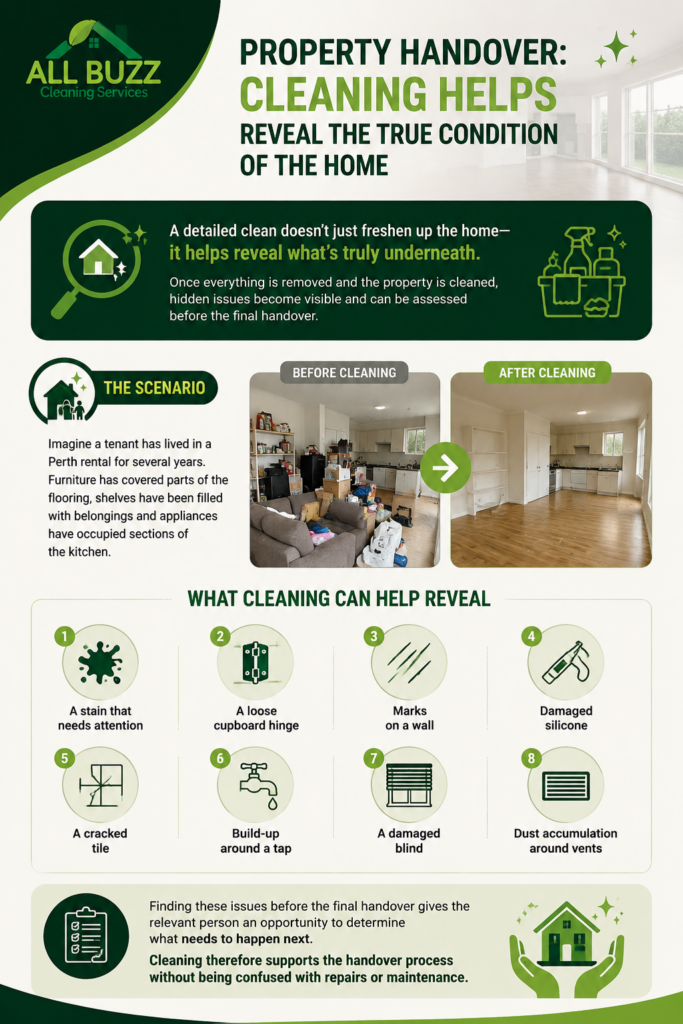
Property Handover: Cleaning Helps Reveal the True Condition of the Home

One practical advantage of a detailed clean is that it can reveal problems that were previously difficult to notice.

Imagine a tenant has lived in a Perth rental for several years. Furniture has covered parts of the flooring, shelves have been filled with belongings and appliances have occupied sections of the kitchen.

Once everything is removed and the property is cleaned, previously obscured areas become visible.

You may notice:

  • A stain that needs attention
  • A loose cupboard hinge
  • Marks on a wall
  • Damaged silicone
  • A cracked tile
  • A build-up around a tap
  • A damaged blind
  • Dust accumulation around vents

Finding these issues before the final handover gives the relevant person an opportunity to determine what needs to happen next.

Cleaning therefore supports the handover process without being confused with repairs or maintenance.

Rental Readiness: What Does “Ready” Actually Mean?

Rental readiness is about more than making a property smell fresh.

A property should be presented in a condition that allows the next stage of the tenancy process to proceed efficiently.

From a cleaning perspective, that generally means the obvious areas have received appropriate attention and the property no longer contains the residue of the previous occupant’s day-to-day living.

A rental-readiness review can include:

Kitchen

Pay attention to grease and food residue, particularly around cooking areas.

Check:

  • Cooktop
  • Oven interior and exterior
  • Rangehood
  • Splashback
  • Benchtops
  • Cabinet fronts
  • Cupboard interiors
  • Sink and tapware
  • Floors
  • Appliance surfaces

Kitchen cleaning often takes longer than expected because grease can accumulate gradually and become more difficult to remove.

Bathrooms

Bathrooms need attention to both hygiene and presentation.

Look at:

  • Shower screens
  • Shower tracks
  • Tiles
  • Grout
  • Vanity
  • Mirrors
  • Toilet
  • Basin
  • Tapware
  • Floors
  • Exhaust fan area

Hard-water marks and soap residue may require more focused cleaning than ordinary dust.

Bedrooms and Living Areas

These areas can appear simple, but they still need detailed attention after furniture has been removed.

Check:

  • Floors
  • Skirting boards
  • Doors
  • Handles
  • Built-in wardrobes
  • Shelving
  • Window sills
  • Accessible light fittings
  • Visible walls and surfaces

Empty rooms also make small marks more noticeable.

Exit Process: Cleaning Should Be Planned Before Moving Day

One of the easiest ways to make an exit unnecessarily stressful is to leave all cleaning until the last few hours before the keys need to be returned.

Moving day is already unpredictable.

Furniture removal can take longer than expected. A truck may arrive late. Packing may not be finished. Utilities may need to be organised. A final rubbish collection may be required.

Trying to complete a detailed clean at the same time can create pressure.

Instead, build cleaning into the Exit Process.

A Practical Approach

Several days before moving:
Start removing unnecessary belongings and identify areas requiring additional attention.

After furniture is removed:
Clean spaces that were previously inaccessible.

Before the final inspection or handover:
Complete the detailed clean and check the property room by room.

Immediately before leaving:
Remove rubbish, check cupboards and storage areas, and confirm nothing has been left behind.

This approach reduces the likelihood of rushing through important areas.

Move-Out Cleaning: Why Professional Help Can Be Useful

Professional Move-Out Cleaning is particularly useful when a property requires detailed attention and the tenant does not have enough time, equipment or experience to complete the work themselves.

A professional team can bring a structured process to the job.

For example, Perth Vacate Cleaning Services may be useful when:

  • The property is large.
  • The tenancy has lasted several years.
  • There is significant accumulated grime.
  • The tenant is moving interstate.
  • Multiple rooms need simultaneous attention.
  • The tenant has limited time between moving and handover.
  • The property requires detailed kitchen and bathroom cleaning.
  • A comprehensive final clean would be physically difficult.

The point is not that professional cleaning is always necessary. A tenant who has the time, equipment and ability may prefer to clean independently.

The important consideration is whether the property can realistically be cleaned to the required standard within the available timeframe.

What Professional Cleaners Notice That Homeowners Sometimes Miss

Experience changes the way a cleaner approaches a property.

A homeowner may look at a kitchen and see clean benches and a tidy floor. A professional cleaner is more likely to notice the less obvious areas: the underside of cabinet edges, grease around handles, buildup around the tap base or residue behind appliance controls.

The same principle applies throughout the home.

Professional cleaners commonly work through a property looking for patterns of neglect, not just obvious dirt.

For instance, if a room’s skirting boards are dusty, there may also be dust behind doors, around corners and underneath accessible furniture.

This experience can make a detailed final clean more consistent.

Common Mistakes During Tenant Handover Cleaning

Mistake 1: Cleaning Around Furniture Instead of After It Is Removed

Furniture hides flooring, walls and corners.

Whenever possible, complete the deeper clean after belongings have been removed.

Mistake 2: Forgetting Cupboards and Drawers

Storage areas are easy to overlook because they are not immediately visible when the property is occupied.

Empty cupboards should be checked for crumbs, dust, hair and residue.

Mistake 3: Treating the Oven as an Ordinary Appliance

Cooking residue can become baked onto oven surfaces over time.

A quick wipe may not be enough for accumulated grease and carbon deposits.

Mistake 4: Ignoring Bathroom Details

Cleaning the toilet and basin alone does not constitute a detailed bathroom clean.

Shower screens, tracks, tapware, tile surfaces and other accessible areas also contribute to overall presentation.

Mistake 5: Leaving Cleaning Until the Last Minute

A rushed clean increases the chance that overlooked areas will remain unfinished.

More importantly, it leaves little time to address problems discovered during the process.

Mistake 6: Assuming Cleaning Fixes Damage

Cleaning can remove dirt, dust and residue. It cannot repair cracked tiles, damaged walls, broken fittings or other property defects.

If something appears damaged, document it and raise it through the appropriate tenancy or property-management channel rather than trying to disguise it through cleaning.

Expert Tips for a Smoother Property Handover

Start With a Room-by-Room Checklist

Do not rely entirely on memory.

A simple checklist can include kitchen, bathrooms, bedrooms, living areas, laundry, storage and outdoor areas where applicable.

Photograph the Property After Cleaning

Taking clear, date-stamped photographs after your belongings have been removed and the property has been cleaned can provide a useful record of its condition at that point.

Photographs are not a substitute for the formal inspection process, but they can help you keep an organised record.

Check the Property When It Is Empty

An empty property looks different.

Walk through slowly and inspect from different angles. Look at floors in natural light, check corners and open every cupboard and drawer.

Ask About Specific Cleaning Expectations

Tenancy arrangements can differ. If you are unsure about what is expected, check your agreement and communicate with the relevant property manager or landlord before the handover.

Avoid relying solely on generic online checklists because the condition and requirements of individual properties vary.

Book Cleaning With Enough Time

If using Vacate Cleaning Services Perth, avoid scheduling the clean so close to the handover that there is no time to address an overlooked area.

A small amount of scheduling flexibility can make a significant difference.

How All Buzz Cleaning Approaches a Vacate Clean

For All Buzz Cleaning, the objective of a vacate clean is not simply to make a property look tidy for a few minutes.

The focus is on giving the property a thorough, systematic clean so that it is presented in a clear and orderly condition for the next stage of the tenancy.

That means paying attention to the areas that are commonly overlooked during everyday cleaning and approaching each property according to its actual condition.

A detailed Vacate Cleaning Perth service should always account for the property’s size, condition, surfaces and specific cleaning requirements rather than assuming every move-out clean is identical.

Conclusion:

A successful Tenant Handover is easier when the property is organised, empty, clean and ready for inspection.

Professional cleaning cannot resolve every maintenance issue or guarantee a particular tenancy outcome. What it can do is remove one of the most manageable sources of stress during the move-out process: the condition of the property’s cleanliness.

For tenants preparing to leave a Perth rental, rental property cleaning Perth should be treated as part of the overall move-out plan rather than an afterthought.

Whether you choose to clean the property yourself or use Vacate Cleaning Services in Perth, the most important principles remain the same: start early, work systematically, pay attention to overlooked areas and understand the specific expectations attached to your tenancy.

For homeowners and tenants who want a structured approach to the final clean, All Buzz Cleaning can help make the cleaning component of the property handover more manageable and organised.

Frequently Asked Questions

1. What is included in vacate cleaning in Perth?

The exact scope varies between cleaners and properties, but a detailed vacate clean commonly covers kitchens, bathrooms, bedrooms, living areas, floors, cupboards and other accessible surfaces.

Kitchen work may include the cooktop, oven, rangehood, cabinets and sink. Bathroom cleaning may include showers, screens, toilets, basins, mirrors and accessible tile surfaces.

Before booking, ask for a written scope so you understand what is included and whether services such as carpet cleaning, exterior windows or wall washing are separate.

2. Is professional vacate cleaning required to get a rental bond back?

Professional cleaning is not automatically a guarantee of a bond outcome, and tenants should not assume that hiring a cleaner removes their responsibilities under the tenancy agreement.

The relevant standard depends on the tenancy circumstances and applicable requirements. A professional clean can, however, help address ordinary cleaning tasks systematically and improve the property’s presentation.

Tenants should review their agreement and communicate with their property manager or landlord if they are uncertain about specific requirements.

3. When should I book Vacate Cleaning Perth services?

Ideally, arrange the cleaning after most or all belongings have been removed, because empty rooms allow cleaners to reach areas that furniture previously covered.

The booking should also leave enough time before the handover for you to review the property. If a cleaner identifies an area requiring additional attention, having some time available to address it is preferable to discovering the issue immediately before returning the keys.

4. Can vacate cleaning remove every mark or stain?

No. Professional cleaning can remove many forms of dirt, dust, grease and surface residue, but some stains, permanent marks and damage cannot be completely removed without specialist treatment or repair.

For example, a cleaner may improve a carpet stain significantly without being able to restore the carpet to its original condition.

A professional cleaner should distinguish between removable dirt and underlying damage rather than promising that every mark will disappear.

5. How can tenants make the handover process easier?

Start early, remove all belongings, clean systematically and check the property when it is empty.

Use a room-by-room checklist, inspect cupboards and storage spaces, remove rubbish and keep a record of the property’s condition after cleaning.

If the property requires more cleaning than you can realistically complete yourself, Perth Vacate Cleaning Services can take care of the detailed work while you focus on the logistics of moving.

The Science Behind Deep Cleaning: Why Surface Cleaning Isn’t Enough Before Vacating

Moving out of a rental property often creates a long list of jobs: packing boxes, arranging transport, returning keys, cancelling services, and preparing the property for its final inspection. Cleaning can easily become something you leave until the last day. That is where problems often begin.

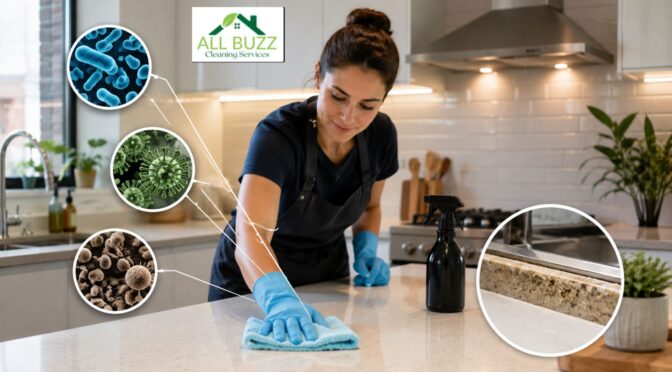
A quick wipe of visible surfaces may make a home look tidy, but it does not necessarily remove the dust, grease, soap residue, built-up grime, hair, bacteria, and dirt that accumulate in less obvious places. For tenants preparing for a final inspection, Vacate Cleaning Services Perth can provide a more systematic approach to preparing the property for handover.

The difference between ordinary cleaning and a properly planned vacate clean is not simply the amount of cleaning product used. It is the method. Effective cleaning involves identifying where contaminants collect, choosing an appropriate cleaning method, allowing products enough contact time, working from cleaner areas toward dirtier ones, and checking commonly overlooked surfaces.

This is why understanding the science behind Deep Cleaning can be useful before leaving a rental property. A practical approach helps you focus your time and attention where it matters most.

Why Surface Cleaning Is Not Enough

Surface cleaning generally focuses on what is immediately visible.

You might wipe the kitchen bench, vacuum the living room, clean the bathroom sink, and mop the floor. The property may look much better, but several layers of dirt can remain.

Think about a kitchen rangehood. The outside may look clean after a quick wipe, while grease has accumulated around filters, edges, and vents. Similarly, a bathroom can appear fresh while soap residue remains around taps, shower screens, grout lines, and the base of fixtures.

Dust also settles in places people rarely notice during normal weekly cleaning:

  • Behind and underneath furniture
  • Skirting boards
  • Door frames
  • Window tracks
  • Light switches
  • Air vents
  • Cabinet tops
  • Corners
  • Behind appliances
  • Shower door edges
  • Exhaust fan covers

These areas matter during a vacate clean because the property is being assessed as a whole rather than simply judged by whether the main surfaces look presentable.

Deep Cleaning: What Makes It Different?

Deep cleaning is best understood as a systematic process rather than a single type of cleaning product.

Regular cleaning is generally designed to maintain a reasonable level of cleanliness between larger cleaning sessions. Deep cleaning involves addressing accumulated dirt and areas that are frequently missed.

The difference can involve:

Frequency:
Deep cleaning is performed less often but covers more areas.

Detail:
It targets edges, corners, buildup, and hard-to-reach surfaces.

Method:
Different surfaces and contaminants require different cleaning approaches.

Time:
Proper cleaning often requires more preparation and attention than simply wiping and vacuuming.

Inspection:
A systematic final check helps identify missed areas before the property is handed back.

For tenants, this distinction is important because a rental inspection can reveal problems that were invisible during everyday cleaning.

Deep Cleaning Methods: How Dirt Actually Gets Removed

Cleaning is not simply about making dirt disappear. Different types of contamination respond differently to physical and chemical cleaning methods.

Physical Cleaning

Physical action is one of the most important parts of cleaning.

Wiping, scrubbing, vacuuming, brushing, and mopping help loosen and remove contaminants from surfaces.

For example, a dried soap deposit may not disappear with a quick spray. It may require the correct product, sufficient contact time, and mechanical agitation.

This is why simply using more cleaning product is not always the answer.

Chemical Cleaning

Cleaning products are formulated for particular types of soil.

Degreasers are useful for oily kitchen buildup. Descaling products are designed for certain mineral deposits. General-purpose cleaners can handle many everyday soils.

Using the appropriate product for the specific surface and contaminant generally produces better results than applying one product everywhere.

It is also important to follow the product label, particularly regarding dilution, ventilation, surface compatibility, and contact time.

Vacuuming and Extraction

Vacuuming removes loose dust, hair, crumbs, and other debris before wet cleaning begins.

In some situations, carpet or upholstery may require more than ordinary vacuuming. Depending on the material and condition, professional extraction methods can remove embedded soil that routine vacuuming cannot reach.

This illustrates an important principle: the cleaning method should match the type of contamination.

Bacteria Removal: Cleaning and Disinfection Are Not the Same

One common misconception is that every cleaning task is automatically a sanitisation task.

Cleaning primarily removes dirt, organic material, and contaminants from surfaces. Disinfection or sanitisation involves reducing microorganisms according to the requirements of the particular product and process.

For most vacate cleaning tasks, the first step is thorough cleaning.

A disinfectant applied over a dirty surface may not perform as effectively as intended because grime and organic material can interfere with the process.

A sensible sequence is therefore:

  1. Remove loose debris.
  2. Clean the surface.
  3. Rinse or remove residue where required.
  4. Apply an appropriate sanitising or disinfecting product when necessary.
  5. Follow the product’s required contact time.
  6. Allow the surface to dry appropriately.

This is particularly relevant to frequently touched areas such as door handles, switches, taps, and bathroom fixtures.

The goal is not to make a home sterile. That is neither realistic nor necessary for an ordinary rental handover. The objective is to leave the property hygienic, clean, and appropriately maintained.

Sanitisation Standards and Rental Handover

A rental property does not need to be treated like a hospital or laboratory.

However, tenants generally need to return the property in a condition consistent with their rental obligations and the property’s original condition, allowing for reasonable wear and tear.

This means cleaning should focus on the areas that are actually relevant to the property’s condition.

A practical vacate cleaning process should pay close attention to:

  • Kitchens and cooking areas
  • Bathrooms and toilets
  • Floors and carpets
  • Windows and tracks where required
  • Doors and frames
  • Cabinets and drawers
  • Walls where cleaning is appropriate
  • Fixtures and fittings
  • Frequently touched surfaces
  • Outdoor areas included in the tenancy

The exact requirements can vary according to the tenancy agreement, property condition report, and circumstances of the rental.

Before cleaning, tenants should review their original entry condition report where available. It can provide useful guidance about what was present when they moved in.

The Professional Cleaning Process: A Logical Sequence

Professional cleaners generally do not approach a property randomly.

A structured process reduces the likelihood of missing areas and avoids creating additional work.

Step 1: Inspect the Property

Walk through every room before beginning.

Look for:

  • Visible buildup
  • Dust accumulation
  • Stains
  • Grease
  • Soap residue
  • Cobwebs
  • Hair
  • Appliance grime
  • Mould-like growth requiring special attention
  • Areas that need additional treatment

This inspection helps establish priorities.

Step 2: Remove Clutter

Cleaning around boxes, bags, furniture, and personal belongings makes the job harder.

The more completely the property is emptied, the easier it becomes to clean floors, cupboards, corners, and surfaces.

Step 3: Work From High to Low

Dust and debris naturally fall downward.

Clean higher surfaces before lower ones, where practical. This reduces the chance of contaminating areas that have already been cleaned.

Step 4: Dry Clean Before Wet Cleaning

Vacuuming and dusting first removes loose particles.

Wet cleaning can then deal with residues and remaining soil more effectively.

Step 5: Allow Appropriate Contact Time

Many cleaning and disinfecting products need time to work.

Immediately wiping a product away may reduce its effectiveness. Always follow the manufacturer’s instructions rather than assuming that longer or shorter contact time is better.

Step 6: Complete a Final Inspection

Walk through the property again under good lighting.

Look at the room from different angles. Check edges, corners, handles, tracks, and areas behind fixtures.

This final inspection often catches small details that were missed during the main cleaning process.

A Deep Cleaning Checklist Before Moving Out

A deep cleaning checklist before moving out can prevent the common problem of remembering the obvious areas while forgetting everything else.

Kitchen

Check:

  • Benchtops
  • Splashbacks
  • Cooktop
  • Oven interior and exterior
  • Rangehood
  • Filters where appropriate
  • Cabinet fronts
  • Cabinet interiors
  • Drawers
  • Sink and taps
  • Dishwasher surfaces
  • Refrigerator areas if included
  • Floor edges
  • Skirting boards

Grease deserves particular attention because it can accumulate gradually and become difficult to remove.

Bathroom

Check:

  • Shower walls
  • Shower screen
  • Grout
  • Taps
  • Showerhead
  • Sink
  • Vanity
  • Mirrors
  • Toilet
  • Toilet base
  • Floor
  • Corners
  • Exhaust fan cover
  • Cabinet interiors

Bathrooms often require more attention than a quick spray-and-wipe routine provides because soap residue and mineral deposits can accumulate over time.

Bedrooms and Living Areas

Check:

  • Floors
  • Carpets
  • Skirting boards
  • Doors
  • Door frames
  • Light switches
  • Built-in wardrobes
  • Shelves
  • Window sills
  • Window tracks
  • Accessible ledges
  • Cobwebs

Do not forget areas where furniture previously stood.

Laundry

Check:

  • Laundry tub
  • Taps
  • Cabinets
  • Cupboards
  • Floors
  • Walls around appliances
  • Appliance exteriors
  • Lint and dust around accessible areas

Outdoor Areas

If outdoor areas are part of the tenancy, review the property’s condition report and tenancy requirements.

Depending on the property, this could include:

  • Garages
  • Patios
  • Balconies
  • Outdoor storage
  • Accessible paved areas
  • Cobweb removal
  • General sweeping

Why Kitchens and Bathrooms Usually Need More Work

Not every room accumulates the same kind of dirt.

Kitchens experience grease, food residue, oils, and heat. Bathrooms experience moisture, soap, body oils, hair, and mineral deposits.

This means the cleaning approach needs to change according to the environment.

For example, wiping a greasy kitchen surface with a damp cloth may spread the residue instead of removing it. A suitable degreasing approach may be more effective.

Likewise, mineral buildup around a bathroom tap may require a product designed for that type of deposit rather than an ordinary surface cleaner.

Understanding the source of the dirt helps determine the appropriate cleaning method.

Common Vacate Cleaning Mistakes

Cleaning Only What You Can See

Visible surfaces receive attention while cupboard interiors, tracks, edges, and corners are forgotten.

A systematic checklist helps prevent this.

Leaving Cleaning Until Moving Day

Trying to clean an entire property while also loading a moving truck creates unnecessary pressure.

If possible, finish the cleaning after furniture and belongings have been removed.

Using the Same Product Everywhere

Different surfaces have different requirements.

Some materials can be damaged by abrasive products, harsh chemicals, or unsuitable cleaning methods. Always check product instructions and surface compatibility.

Using Too Much Product

More cleaner does not automatically mean a cleaner surface.

Excess product can leave residue, create streaks, or damage certain materials.

Ignoring Contact Time

Some products need time to work. Follow the label rather than immediately wiping them away.

Forgetting the Condition Report

The original property condition report can help you understand what should reasonably be restored or cleaned before handover.

When Professional Cleaning Makes Sense

Some tenants prefer to handle cleaning themselves, and that can work well when the property is small, recently maintained, and the tenant has enough time.

Professional help becomes more useful when:

  • The property is large
  • There is significant accumulated grime
  • The move-out deadline is tight
  • Carpets require specialist attention
  • The oven or rangehood needs intensive cleaning
  • The property has been occupied for several years
  • There are many hard-to-reach areas
  • You want a structured final cleaning process

Professional cleaning does not guarantee a particular inspection outcome because landlords and property managers assess properties according to their own requirements. However, a systematic cleaning process can reduce the chance of overlooking common problem areas.

For many tenants, the value is also practical: instead of spending an entire day trying to remember what needs cleaning, they can follow a structured process or have experienced cleaners handle the detailed work.

How to Prepare Before the Cleaners Arrive

Even when hiring professionals, preparation can make the cleaning process smoother.

Remove Personal Belongings

Cleaning is easier when surfaces, cupboards, and floors are accessible.

Empty the Fridge and Cabinets

If these areas are included in the cleaning scope, remove food and personal items before cleaning begins.

Identify Problem Areas

Tell the cleaners about stubborn stains, damaged surfaces, or areas that need particular attention.

Keep Important Documents Accessible

Keep your tenancy documents and condition report somewhere safe rather than packing them into a box that you cannot access.

Check the Property After Cleaning

Do a final walkthrough before returning the keys. If you notice an area that requires attention, it is much easier to address it before handover.

Real-World Example: Why Small Details Matter

Consider a tenant who has kept a property generally tidy for three years.

The kitchen benches are regularly wiped. The floors are vacuumed. The bathroom is cleaned every week.

At first glance, the property appears clean.

But during the final preparation, they discover grease inside the rangehood area, dust on skirting boards, residue around shower fittings, dirt in window tracks, and buildup around cabinet handles.

None of these issues necessarily came from neglect. They simply accumulated gradually because routine cleaning focuses on maintaining the property rather than performing a detailed end-of-tenancy reset.

This is one of the biggest differences between everyday cleaning and a thorough vacate clean.

Expert Tips for a Better End-of-Tenancy Clean

Start With the Property Condition Report

Do not rely entirely on memory. Compare the property with its original documented condition where possible.

Clean After Moving Out

An empty property gives you access to areas that furniture normally hides.

Use a Room-by-Room System

Finish one area before moving to the next. This reduces missed tasks.

Keep a Separate Cleaning Kit

Have appropriate cloths, brushes, vacuum attachments, products, gloves, and rubbish bags ready.

Don’t Experiment With Harsh Chemicals

Strong products are not automatically better. Some can damage paint, stone, timber, metal, seals, or finishes.

Pay Attention to Edges

Inspection problems are often noticed around edges, corners, handles, tracks, and fixtures rather than the middle of a large surface.

Allow Enough Time

Rushing increases the likelihood of missed areas and incomplete cleaning.

Choosing the Right Vacate Cleaning Approach in Perth

Perth rental properties vary considerably, from apartments and compact units to larger family homes. The appropriate cleaning approach therefore depends on the property’s size, condition, materials, and tenancy requirements.

If you are comparing Vacate Cleaning Services Perth, look beyond claims about being “the best” or “the cheapest.” Ask what areas are included, whether the cleaning process is itemised, how difficult buildup is handled, and whether carpet or specialised cleaning is separate from the standard service.

A transparent scope of work is more useful than a vague promise that everything will be cleaned.

For tenants looking for End of Tenancy Cleaning Perth, it is also worth asking whether the cleaner understands the difference between ordinary maintenance cleaning and detailed move-out preparation.

A good cleaning process should be based on the property’s actual condition rather than a one-size-fits-all assumption.

Final Thoughts

A successful move-out clean is about more than making a property look tidy for a few minutes.

Dirt accumulates in layers and in places that everyday cleaning does not always reach. Grease can build up around kitchen equipment, soap residue can collect in bathrooms, dust can settle along edges and tracks, and debris can become trapped under or behind furniture.

Understanding these patterns makes it easier to approach cleaning logically.

Whether you complete the work yourself or arrange Vacate Clean assistance, start with a detailed inspection, use appropriate cleaning methods, work systematically, and finish with a room-by-room quality check.

A thorough deep cleaning checklist before moving out can be one of the simplest ways to stay organised and reduce the risk of overlooking small but noticeable areas.

For tenants who want help with the detailed process, All Buzz Cleaning can assist with preparing rental properties for handover while focusing on practical cleaning needs rather than unnecessary extras. The priority should always be a clear scope, appropriate cleaning methods, and a property that is ready for its next stage.

Frequently Asked Questions

1. What is the difference between regular cleaning and vacate cleaning?

Regular cleaning is designed to maintain a property during normal living. Vacate cleaning is more detailed and focuses on preparing an empty property for handover. It typically includes areas that are easy to overlook during routine cleaning, such as cupboard interiors, skirting boards, window tracks, appliance surfaces, and bathroom buildup.

2. Do I need professional vacate cleaning?

Not always. If you have enough time, the property is small, and there is little buildup, you may be able to clean it yourself. Professional cleaning can be useful when the property is large, heavily used, difficult to clean, or when you have limited time before the final inspection.

3. What areas are commonly missed before moving out?

Commonly missed areas include rangehood filters, oven interiors, window tracks, skirting boards, door frames, cupboard interiors, exhaust fan covers, shower edges, behind appliances, and areas underneath furniture. A room-by-room checklist can help catch these details.

4. Can deep cleaning guarantee my bond will be returned?

No cleaning company can guarantee a bond outcome because the final decision depends on the rental agreement, property condition, inspection findings, and other factors. However, thorough cleaning can help address cleanliness-related issues and reduce the likelihood of problems caused by missed areas.

5. When should I schedule a vacate clean?

Ideally, schedule the cleaning after most or all belongings have been removed. This provides better access to floors, cupboards, corners, and other surfaces. Leave enough time before key handover to inspect the property and address any areas that may have been missed.

Common Reasons Tenants Lose Their Bond in Perth

Moving out of a rental property can be stressful, especially when a significant portion of your bond money is at stake. Many tenants assume that paying rent on time guarantees a full bond refund, but in reality, property condition plays a major role in the final inspection process.

One of the most common causes of disputes between tenants and property managers is cleaning. Even minor oversights can result in deductions, delays, or complete loss of bond funds. Understanding the most frequent bond cleaning mistakes Perth tenants make can help avoid unnecessary costs and improve the chances of receiving a full bond refund.

For renters preparing to move, investing time in proper Bond Cleaning Perth standards can make a significant difference. This guide explores the most common reasons tenants lose their bond, practical cleaning strategies, and expert insights based on real rental inspection experiences.

Understanding Why Bonds Are Withheld in Perth

A rental bond serves as financial protection for landlords if a property is returned in unsatisfactory condition. At the end of a tenancy, property managers conduct a detailed inspection comparing the property’s current state to the original entry condition report.

While fair wear and tear is generally accepted, issues such as excessive dirt, damage, neglected maintenance, or incomplete cleaning often trigger deductions.

Many tenants underestimate how closely inspections are conducted. Areas that seem clean during a casual walkthrough may fail professional inspection standards.

Some of the most common reasons bonds are withheld include:

  • Inadequate cleaning
  • Property damage
  • Stained carpets
  • Dirty kitchens and bathrooms
  • Unremoved rubbish
  • Pest issues caused by neglect
  • Unfinished repairs
  • Outdoor maintenance problems

Understanding these issues before moving out helps tenants meet expectations and avoid disputes.

The Importance of Meeting Rental Property Standards

Rental Property Standards Matter More Than Most Tenants Realise

Property managers assess properties against specific Rental Property Standards, not personal opinions.

In many Perth rentals, final inspections focus heavily on:

  • Cleanliness
  • Hygiene
  • Appliance condition
  • Fixtures and fittings
  • Flooring condition
  • Outdoor areas
  • General presentation

A common misconception is that a property only needs to look clean. In reality, inspection standards often require a property to be returned in a condition similar to when the tenancy began.

For example:

A kitchen bench may appear spotless but still contain grease residue around splashbacks or behind appliances. Property managers frequently identify these overlooked areas during inspections.

This is where professional-level End of Tenancy Cleaning Perth standards become important.

Vacate Cleaning – The Most Common Reason Bonds Are Lost

When discussing bond deductions, cleaning consistently ranks as the leading cause.

Many tenants perform a quick surface clean but overlook detailed tasks required for final inspections.

Areas Frequently Missed During Vacate Cleaning

Kitchen

The kitchen is one of the most heavily scrutinised rooms.

Common issues include:

  • Grease inside range hoods
  • Dirty oven interiors
  • Food residue in cupboards
  • Stained splashbacks
  • Unclean dishwasher filters
  • Marks on cabinet doors

Even small amounts of grease can lead to cleaning deductions.

Bathroom

Bathrooms often reveal hidden cleaning issues.

Property managers commonly report:

  • Soap scum buildup
  • Mould around silicone seals
  • Hard water stains
  • Dirty grout
  • Dust on exhaust fans

These issues are among the most common bond cleaning mistakes Perth renters make before moving out.

Windows and Tracks

Many tenants clean glass surfaces but forget:

  • Window tracks
  • Flyscreens
  • Window frames

Dust and debris in tracks frequently appear in inspection reports.

Walls and Skirting Boards

Scuff marks, fingerprints, and accumulated dust often become noticeable during inspections.

A simple wipe-down can prevent unnecessary cleaning deductions.

Bond Cleaning Mistakes That Frequently Cost Tenants Money

Understanding common bond cleaning mistakes can significantly improve inspection outcomes.

Assuming “Good Enough” Is Good Enough

One of the biggest mistakes tenants make is cleaning according to personal standards rather than inspection standards.

Property managers evaluate cleanliness objectively. If grease, dust, or stains remain, deductions may still apply.

Leaving Cleaning Until the Last Day

Rushing through cleaning often leads to overlooked areas.

Experienced cleaners recommend starting preparation at least one week before vacating.

This allows time for:

  • Deep cleaning
  • Spot repairs
  • Carpet treatments
  • Final touch-ups

Forgetting High-Touch Areas

Frequently missed areas include:

  • Light switches
  • Door handles
  • Power points
  • Air conditioning vents
  • Ceiling fans

These details often influence overall inspection impressions.

Ignoring Outdoor Areas

Tenants often focus solely on indoor cleaning.

However, neglected outdoor areas can also result in deductions.

Examples include:

  • Overgrown lawns
  • Weeds
  • Leaf accumulation
  • Dirty patios
  • Unclean garages

Many Perth property managers include outdoor condition within final inspection criteria.

Carpet Issues That Commonly Lead to Bond Deductions

Carpets are among the most expensive bond deduction categories.

Common Carpet Problems

  • Food stains
  • Pet odours
  • Drink spills
  • Excessive dirt
  • Permanent discolouration

Many rental agreements require carpets to be professionally cleaned, particularly when pets have lived in the property.

A common real-world example involves tenants vacuuming thoroughly while overlooking embedded stains. During inspection, stains become visible under different lighting conditions, resulting in cleaning deductions.

Real Estate Approved Cleaning Expectations

What Is Real Estate Approved Cleaning?

Real Estate Approved Cleaning refers to cleaning standards commonly accepted by property managers and landlords during end-of-lease inspections.

These expectations generally include:

  • Deep-cleaned kitchens
  • Sanitised bathrooms
  • Dust-free surfaces
  • Clean windows
  • Spot-free floors
  • Empty cupboards
  • Clean appliances

Property managers are trained to identify details that tenants often miss.

Professional cleaning checklists typically cover more than 100 individual inspection points.

This level of detail explains why many renters underestimate the amount of work required to achieve full bond compliance.

Damage Versus Fair Wear and Tear

One area that frequently causes confusion is distinguishing property damage from normal wear.

Fair Wear and Tear

Examples include:

  • Minor carpet flattening
  • Faded paint from sunlight
  • General aging of fixtures

Tenant-Caused Damage

Examples include:

  • Large wall holes
  • Broken fixtures
  • Burn marks
  • Deep carpet stains
  • Cracked windows

Understanding this distinction helps tenants address issues before final inspections.

Vacate Cleaning Checklist for Better Bond Outcomes

A structured Vacate Cleaning approach reduces the risk of missing important tasks.

Kitchen Checklist

  • Clean oven thoroughly
  • Degrease range hood
  • Wipe cabinets inside and out
  • Clean dishwasher
  • Sanitize benchtops
  • Mop floors

Bathroom Checklist

  • Remove mould
  • Clean grout
  • Polish mirrors
  • Sanitize toilets
  • Remove soap scum
  • Clean exhaust fans

Bedrooms and Living Areas

  • Dust all surfaces
  • Clean wardrobes
  • Wipe skirting boards
  • Vacuum carpets
  • Remove wall marks

Outdoor Areas

  • Sweep pathways
  • Remove rubbish
  • Mow lawns
  • Trim vegetation
  • Clean outdoor surfaces

Using a checklist significantly reduces overlooked areas that commonly appear in inspection reports.

Practical Strategies to Protect Your Bond

Take Photos Before Moving Out

Photographic evidence can be invaluable if disputes arise.

Capture:

  • Cleaned rooms
  • Appliances
  • Carpets
  • Bathrooms
  • Outdoor areas

Time-stamped photos provide useful documentation.

Review Your Entry Condition Report

Compare the property’s current condition against the original report.

This helps identify issues that require attention before inspection day.

Perform a Self-Inspection

Walk through the property as if you were the property manager.

Look closely at:

  • Corners
  • Cupboards
  • Behind doors
  • Window tracks
  • Appliances

This simple exercise often reveals overlooked cleaning tasks.

Expert Advice from Cleaning Professionals

After years of observing rental inspections, one pattern consistently appears: tenants focus on visible areas while inspectors focus on detailed areas.

Professional cleaners often spend extra time on:

  • Oven interiors
  • Window tracks
  • Exhaust fans
  • Grout lines
  • Skirting boards

These are precisely the areas most frequently mentioned in inspection reports.

Another important observation is that cleaning quality often matters more than cleaning speed. A carefully planned cleaning process usually produces better results than attempting everything in a single day.

For many tenants, the cost of correcting inspection failures can exceed the effort required to prepare properly the first time.

Common Misconceptions About Bond Cleaning

“The Property Doesn’t Need to Be Perfect”

While perfection may not be required, cleanliness standards remain high.

Inspectors expect properties to be returned in a condition that allows immediate occupancy.

“A Quick Vacuum Is Enough”

Vacuuming alone does not address stains, odours, dust accumulation, or hidden grime.

“Property Managers Don’t Check Small Details”

In reality, small details often influence inspection outcomes.

Dusty skirting boards or greasy range hoods frequently appear on inspection reports.

“Wear and Tear Covers Everything”

Fair wear and tear has limits.

Damage caused by neglect, accidents, or improper maintenance may still result in deductions.

Conclusion

Losing part of a rental bond is often preventable. Most disputes arise from avoidable cleaning oversights, neglected maintenance issues, or misunderstandings about inspection expectations.

Understanding common bond cleaning mistakes Perth tenants make provides a significant advantage when preparing for a final inspection. By following proper Bond Cleaning Perth standards, meeting Rental Property Standards, and ensuring Real Estate Approved Cleaning expectations are met, tenants can dramatically improve their chances of receiving a full bond refund.

Whether handling the process independently or seeking assistance from experienced professionals like All Buzz Cleaning, preparation and attention to detail remain the most effective ways to protect your bond and enjoy a smoother move-out experience.

FAQS

1. What is the most common reason tenants lose their bond in Perth?

The most common reason is inadequate cleaning. Kitchens, bathrooms, ovens, carpets, and window tracks are frequently identified during inspections as areas requiring additional cleaning. Even small oversights can result in deductions.

2. Is professional Bond Cleaning Perth mandatory?

Not always. However, the property must meet the cleanliness standards outlined in the tenancy agreement and expected by property managers. Professional cleaning is often recommended because it helps achieve inspection-level results and reduces the likelihood of disputes.

3. What areas are most commonly missed during End of Tenancy Cleaning Perth?

The most frequently overlooked areas include:

  • Range hoods
  • Oven interiors
  • Window tracks
  • Ceiling fans
  • Exhaust vents
  • Skirting boards
  • Cupboard interiors

These areas regularly appear in final inspection reports.

4. Can carpet stains affect my bond refund?

Yes. Carpet stains are among the most common causes of bond deductions. Property managers often inspect carpets carefully and may require professional treatment if stains, odours, or excessive dirt remain.

5. How can tenants avoid common bond cleaning mistakes Perth renters make?

The best approach is to start cleaning early, follow a detailed checklist, review the entry condition report, inspect every room carefully, and address overlooked areas such as appliances, vents, windows, and outdoor spaces. Taking photos after cleaning can also provide useful evidence if disputes occur.