
July 9, 2026
Common Area Cleaning Perth: Best Practices for Strata Properties
Keeping shared spaces clean is about much more than appearance. In apartments, mixed-use developments, office buildings, and strata communities, common areas are the first places residents, visitors, and contractors see. A well-maintained entrance, spotless hallway, hygienic lift, and clean shared facilities create a positive impression while supporting health, safety, and long-term property value.
For property managers and strata committees, maintaining these spaces consistently can be challenging. High foot traffic, changing weather conditions, spills, dust, and everyday wear can quickly turn attractive communal spaces into areas that look neglected. Without a structured cleaning approach, complaints increase, maintenance costs rise, and surfaces deteriorate faster than expected.
This guide explores Common Area Cleaning Perth best practices for strata properties, providing practical insights drawn from real-world facility management experience. Whether you’re managing a small residential complex or a large commercial strata building, these recommendations will help create cleaner, safer, and more welcoming shared environments.
Understanding Common Area Cleaning in Strata Properties
Common Area Cleaning Perth refers to the professional cleaning and maintenance of all shared spaces within residential, commercial, and mixed-use strata properties.
These areas commonly include:
- Building entrances
- Reception areas
- Hallways
- Stairwells
- Elevators
- Shared kitchens
- Laundry rooms
- Community halls
- Gyms
- Swimming pool surrounds
- Car parks
- Bin storage areas
- Outdoor pathways
- Garden walkways
Unlike private residences, these areas experience continuous use by multiple occupants every day, making routine cleaning an essential part of property management.
A consistent cleaning schedule not only improves appearance but also reduces health risks, prevents premature wear of surfaces, and creates a more enjoyable living environment.
Why Common Area Cleaning Matters More Than Ever
Modern strata properties are larger, more densely populated, and feature significantly more shared amenities than older buildings.
Daily exposure to:
- Dirt
- Mud
- Dust
- Rainwater
- Food waste
- Germs
- Pollutants
means communal spaces can quickly become unhygienic without regular attention.
Professional cleaning contributes to:
- Better resident satisfaction
- Improved building presentation
- Safer walking surfaces
- Longer-lasting flooring
- Lower maintenance expenses
- Reduced pest activity
- Better indoor air quality
Many Perth strata managers have discovered that preventive cleaning costs significantly less than repairing neglected surfaces.
Resident Safety Starts with Clean Shared Spaces
One of the biggest benefits of structured cleaning is improved Resident Safety.
A clean building is generally a safer building.
Slip Prevention
Wet entrances during Perth’s rainy months can become hazardous.
Regular cleaning includes:
- Dry mopping
- Entry mat maintenance
- Immediate spill removal
- Moisture control
These simple practices significantly reduce slip-and-fall incidents.
Better Air Quality
Dust accumulation inside corridors, stairwells, and lifts can affect indoor air quality.
Routine vacuuming using HEPA-filter equipment removes:
- Fine dust
- Allergens
- Pollens
- Pet hair
This is particularly valuable for residents with asthma or allergies.
Reduced Germ Transmission
High-touch surfaces require frequent sanitisation, including:
- Lift buttons
- Handrails
- Door handles
- Mailbox areas
- Intercom panels
Consistent disinfection reduces the spread of bacteria and viruses throughout the building.
Shared Facility Maintenance: Protecting Building Assets
Cleaning should never be viewed as a cosmetic task alone.
Effective Shared Facility Maintenance protects expensive building assets from premature deterioration.
Examples include:
- Stone flooring
- Timber surfaces
- Glass panels
- Stainless steel fixtures
- Painted walls
- Carpets
- Vinyl flooring
Dirt acts like sandpaper.
Every footstep grinds abrasive particles into surfaces, gradually causing scratches, dullness, and permanent damage.
Routine cleaning removes these particles before they become costly maintenance issues.
Common Area Cleaning Services Perth: What Should Be Included?
Professional Common Area Cleaning Services Perth typically cover far more than vacuuming and emptying bins.
A comprehensive maintenance program usually includes:
Daily Tasks
- Empty rubbish bins
- Spot clean glass
- Remove litter
- Sanitise touchpoints
- Clean entrance areas
- Mop hard floors
Weekly Tasks
- Vacuum carpets
- Dust ledges
- Clean lift interiors
- Stairwell cleaning
- Wipe skirting boards
- Clean shared amenities
Monthly Tasks
- High dusting
- Pressure washing
- Window cleaning
- Car park sweeping
- Deep floor scrubbing
- Bin enclosure sanitisation
Seasonal Maintenance
Professional teams often schedule:
- Gutter cleaning
- Outdoor pressure washing
- Moss removal
- Exterior pathway cleaning
- Storm debris removal
This structured approach helps prevent cleaning tasks from being overlooked.
Apartment Common Area Cleaning Perth: Unique Challenges
Apartment Common Area Cleaning Perth involves unique cleaning challenges compared to standalone commercial buildings.
High-density apartment complexes experience:
- Constant resident movement
- Frequent deliveries
- Pet traffic
- Moving furniture
- Visitor parking
- Children’s play equipment
- Shared recreational facilities
These factors increase cleaning frequency requirements.
Experienced cleaners often recommend increasing inspections during weekends and holiday periods when building activity is highest.
Lift Cleaning
Elevators are among the busiest shared spaces.
Best practices include:
- Stainless steel polishing
- Floor vacuuming
- Button sanitisation
- Mirror cleaning
- Odour control
Even small improvements in lift cleanliness greatly influence residents’ overall perception of the building.
Entry Areas
The building entrance forms lasting first impressions.
Maintaining:
- Glass doors
- Reception flooring
- Entry mats
- Signage
- Decorative features
creates a welcoming environment for residents and visitors.
Office Common Area Cleaning Perth: Different Priorities
Office Common Area Cleaning Perth often requires different cleaning strategies.
Commercial buildings typically experience:
- Higher weekday traffic
- Shared meeting rooms
- Lunchrooms
- Washrooms
- Reception spaces
- Lift lobbies
Cleaning schedules may need to occur:
- Before business hours
- After office closing
- During low-traffic periods
This minimises disruption while maintaining professional presentation.
Choosing the Right Cleaning Frequency
Not every area requires identical cleaning schedules.
Professional facility managers often assess:
High Traffic
Clean daily or multiple times daily.
Examples:
- Entrances
- Lifts
- Reception
- Hallways
Medium Traffic
Clean several times weekly.
Examples:
- Community rooms
- Shared kitchens
- Laundry rooms
Low Traffic
Clean weekly or fortnightly.
Examples:
- Storage rooms
- Utility corridors
- Plant rooms
A customised schedule delivers better results than applying one frequency across the entire property.
Practical Cleaning Strategies That Actually Work
Years of facility management experience show that consistency is more effective than occasional deep cleaning.
Some proven strategies include:
Use Entry Mat Systems
Quality entrance mats capture dirt before it spreads throughout the building.
Studies consistently show that most indoor dirt enters on footwear.
Replacing worn mats dramatically reduces cleaning requirements elsewhere.
Focus on High-Touch Surfaces
Rather than cleaning visible dirt alone, prioritise frequently touched areas.
These include:
- Railings
- Lift controls
- Door handles
- Gates
- Shared equipment
This approach improves hygiene while addressing resident concerns.
Schedule Cleaning Around Building Activity
Cleaning during quieter periods allows:
- Better access
- Faster drying
- Reduced disruption
- Higher cleaning quality
Timing often matters just as much as cleaning techniques.
Document Cleaning Tasks
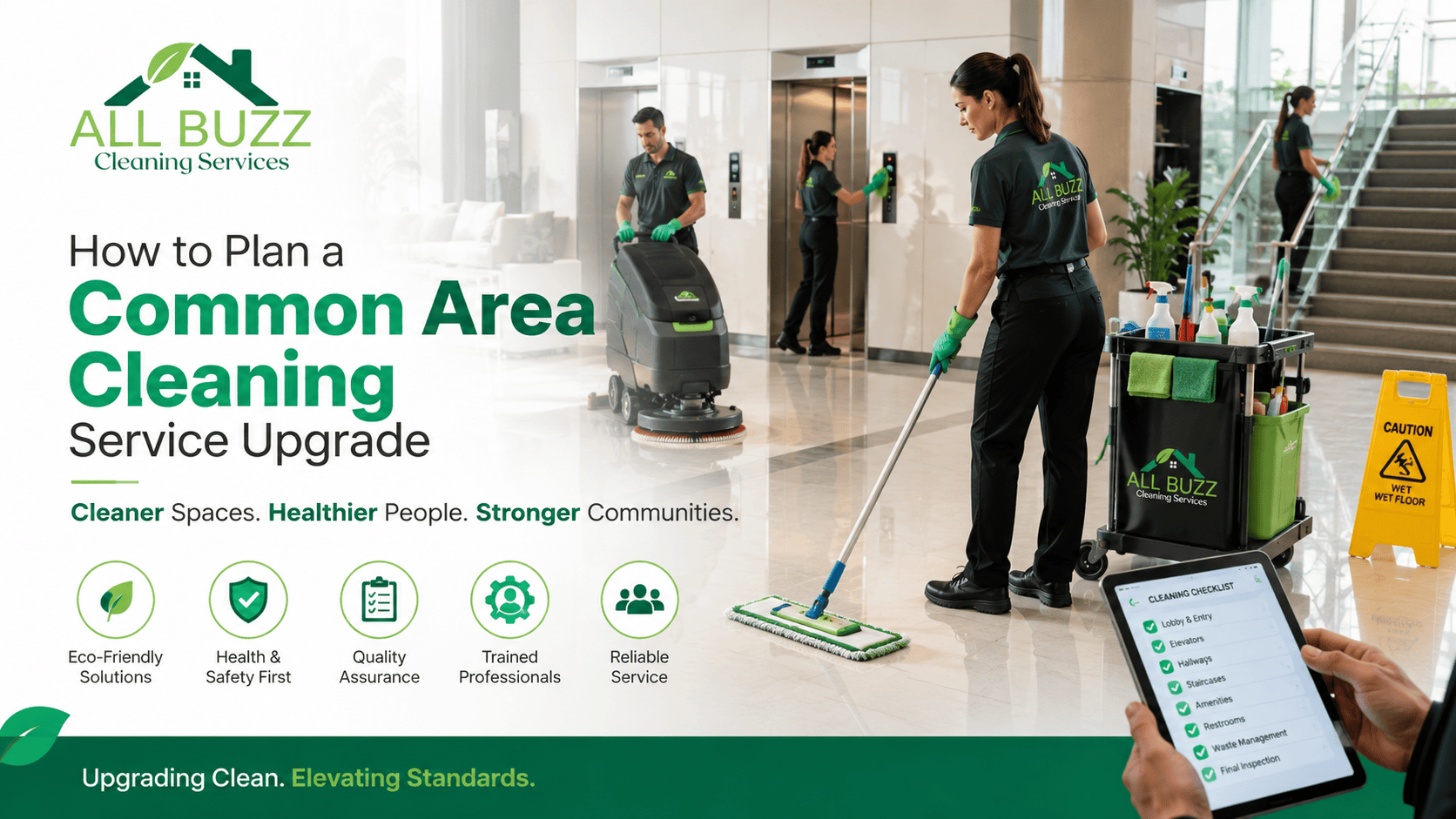
Professional cleaning teams commonly use digital checklists to record completed tasks.
Benefits include:
- Accountability
- Consistency
- Easier quality inspections
- Better communication with strata managers
Common Mistakes Strata Properties Should Avoid
Many strata buildings unintentionally create bigger maintenance problems through avoidable mistakes.
Waiting Until Areas Look Dirty
By the time dirt becomes visible, microscopic contaminants have often accumulated for weeks.
Preventive cleaning always delivers better long-term outcomes.
Ignoring Outdoor Areas
Outdoor walkways influence cleanliness indoors.
Leaves, dust, sand, and mud are continually tracked inside.
Cleaning external pathways helps reduce internal cleaning requirements.
Using Incorrect Products
Different flooring materials require different cleaning methods.
Using harsh chemicals on natural stone, timber, or specialty flooring can cause permanent damage.
Always follow manufacturer recommendations.
Overlooking Bin Areas
Waste storage rooms require regular deodorising and sanitisation.
Neglected bin rooms quickly attract pests and unpleasant odours.
Inconsistent Cleaning Standards
Changing contractors frequently or lacking documented cleaning procedures often leads to inconsistent results.
Standardised cleaning schedules create reliable outcomes.
Expert Advice from Property Cleaning Professionals
Experienced cleaning professionals often recommend thinking beyond today’s appearance.
Instead, ask:
“Will today’s cleaning protect the building five years from now?”
That perspective changes priorities.
For example:
Instead of repeatedly scrubbing stained grout, regular maintenance prevents staining from becoming permanent.
Instead of replacing carpets every few years, routine vacuuming and periodic deep extraction extend carpet life considerably.
Experienced facility managers also recommend conducting quarterly cleaning audits with strata committees to identify maintenance trends before they become expensive repairs.
Creating a Sustainable Cleaning Program
Environmental responsibility has become increasingly important across Perth strata properties.
Simple sustainable practices include:
- Microfibre cleaning systems
- Water-efficient equipment
- Environmentally responsible chemicals
- Waste separation
- Recycling stations
- Refillable cleaning products
These measures reduce environmental impact while maintaining excellent cleaning standards.
How Residents Can Support Cleaner Common Areas
Professional cleaners can only do part of the job.
Residents also contribute by:
- Reporting spills immediately
- Disposing of rubbish properly
- Cleaning up after pets
- Avoiding storage in shared corridors
- Respecting recycling guidelines
- Using designated smoking areas
When residents and cleaners work together, the entire community benefits.
Signs Your Cleaning Schedule Needs Improvement
Property managers should review cleaning performance if they notice:
- Persistent odours
- Dirty entrance glass
- Overflowing bins
- Dust on surfaces
- Stained carpets
- Resident complaints
- Increased pest activity
- Slippery walkways
These signs often indicate that cleaning frequency or procedures need updating.
Building Long-Term Value Through Better Cleaning
High-quality common area cleaning perth practices provide benefits that extend far beyond appearance.
They help:
- Preserve property value
- Improve resident satisfaction
- Support healthier living environments
- Protect expensive building finishes
- Reduce repair costs
- Create safer communal spaces
For strata properties, cleaning should always be viewed as an investment rather than an expense.
Buildings that receive consistent maintenance generally experience fewer complaints, stronger resident retention, and lower long-term maintenance costs.
Conclusion
Effective Common Area Cleaning Perth is one of the most important components of successful strata property management. Clean communal spaces enhance resident wellbeing, improve Resident Safety, support ongoing Shared Facility Maintenance, and protect valuable building assets for years to come.
Whether managing residential apartments, mixed-use developments, or commercial buildings, a structured cleaning program built around prevention, consistency, and quality delivers measurable benefits. Regular inspections, appropriate cleaning frequencies, trained professionals, and cooperation from residents all contribute to cleaner, healthier, and more attractive shared environments.
By adopting these best practices, strata communities can maintain welcoming properties that residents are proud to call home while reducing maintenance costs and extending the life of shared facilities.
Frequently Asked Questions (FAQs)
1. How often should common areas in a strata property be professionally cleaned?
The ideal frequency depends on building size, occupancy, and the level of daily foot traffic. High-use areas such as entrances, lifts, and hallways often require daily cleaning, while lower-traffic spaces like storage rooms may only need weekly attention. A customised schedule based on actual usage generally delivers better results than a one-size-fits-all approach. Regular inspections help adjust cleaning frequencies as seasons and occupancy levels change.
2. What areas are typically included in Common Area Cleaning Services Perth?
Professional Common Area Cleaning Services Perth usually include entrances, reception areas, hallways, elevators, stairwells, shared kitchens, laundry facilities, gyms, community rooms, car parks, bin storage areas, outdoor walkways, and other communal spaces. Services may also include sanitising high-touch surfaces, pressure washing, carpet cleaning, window cleaning, and periodic deep cleaning to maintain hygiene and protect building assets.
3. Why is preventive cleaning more effective than occasional deep cleaning?
Preventive cleaning removes dirt, moisture, and contaminants before they cause permanent damage. Small amounts of grit can gradually scratch floors, while spills left untreated may lead to staining or mould growth. Consistent maintenance also improves hygiene, reduces repair costs, extends the lifespan of flooring and fixtures, and creates a more pleasant environment for residents throughout the year.
4. How can strata committees improve resident satisfaction through cleaning?
Residents notice the cleanliness of shared spaces every day. Maintaining tidy entrances, fresh-smelling hallways, sanitised lifts, and well-kept amenities creates a positive living experience. Clear communication about cleaning schedules, prompt responses to maintenance concerns, and regular quality inspections also build confidence that the property is being professionally managed and cared for.
5. What qualities should property managers look for when choosing Strata Property Cleaning Services?
When selecting Strata Property Cleaning Services, property managers should look for experienced teams with documented cleaning procedures, trained staff, quality assurance processes, appropriate insurance, modern equipment, environmentally responsible products, and the flexibility to customise cleaning schedules. Providers that perform regular site inspections and communicate openly with strata managers are generally better equipped to deliver consistent, high-quality results over the long term.