

August 28, 2026
How Professional Vacate Cleaning Helps Eliminate Allergens Before New Occupants Move In
Moving out of a rental property involves more than removing furniture, packing boxes and handing over the keys. The condition of the property can affect the experience of the next occupants, particularly when dust, pet dander, mould spores and other allergens have accumulated over time.
A property may look clean at first glance while still holding allergens in carpets, curtains, vents, skirting boards, kitchens and other less obvious areas. This is one reason thorough vacate cleaning services Perth can be valuable between tenancies.
Professional vacate cleaning focuses on the areas that are often missed during routine household cleaning. It combines systematic cleaning with attention to high-dust and high-contact areas, helping reduce the amount of accumulated dust and allergen-containing debris left behind.
For landlords, property managers and tenants preparing a rental for its next occupants, the goal should not be to promise an entirely allergen-free property. That is rarely realistic. Instead, a well-executed Vacate Cleaning process should aim to remove as much accumulated dust, debris, residue and potential allergen material as reasonably possible.
This guide explains how professional vacate cleaning services Perth can support a cleaner transition between occupants, what areas deserve the most attention, and what practical steps can make the process more effective.
Why Allergens Can Remain After a Property Looks Clean
A property can appear spotless while still containing microscopic particles and accumulated debris.
Everyday living introduces material into a home. People shed skin cells, track outdoor dust inside and create household debris through cooking, cleaning, sleeping and normal movement. Pets can add hair and dander. Open windows and doors can introduce pollen and outdoor particles.
Over time, some of this material settles into places that are not cleaned frequently.
Common examples include:
- Carpet fibres
- Upholstery
- Curtains and blinds
- Mattress surfaces if included in the cleaning scope
- Under furniture
- Skirting boards
- Ceiling fans
- Air vents and return grilles
- Window tracks
- Behind appliances
- Bathroom exhaust areas
- Cupboards and drawers
- Hard-to-reach corners
Simply wiping visible surfaces does not necessarily address these areas.
This is where a detailed vacate clean differs from a quick tidy-up. The objective is to systematically work through the property rather than focusing only on areas that are immediately noticeable.
It is also important to understand that allergens are not limited to visible dust. Dust can contain a mixture of particles, including pollen, pet dander, fibres and other household debris. Dust mites themselves are microscopic, and their waste particles can become part of household dust.
Professional cleaning cannot guarantee the complete removal of every allergen. However, removing accumulated dust and debris can reduce the material in which these particles are found.
How Vacate Cleaning Supports Allergen Removal
Allergen Removal begins with identifying where particles are likely to accumulate.
An experienced cleaner generally works methodically from higher surfaces towards lower surfaces. This matters because cleaning a floor first and then disturbing dust from a ceiling fan or high shelf can simply cause particles to settle again.
A logical cleaning sequence may include:
- Removing rubbish and remaining belongings.
- Dusting high surfaces and fixtures.
- Cleaning walls, doors and frames where required.
- Cleaning cupboards and storage areas.
- Addressing kitchens and bathrooms.
- Cleaning windows and tracks where included.
- Vacuuming carpets and fabric surfaces.
- Mopping hard floors.
- Performing a final inspection.
The exact process depends on the property’s condition and the agreed scope of work.
Carpet Cleaning Deserves Special Attention
Carpets can act as reservoirs for dust and other particles because fibres can trap material that is not obvious from the surface.
Regular vacuuming removes some debris, but heavily used carpets may require more intensive cleaning, particularly at the end of a tenancy.
A proper vacate cleaning process should pay attention to:
- High-traffic carpet areas
- Edges and corners
- Areas underneath furniture
- Stair carpeting
- Visible stains
- Accumulated dust
- Pet hair where applicable
Where carpet extraction or steam cleaning is required, it should be carried out using equipment and methods appropriate for the carpet material.
A useful practical point is that cleaning should not stop at the centre of the room. Carpet edges and areas close to skirting boards frequently receive less attention during routine cleaning.
Dust Mite Control Starts With Reducing Dust and Moisture
Dust Mite Control is often misunderstood.
Dust mites are microscopic organisms that commonly live in household environments, particularly where there is suitable food material and humidity. They can be associated with bedding, carpets, upholstered furniture and other fabric-rich areas.
A vacate clean cannot guarantee that a property contains no dust mites. However, thorough cleaning can remove dust, skin flakes and other debris that contribute to the household environment in which they live.
Moisture management is also important. Areas that remain damp for long periods can create conditions that support a range of indoor problems.
During a vacate clean, cleaners should therefore look carefully at areas such as:
- Bathroom corners
- Shower screens
- Grout lines
- Around sinks
- Window condensation areas
- Damp-prone cupboards
- Ventilation points
Cleaning visible mould is not the same as solving an underlying moisture problem. If a property has recurring mould caused by leaks, rising damp, condensation or inadequate ventilation, the underlying issue should be investigated and addressed separately.
Healthy Home Cleaning: Areas Professionals Should Not Overlook
A thorough Healthy Home Cleaning approach considers the entire property rather than only the most visible rooms.
Some areas receive frequent attention during everyday cleaning. Others are easily forgotten.
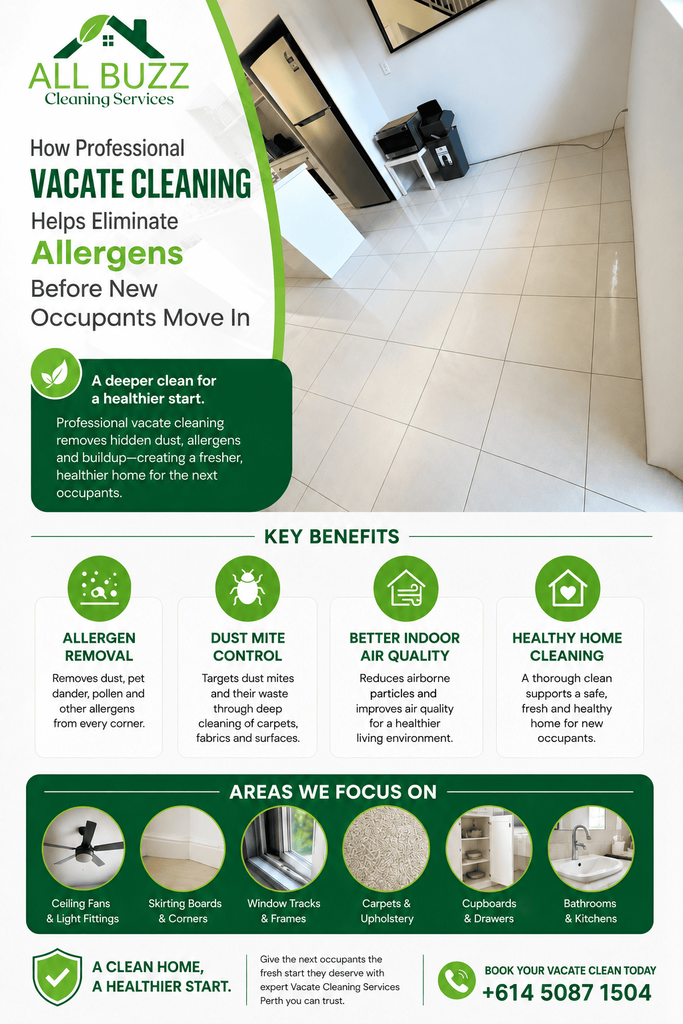
Ceiling Fans and Light Fittings
Ceiling fans can accumulate a surprising amount of dust on their blades. When the fan operates, some of that dust may become airborne.
Light fittings, shades and high ledges can have similar issues.
These areas should generally be cleaned before floors are vacuumed and mopped so that any falling dust can be removed during the later stages.
Skirting Boards
Skirting boards are another commonly overlooked surface.
Dust can accumulate along their upper edges, especially behind furniture and in corners. During a vacate clean, cleaning these areas helps provide a more complete result.
Window Tracks and Frames
Window tracks can collect:
- Outdoor dust
- Insects and insect debris
- Hair
- Soil particles
- General household residue
They are particularly important because they are rarely included in quick routine cleaning.
Cupboards and Drawers
Kitchen cupboards, bathroom storage and built-in wardrobes can retain dust and debris even when their external surfaces appear clean.
When a property is empty, these areas become easier to access. That makes the end of tenancy an ideal opportunity to clean them properly.
Indoor Air Quality and the Importance of Dust Reduction
Indoor Air Quality is influenced by numerous factors, including ventilation, outdoor pollution, humidity, combustion sources, building materials and household activities.
Cleaning is only one part of the picture.
However, reducing accumulated dust can still be useful because settled dust may contain a mixture of household particles. Poor cleaning practices can also temporarily disturb dust and redistribute it around a room.
For this reason, professional cleaning should focus on removing dust rather than simply moving it from one surface to another.
Effective practices include:
- Using suitable vacuum equipment
- Working systematically
- Cleaning high surfaces before floors
- Emptying or maintaining vacuum systems appropriately
- Using clean cloths for different areas
- Avoiding excessive dust disturbance
- Allowing appropriate drying and ventilation
After wet cleaning, surfaces should be allowed to dry properly. Excessive moisture can create its own problems, particularly in poorly ventilated areas.
A Real-World Example: Preparing a Pet-Friendly Rental
Consider a three-bedroom rental where the previous occupants lived with a dog.
The property may have been maintained reasonably well during the tenancy. Floors were vacuumed, kitchens were wiped and bathrooms were cleaned regularly.
Yet after several years, pet hair and dander may have accumulated in carpet fibres, along skirting boards and underneath furniture.
When the tenants move out, the property is empty.
This creates an opportunity to clean areas that were previously difficult to reach.
A detailed vacate clean might focus on:
- Vacuuming carpet edges
- Removing visible pet hair
- Cleaning skirting boards
- Dusting ceiling fans
- Cleaning built-in wardrobes
- Vacuuming behind appliances where accessible
- Cleaning window tracks
- Deep-cleaning bathrooms
- Cleaning hard floors after dust removal
The result is not an allergen-free property. Rather, it is a property where accumulated household debris has been substantially reduced before the next occupants arrive.
That distinction is important.
Practical Strategies for a More Effective Vacate Clean
Start With an Empty Property
Cleaning becomes considerably more thorough when rooms are empty.
Furniture can hide carpet, floor edges and skirting boards. Boxes can prevent access to cupboards and corners.
If possible, remove all personal belongings and rubbish before the cleaning team arrives.
Prioritise High-Dust Areas
Not every surface carries the same cleaning priority.
Pay particular attention to:
- Ceiling fans
- Air vents
- Skirting boards
- Carpet edges
- Window tracks
- Door frames
- Behind appliances
- Storage areas
These locations can accumulate debris while receiving little attention during normal household cleaning.
Ventilate Where Appropriate
Fresh air can help clear residual cleaning odours and support drying after wet cleaning.
However, ventilation should be appropriate for the conditions. During periods of heavy outdoor pollen, smoke or pollution, opening every window may not necessarily improve indoor conditions.
Address Moisture Problems Separately
If there is persistent mould or dampness, cleaning alone may provide only a temporary visual improvement.
Look for possible causes such as:
- Plumbing leaks
- Roof leaks
- Condensation
- Poor bathroom ventilation
- Water intrusion
- Damp building materials
Property owners or managers should arrange appropriate assessment where an underlying building issue is suspected.
Common Vacate Cleaning Mistakes That Can Leave Allergens Behind
Mistake 1: Cleaning Only What Is Visible
A property can look clean while dust remains underneath appliances, around carpet edges and inside storage areas.
A proper checklist helps prevent these areas from being forgotten.
Mistake 2: Vacuuming Without Cleaning the Rest of the Room
Vacuuming is important, but it should be part of a broader cleaning system.
Dust from shelves, fans and fittings can fall onto the floor. Vacuuming too early can therefore create unnecessary rework.
Mistake 3: Ignoring Soft Furnishings
Curtains, carpets and upholstery can hold dust and other particles.
Where these items remain in the property, their cleaning requirements should be considered rather than assuming hard-surface cleaning is sufficient.
Mistake 4: Treating Mould as Ordinary Dirt
Mould is not simply a stain that can always be wiped away permanently.
If the moisture source remains, mould can return. Significant mould problems may require specialist assessment and remediation rather than ordinary vacate cleaning.
Mistake 5: Making “Allergen-Free” Claims
No ordinary cleaning service should casually guarantee that a property is completely allergen-free.
There are too many variables, including outdoor air, building materials, humidity, ventilation and the behaviour of future occupants.
A more accurate goal is thorough removal of accumulated dust, debris and other removable contaminants.
Expert Tips for Landlords and Property Managers
One practical lesson from end-of-tenancy cleaning is that timing matters.
If cleaning occurs while tradespeople are still working, dust from repairs can quickly undo part of the cleaning work.
Where possible, schedule the final clean after:
- Painting is complete
- Carpentry is finished
- Flooring work is complete
- Repairs are finished
- Rubbish has been removed
- Remaining belongings are cleared
This allows the cleaning team to perform the final dust and surface-cleaning process once.
It is also useful to document areas requiring special attention. For example, if the previous occupants had pets or if a property has a history of heavy carpet use, these details can help determine where additional cleaning effort may be appropriate.
For tenants, photographs before and after cleaning can also provide useful records when completing a rental handover.
What Tenants Should Do Before the Cleaners Arrive
Tenants can improve the effectiveness of a vacate clean by preparing the property properly.
Before cleaners arrive:
- Remove personal possessions.
- Empty rubbish bins.
- Remove food from cupboards and refrigerators.
- Defrost appliances if required.
- Clear floors and surfaces.
- Remove items from wardrobes and drawers.
- Identify areas needing particular attention.
- Ensure cleaners can access the property.
- Complete minor repairs separately where required.
This preparation gives cleaners more access and reduces time spent working around belongings.
It also helps separate cleaning from maintenance. A cleaner can remove dirt from a surface, but repairing damaged flooring, leaking plumbing or broken fixtures is a different responsibility.
When Should You Consider a More Detailed Vacate Clean?
A more intensive cleaning approach may be worth considering when:
- The tenancy lasted several years.
- Pets lived at the property.
- Carpets have significant traffic.
- The property has been occupied by smokers.
- There is substantial accumulated dust.
- The property has many fabric surfaces.
- The rental has been vacant for an extended period.
- The incoming occupants are particularly concerned about cleanliness.
- A property inspection identifies areas requiring additional attention.
The right cleaning scope depends on the property rather than simply its number of bedrooms.
A small apartment with heavily soiled carpets may require more work than a larger home that has been carefully maintained.
Choosing Vacate Cleaning Services Perth With the Right Approach
When comparing vacate cleaning services Perth, look beyond claims about being “deep clean” or “the best.”
Instead, ask practical questions.
Does the cleaning checklist cover high and low surfaces? Are cupboards included? Are carpet cleaning and window tracks separate services? How are mould concerns handled? Does the company explain what is included and excluded?
A transparent scope of work is more useful than a vague promise.
It is also worth checking whether the cleaning method is appropriate for the property’s surfaces. Natural stone, timber flooring, delicate fabrics and painted surfaces may require different products and techniques.
Good cleaning is not simply about using stronger chemicals. It is about selecting an appropriate method for the material and type of contamination.
Conclusion
A successful end-of-tenancy clean is about more than making a property look presentable for an inspection. It is an opportunity to remove accumulated dust, hair, debris and residue from the areas that have been exposed to everyday living.
Professional vacate cleaning services Perth can support this process by using a systematic cleaning approach that reaches beyond obvious surfaces. Carpet fibres, skirting boards, ceiling fans, cupboards, window tracks and other overlooked areas all deserve attention when preparing a property for new occupants.
Allergen Removal, Dust Mite Control and better Indoor Air Quality should be approached realistically. Cleaning cannot make a property completely allergen-free, but careful removal of accumulated household debris can create a cleaner starting point for the next tenancy.
For landlords, property managers and outgoing tenants, the key is simple: clean systematically, address hidden dust, manage moisture problems separately, and use an appropriate cleaning method for each surface.
That is what turns an ordinary move-out clean into a genuinely thorough vacate clean and helps ensure the property is ready for its next occupants.
Frequently Asked Questions
1. Can vacate cleaning completely remove allergens from a rental property?
No cleaning service can realistically guarantee complete allergen removal. Allergens can enter from outdoor air, occupants, pets and building materials. However, thorough cleaning can remove significant amounts of accumulated dust, pet hair, dander and other removable debris from surfaces and fabrics.
A detailed vacate clean is particularly useful because an empty property provides better access to carpets, corners, cupboards, skirting boards and areas that may have been hidden by furniture.
2. Does professional vacate cleaning help with dust mites?
It can help reduce dust and other organic debris associated with the household environment, but it should not be described as a guaranteed dust-mite eradication treatment.
Carpet and fabric cleaning, regular vacuuming and appropriate moisture management can all contribute to a cleaner indoor environment. For serious pest or allergen concerns, specialist assessment may be appropriate.
3. Does vacate cleaning improve indoor air quality?
Cleaning can contribute to better indoor conditions by removing accumulated dust and debris, but Indoor Air Quality depends on many other factors.
Ventilation, humidity, combustion sources, outdoor pollution, mould, building materials and occupant behaviour can all influence air quality. Vacate cleaning should therefore be viewed as one part of maintaining a clean indoor environment, not as a complete air-quality solution.
4. Should carpets be professionally cleaned before new occupants move in?
It depends on the property’s condition, carpet type, tenancy requirements and agreed cleaning scope. Carpets can retain dust, hair and other particles, particularly after long-term use or where pets have lived in the property.
Where deeper carpet cleaning is appropriate, it can complement standard vacuuming and provide a more thorough end-of-tenancy clean.
5. What should landlords prioritise if allergen reduction is a concern?
Start with accumulated dust and debris in carpets, soft furnishings, high surfaces, skirting boards, vents, window tracks and storage areas. Also investigate moisture problems and visible mould rather than treating them as ordinary dirt.
Most importantly, avoid unrealistic “allergen-free” promises. The practical objective is to leave the property thoroughly cleaned, dry, well-maintained and ready for the next occupants.