


September 19, 2026
How Professional Vacate Cleaning Protects Flooring, Walls and Fixtures
Moving out of a rental property involves more than removing furniture and wiping down visible surfaces. Once a home is empty, small marks that were easy to overlook can suddenly become obvious. Scuffed floors, dusty skirting boards, greasy walls, stained grout, scratched fixtures and neglected corners may all affect how the property is assessed during the final inspection.
This is where professional House Vacate Cleaning Perth can make a practical difference. A properly planned vacate clean is not simply about making a property look tidy. It involves cleaning methods that are appropriate for different materials, surfaces and finishes while reducing the risk of avoidable damage.
For tenants, this matters because aggressive cleaning can sometimes create new problems. Using the wrong chemical on a painted wall, soaking timber flooring or scrubbing a delicate fixture too hard may leave marks that were not present before cleaning. Professional vacate cleaning Perth therefore needs to balance cleanliness with careful Property Protection.
Whether the property has timber floors, tiles, laminate, painted walls, stainless-steel fixtures or older fittings, the cleaning approach should be adjusted to the surface. This guide explains how experienced cleaners protect these areas during a Vacate Cleaning job and what tenants should look for when preparing a property for its final inspection.
Why Property Protection Matters During a Vacate Clean
A vacant property creates a different cleaning environment from an occupied home. Furniture and personal belongings are no longer hiding sections of flooring, walls or cabinetry. At the same time, cleaners can access areas that have not been thoroughly cleaned for months.
The objective is not to make every surface aggressively spotless at any cost. It is to remove accumulated dirt while preserving the condition of the property.
Professional cleaners generally consider three factors before working on a surface:
- Material: Timber, tile, vinyl, laminate, stone, painted plaster and metal all react differently to moisture and chemicals.
- Existing condition: Old scratches, faded paint and worn finishes should be distinguished from fresh cleaning-related damage.
- Cleaning method: The pressure, equipment, temperature, moisture level and product should suit the surface.
This approach is particularly important during House Vacate Cleaning Perth, because the cleaning takes place close to a formal handover or inspection.
A good cleaner does not assume that the strongest product or hardest scrubbing method is automatically the most effective solution.
Floor Protection: Cleaning Without Damaging Flooring
Flooring is one of the most visible parts of a property after it has been emptied. Dirt, hair, dust and marks that were previously concealed by furniture become much easier to notice.
However, different floor types require different cleaning techniques.
Timber Flooring
Timber floors can be particularly sensitive to excessive moisture. Water left standing on timber or engineered wood may penetrate joints or affect the finish.
A careful cleaning process normally involves:
- Removing loose dirt and grit before mopping.
- Using a suitable cleaner for the flooring finish.
- Controlling the amount of moisture applied.
- Avoiding prolonged standing water.
- Drying the surface appropriately after cleaning.
The first step is especially important. Small particles of sand or grit can act like abrasives when dragged across the floor with a mop or cleaning pad.
Laminate Flooring
Laminate can resemble timber but should not automatically be cleaned like solid wood. Excessive water can enter seams and contribute to swelling or edge damage.
For a Vacate Clean, the safer approach is generally controlled moisture, appropriate products and careful attention around joins and edges.
Tiles and Grout
Ceramic and porcelain tiles are usually more moisture-tolerant, but grout requires a different approach. Dirt can accumulate inside grout lines, particularly around kitchens, bathrooms and entrances.
Aggressive scrubbing can sometimes damage deteriorated grout or surrounding sealants. Experienced cleaners assess how heavily soiled the area is before choosing a cleaning method.
Vinyl and Other Resilient Floors
Vinyl flooring can be vulnerable to abrasive products and excessive mechanical agitation. A cleaner should avoid assuming that a rough pad will remove marks without consequences.
The practical principle is simple: remove contamination without unnecessarily disturbing the floor’s protective finish.
Wall Cleaning: Removing Marks While Preserving Paint
Walls are often overlooked during everyday cleaning because furniture, artwork and household activity draw attention elsewhere. During a move-out clean, however, empty walls can reveal fingerprints, dust, cobwebs, food splashes and scuff marks.
Wall cleaning requires particular care because painted surfaces vary considerably.
Understanding Painted Surfaces
Some walls have washable finishes, while others may have more delicate or low-sheen paint. A technique that works on one wall may leave a visible patch on another.
Before cleaning a noticeable mark, an experienced cleaner considers:
- Paint type and finish
- Age and condition of the coating
- Severity of the mark
- Whether the mark is removable dirt or actual paint damage
- Whether moisture could affect the surface
A common mistake is repeatedly scrubbing one small area because a mark does not disappear immediately. This can create a noticeable difference in sheen even when the original mark was relatively minor.
Cleaning High-Touch Areas
Door surrounds, light-switch areas, hallways and sections near handles often accumulate fingerprints and grime.
Rather than applying excessive pressure, professional cleaning usually relies on an appropriate cleaning solution, controlled agitation and gradual removal.
This is one area where vacate cleaning Perth services can provide useful practical expertise: cleaners encounter different paint finishes and surface conditions regularly, so they can adjust the technique rather than applying one method throughout the property.
Fixture Maintenance: Protecting Fittings During Final Cleaning
Fixtures can include taps, shower fittings, handles, switches, sinks, exhaust covers, cabinet hardware and other installed components.
These areas often attract mineral deposits, soap residue, grease and fingerprints. However, some fixtures can be damaged by harsh chemicals or abrasive tools.
Bathroom Fixtures
Bathroom fittings frequently contain chrome, stainless steel, coated metal or other finishes. Strong acidic or abrasive products may affect these finishes if they are inappropriate for the material or left on the surface for too long.
A careful cleaner should:
- Identify the fixture material where possible.
- Use a suitable cleaning product.
- Follow product dilution instructions.
- Avoid abrasive pads on delicate finishes.
- Rinse or wipe residues as appropriate.
- Dry fittings to minimise water spotting.
Hard-water deposits can be stubborn, but stronger does not always mean safer.
Kitchen Fixtures
Kitchen areas present a different challenge because grease and food residue may combine with dust.
Cabinet handles, splashbacks, sink surrounds and appliance surfaces can require targeted degreasing. Excessive product, however, can leave residue or affect certain finishes.
A controlled approach is particularly useful around cabinetry edges and joins where moisture should not be allowed to accumulate unnecessarily.
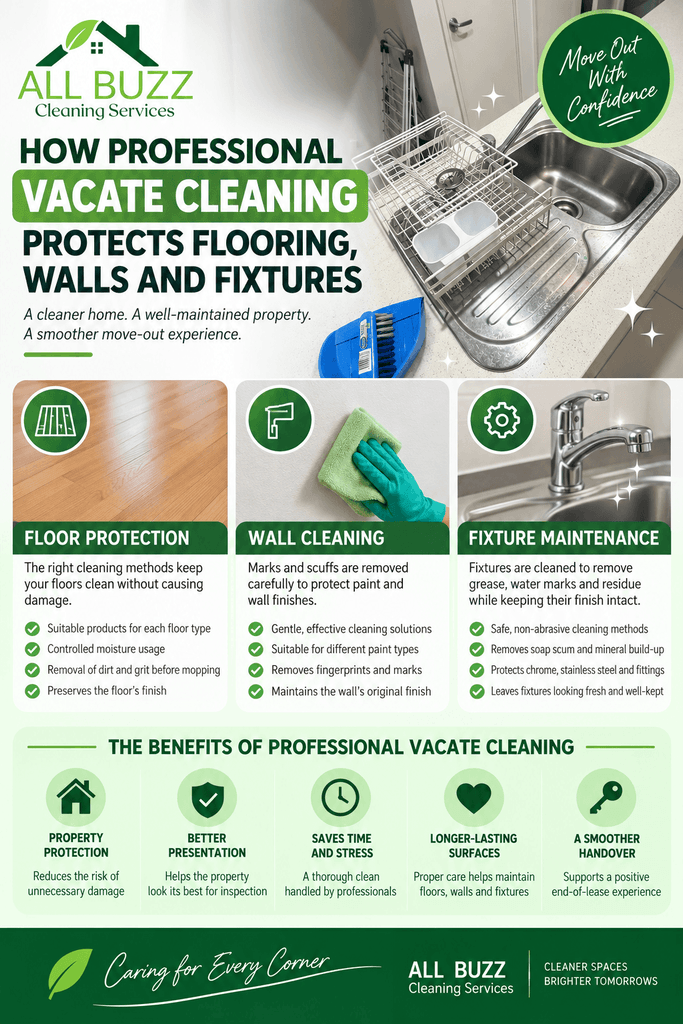
Surface Preservation During a Vacate Cleaning
Surface Preservation is an important part of professional move-out cleaning because the goal is to improve cleanliness without creating additional deterioration.
This requires understanding the difference between cleaning and restoration.
Cleaning removes dirt, grease, dust, residue and other removable contamination. Restoration involves repairing, refinishing or replacing damaged materials.
For example, a deep scratch in a timber floor is not something a standard cleaning process should attempt to “scrub away.” Similarly, chipped paint is not the same as a washable wall mark.
Recognising this difference helps prevent inappropriate cleaning methods.
A Practical Surface Assessment
Before tackling difficult areas, cleaners can ask:
Is this dirt, staining, wear or physical damage?
That question can prevent unnecessary treatment.
If something is removable contamination, an appropriate cleaning process may resolve it.
If it is permanent deterioration, repeated cleaning may do nothing except increase the risk of damage.
This distinction is one of the most valuable principles in professional House Vacate Cleaning Perth.
Property Care: A Room-by-Room Approach
A structured cleaning sequence helps reduce missed areas and unnecessary rework.
Kitchen
Pay particular attention to:
- Benchtops
- Splashbacks
- Cabinet fronts
- Handles
- Sink and tapware
- Floors
- Wall areas around cooking zones
- Appliance exteriors
Grease should be treated according to the surface rather than attacked with an unnecessarily harsh chemical.
Bathroom
Focus on:
- Shower screens
- Tiles
- Grout
- Taps
- Vanity surfaces
- Mirrors
- Toilet exterior
- Floor
- Ventilation covers
Water marks and soap residue often require different treatment from ordinary dust.
Bedrooms and Living Areas
These rooms commonly require:
- Vacuuming floors
- Cleaning skirting boards
- Removing cobwebs
- Spot-cleaning suitable wall marks
- Dusting fixtures
- Cleaning accessible ledges
- Checking corners and behind doors
Once furniture has been removed, inspect the flooring carefully for accumulated dust and debris.
Hallways and Entry Areas
Entry zones receive substantial foot traffic. They may show more visible scuffing and dirt than bedrooms.
Cleaners should pay attention to the relationship between flooring, skirting boards and lower wall areas because dirt can transfer between these surfaces.
What Professional Cleaners Do Differently
A professional approach is not necessarily about using more equipment. It is about making better decisions about where, when and how equipment is used.
For example, an experienced cleaner may use a vacuum to remove abrasive particles before wet cleaning a floor. They may test a cleaning solution in an inconspicuous location before treating a visible wall. They may also use separate tools for bathrooms and kitchens to reduce cross-contamination.
These small decisions can influence the final result.
Practical Example: A Scuffed Hallway
Imagine a tenant moving out of a property where the hallway has dark marks near the skirting boards.
A rushed approach might involve applying a strong cleaner and scrubbing aggressively.
A more careful approach would first determine whether the marks are surface dirt, transfer marks or damage to the paint. The cleaner can then select an appropriate method and stop if further agitation begins affecting the paint finish.
The objective is not simply to remove the mark at any cost. It is to achieve the cleanest reasonable result while preserving the wall.
Common Vacate Cleaning Mistakes That Can Cause Damage
Using One Cleaner for Every Surface
Multi-purpose products can be useful, but “multi-purpose” does not mean universally suitable.
Timber, natural stone, painted walls, metal fixtures and laminate may have very different cleaning requirements.
Scrubbing Too Hard
Pressure can remove dirt, but it can also remove finishes.
If a mark does not respond to gentle cleaning, increasing pressure indefinitely is rarely the best solution.
Using Too Much Water
Excess moisture is particularly problematic around timber, laminate, cabinetry joins and other moisture-sensitive areas.
Ignoring Product Instructions
Concentrated chemicals are designed to be diluted according to instructions. Using extra product does not necessarily improve cleaning performance.
It can instead leave residue or increase the risk of surface damage.
Treating Damage as Dirt
A tenant may spend considerable time trying to clean a scratch, chipped paint or worn finish.
Understanding what can realistically be removed helps avoid unnecessary treatment.
Cleaning Floors Before Other Dust-Producing Tasks
A practical cleaning sequence usually moves from higher surfaces toward lower surfaces. Otherwise, dust from walls, ledges or fixtures can fall onto an already-clean floor.
Expert Tips for Safer Vacate Cleaning Perth
If you are preparing a property for handover, these practical habits can help.
1. Start With a Surface Inspection
Before cleaning, identify delicate flooring, freshly painted areas, natural stone, older fixtures and visibly worn surfaces.
2. Remove Dry Debris First
Vacuuming or dusting before wet cleaning helps prevent grit from being spread or dragged across surfaces.
3. Test Unfamiliar Products
If a product has not previously been used on a surface, testing it in a discreet location can help identify unwanted reactions.
4. Use Controlled Moisture
Apply enough moisture to clean effectively without unnecessarily saturating the surface.
5. Work Systematically
Clean room by room and follow a consistent top-to-bottom process.
6. Document Existing Damage
If you are a tenant, photographs taken before cleaning can help distinguish pre-existing damage from issues discovered during the move-out process.
This is especially useful for older properties where normal wear and tear may already be visible.
Does a Professional Vacate Clean Guarantee a Bond Return?
No cleaning service should promise a guaranteed bond outcome.
A professional Vacate Cleaning service can help address removable dirt and improve the property’s presentation, but bond decisions depend on the tenancy agreement, property condition, inspection findings and applicable tenancy requirements.
Cleaning also cannot automatically correct physical damage, deterioration or maintenance issues.
The sensible approach is to treat cleaning as one part of preparing the property for handover rather than as a guarantee of a particular inspection result.
How to Choose a Careful Vacate Cleaning Service
When comparing cleaning providers, do not focus only on the number of tasks included.
Ask how they approach different materials and difficult surfaces.
Useful questions include:
- Do they adjust cleaning methods for different flooring types?
- How do they handle painted walls?
- What approach do they use for delicate fixtures?
- Do they inspect surfaces before applying strong products?
- Are difficult stains assessed individually?
- Do they distinguish cleaning from physical damage?
- Is the cleaning checklist clearly explained?
A provider that can explain its process clearly demonstrates a more useful level of practical knowledge than one that simply promises an exceptionally strong clean.
Final Thoughts
A successful move-out clean is about more than making an empty property look fresh. It requires an understanding of how dirt interacts with different materials and how cleaning methods can affect finishes.
From controlled moisture on flooring to careful treatment of painted walls and appropriate products for fixtures, Property Care should remain central to the cleaning process.
Professional House Vacate Cleaning Perth can be particularly useful when a property contains multiple flooring types, delicate fittings or areas requiring specialist attention. The most effective approach is not the most aggressive one. It is the method that removes contamination thoroughly while respecting the materials underneath.
For anyone preparing a rental property for handover, vacate cleaning Perth should therefore be viewed as a combination of cleanliness, careful surface management and practical preparation for inspection. A well-planned Vacate Clean can leave the property presentable without unnecessarily compromising the flooring, walls or fixtures that need to remain in good condition.
FAQs About House Vacate Cleaning Perth
1. Can professional vacate cleaning damage flooring?
It can happen if inappropriate chemicals, excessive moisture, abrasive tools or unsuitable equipment are used. Experienced cleaners reduce this risk by identifying the flooring material and adjusting the cleaning method accordingly. Timber and laminate, for example, generally require more moisture control than ceramic tile. The safest approach is to remove dirt effectively without unnecessarily disturbing the floor’s finish.
2. Should walls always be scrubbed during a vacate clean?
No. Walls should be assessed before aggressive cleaning. Some marks are removable, while others result from paint deterioration, scuffing or physical damage. Excessive scrubbing can create a patch with a different sheen or even remove paint. A professional vacate cleaning Perth approach typically uses controlled cleaning appropriate to the wall finish rather than treating every mark with the same level of pressure.
3. How can fixtures be cleaned without damaging their finish?
The cleaning method should depend on the fixture material and manufacturer’s recommendations where available. Avoid assuming that abrasive pads or strong chemicals are suitable for every fitting. Chrome, coated metals and other decorative finishes can react differently to cleaning products. Using appropriate products, controlled application and thorough residue removal helps maintain the appearance of fixtures.
4. Is professional cleaning enough to remove all marks before an inspection?
Not necessarily. Cleaning can remove dirt, grease, dust and many types of surface residue, but it cannot always correct scratches, chipped paint, permanent stains or worn finishes. A useful House Vacate Cleaning Perth process should identify these differences rather than promising that every imperfection can be removed. Tenants should address genuine repairs separately where required.
5. What is the biggest mistake people make when cleaning before moving out?
One of the most common mistakes is focusing on cleaning strength instead of surface suitability. People may use excessive water, strong chemicals or aggressive scrubbing because they want quick results. This can sometimes create new marks or damage. A better approach is systematic cleaning, appropriate product selection and careful treatment of flooring, walls and fixtures.