


August 27, 2026
Why Professional Cleaning Protects Your Rental History and Future References
Moving out of a rental property can feel like a race against the clock. You have to pack belongings, organise your next home, disconnect utilities, return keys and make sure the property is left in an acceptable condition.
One task that is sometimes underestimated is the final clean.
A property can look reasonably tidy during everyday living while still needing significant cleaning before handover. Dust can collect on skirting boards, grease can build up inside an oven, soap residue can remain around bathroom fixtures, and windows or tracks may show months of accumulated grime. These details can become noticeable during the final inspection.
This is where End of Lease Cleaners in Perth can make a practical difference.
A thorough end-of-lease clean is not simply about making a property look attractive. It is about helping you meet your responsibilities as a tenant, presenting the property carefully at Lease Completion, and reducing avoidable disputes over cleaning.
Most importantly, good preparation can contribute to a positive Rental History. While no cleaning company can guarantee a favourable reference or bond outcome, leaving a property clean and well-presented gives property managers fewer obvious cleaning issues to raise during the handover process.
For tenants planning their next move, that matters. A good Tenant Reputation, reliable Rental References, and accurate Rental Records can make future applications easier to manage.
Why Rental History Matters After You Move Out
Your rental history is more than a record of where you have lived. For many prospective landlords and property managers, it provides context about how you approached previous tenancies.
A rental history may include information such as:
- Previous rental addresses
- Length of tenancy
- Rental payment history
- Communication with property managers
- Property condition at the end of the tenancy
- Maintenance and inspection history
- Disputes or unresolved issues
- References from previous property managers or landlords
Cleaning is only one part of this picture, but it is one of the areas tenants can directly control before handing a property back.
Imagine two tenants applying for the same rental. Both have similar employment and financial circumstances. One has a history of leaving properties reasonably clean and maintaining good communication. The other has repeated complaints about cleaning and property presentation.
The difference may influence how a property manager views each application.
That is why professional cleaning Protects Your Rental History indirectly: it helps you avoid preventable cleaning-related problems at the end of your tenancy.
A Clean Handover Creates a Better First Impression
Property managers often conduct final inspections with specific expectations in mind.
They may compare the property’s condition against:
- The original entry condition report
- The agreed tenancy requirements
- Previous inspection records
- Cleaning expectations
- Any documented damage or maintenance issues
A clean property does not eliminate legitimate wear and tear or other tenancy issues. However, it can make the handover process more straightforward.
How End-of-Lease Cleaning Supports a Smooth Lease Completion
The final clean should be approached differently from ordinary household cleaning.
During a normal weekly clean, you might vacuum visible floors, wipe kitchen benches and clean the bathroom. At the end of a tenancy, attention needs to extend to areas that are less frequently cleaned.
Professional Vacate Cleaners Perth generally approach the property as a complete handover project rather than an ordinary domestic clean.
This can involve systematically checking areas such as:
- Kitchen cupboards and drawers
- Oven and cooktop
- Rangehood
- Splashbacks
- Bathroom tiles and grout
- Shower screens
- Toilets and basins
- Skirting boards
- Doors and handles
- Internal windows and tracks where applicable
- Floors and carpets
- Built-in wardrobes
- Laundry areas
- Light fittings and accessible fixtures
- Dust accumulation around corners and edges
The exact cleaning requirements vary between properties and tenancy agreements, so tenants should always check their lease, exit instructions and property manager’s requirements.
Why Detail Matters During the Final Inspection
A property manager may not only look at whether the property appears generally clean.
Small neglected areas can stand out because the property is being inspected when it is empty.
For example, once furniture has been removed, a tenant may suddenly notice:
- Dust lines behind furniture
- Marks on walls
- Dirt around skirting boards
- Debris inside cupboards
- Hair around bathroom drains
- Grease inside the oven
- Dust inside wardrobe corners
These are easy to overlook while the home is occupied.
A systematic end-of-lease clean helps identify those areas before the keys are returned.
Rental References: Why Property Presentation Can Matter
A rental reference is not simply about whether you paid rent on time.
A prospective property manager may want to understand whether you were a responsible tenant overall.
Depending on the circumstances and the information requested, a previous property manager may comment on issues such as:
- Payment reliability
- Communication
- Property care
- Cleanliness
- Maintenance reporting
- Compliance with tenancy obligations
- Condition at the end of the tenancy
A professional clean cannot manufacture a positive reference. It can, however, help prevent one avoidable issue from becoming part of the conversation.
Cleaning Can Reduce Unnecessary End-of-Tenancy Disputes
Consider this example.
A tenant has packed everything and believes the property is clean. During the final inspection, the property manager identifies significant grease inside the oven, dusty wardrobe shelves and dirty bathroom grout.
The tenant may then need to return to address the cleaning or negotiate what happens next.
In a busy relocation, this can create unnecessary stress.
In contrast, a detailed cleaning checklist completed before the inspection gives the tenant a better opportunity to identify and address those issues.
That is particularly useful when the tenant has already moved several hours away or interstate.
Tenant Reputation Is Built Over the Entire Tenancy
It is important not to overstate the role of cleaning.
A tenant’s reputation is generally shaped by multiple behaviours, not one final cleaning appointment.
A responsible tenant should aim to:
- Pay rent according to the tenancy agreement.
- Report maintenance problems promptly.
- Avoid causing unnecessary property damage.
- Keep the property reasonably clean throughout the tenancy.
- Follow the terms of the lease.
- Communicate clearly with the property manager.
- Complete the exit process carefully.
- Return keys and other required items as instructed.
Professional cleaning fits into the final part of this process.
Think of it as completing the tenancy properly rather than trying to repair an entire rental history at the last minute.
How End of Lease Vacate Clean Perth Services Can Help
Searching for End of Lease Vacate Clean Perth services usually means you need more than a quick surface clean.
The objective is to prepare the property systematically for handover.
A useful cleaning process starts with an assessment of the property.
1. Review the Property Before Cleaning
Before starting, walk through every room and identify areas requiring additional attention.
Look at the property from the perspective of someone inspecting it for the first time.
Check:
- Walls
- Floors
- Ceilings
- Cabinets
- Appliances
- Bathrooms
- Windows
- Doors
- Storage areas
- Outdoor areas if included in the agreement
This creates a practical checklist instead of relying on memory.
2. Clean From Top to Bottom
Cleaning from higher surfaces downward prevents dust and debris from falling onto areas that have already been cleaned.
For example:
Ceiling fixtures → high surfaces → cupboards → benches → skirting boards → floors
This simple sequence can improve efficiency and reduce repeat work.
3. Prioritise Kitchens and Bathrooms
Kitchens and bathrooms often require more detailed cleaning because they accumulate grease, soap residue, mineral deposits and moisture-related grime.
In kitchens, pay particular attention to:
- Oven interior
- Cooktop
- Rangehood
- Cabinet interiors
- Drawer interiors
- Splashbacks
- Benchtops
- Sink and taps
Bathrooms may require attention around:
- Shower screens
- Tiles
- Grout
- Taps
- Basins
- Toilets
- Mirrors
- Floor edges
The objective is not necessarily to make an old property look brand new. It is to return it in a clean and reasonable condition consistent with the tenancy requirements.
Rental Records and the Importance of Documentation
Cleaning is only one part of protecting yourself during a move-out.
Documentation is equally valuable.
Before leaving, tenants should consider keeping records of the property’s condition after cleaning.
Depending on the circumstances, useful records may include:
- Dated photographs
- Videos of cleaned rooms
- Copies of cleaning invoices
- The original condition report
- Exit inspection correspondence
- Communications with the property manager
- Receipts for relevant services
Photographs can be particularly useful because they provide a visual record of the condition at the time you handed the property back.
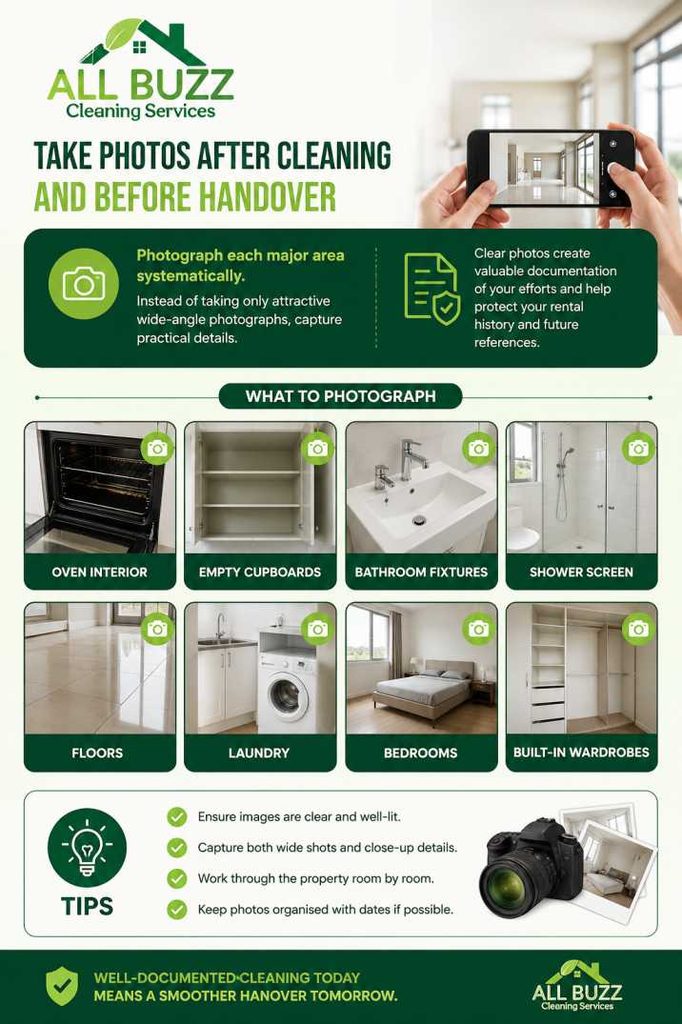
Take Photos After Cleaning and Before Handover
Photograph each major area systematically.
Instead of taking only attractive wide-angle photographs, capture practical details.
For example:
- Oven interior
- Empty cupboards
- Bathroom fixtures
- Shower screen
- Floors
- Laundry
- Bedrooms
- Living areas
- Built-in wardrobes
Make sure the images are clear enough to show the condition.
This does not guarantee that every future disagreement will be resolved in your favour, but it creates useful documentation of your efforts.
Common Mistakes Tenants Make Before Moving Out
Even tenants who clean regularly can make mistakes during an end-of-lease clean.
Mistake 1: Cleaning Only What Is Visible
Furniture and belongings can hide dirt for months.
Once everything has been removed, previously concealed areas become visible.
Better approach: Clean the property after most belongings have been removed, while leaving enough time to correct anything you find.
Mistake 2: Forgetting Appliances
An oven may look clean from the outside while being heavily soiled internally.
Likewise, cupboards, drawers and rangehood filters can be overlooked.
Better approach: Include every appliance and storage area listed in your cleaning requirements.
Mistake 3: Leaving Cleaning Until the Last Few Hours
Moving day is unpredictable.
Delays with removalists, keys, transport or your new property can quickly consume your available time.
Better approach: Start several days before the final handover where possible.
Mistake 4: Assuming Professional Cleaning Guarantees Your Bond
This is an important misconception.
Hiring End of Lease Cleaners Perth does not automatically guarantee a full bond refund, because cleaning is only one component of the overall tenancy condition.
There may be legitimate issues involving damage, maintenance, unpaid amounts or other tenancy matters.
A reputable cleaning provider should therefore avoid making unrealistic promises.
Mistake 5: Ignoring the Entry Condition Report
The property should generally be considered in the context of its documented starting condition.
Aged carpet, existing marks or pre-existing damage should not simply be assumed to be the tenant’s responsibility.
Better approach: Compare the entry condition report with the property’s current condition and retain your own documentation.
Expert Tips for a Better End-of-Lease Clean
Experienced cleaners and property managers tend to see the same avoidable problems repeatedly. A few practical habits can make the process much easier.
Work From a Room-by-Room Checklist
Do not rely on memory.
Create sections for:
- Kitchen
- Bathrooms
- Bedrooms
- Living areas
- Laundry
- Hallways
- Storage
- Windows
- Floors
- Outdoor areas where applicable
Tick off each area only after checking it properly.
Leave the Floors Until Near the End
Floor cleaning is often more effective after furniture and belongings have been removed.
If you clean floors too early, moving boxes and bags can immediately create new dirt.
Do Not Forget High-Touch Areas
Door handles, switches, cupboard handles and frequently touched surfaces can accumulate grime.
These areas take relatively little time to clean but contribute significantly to the overall presentation.
Allow Extra Time for Older Properties
Older homes can require more cleaning because of accumulated dust, aged surfaces, stubborn residue and areas that may not have received detailed cleaning for some time.
That does not necessarily mean they require expensive treatment. It means you should allow realistic time rather than assuming every property will take the same amount of work.
Ask What Is Actually Included
Before hiring a cleaning company, clarify the scope.
Ask whether the service includes items such as:
- Oven cleaning
- Windows
- Carpet cleaning
- Cupboard interiors
- Wall spot cleaning
- Garage areas
- Outdoor areas
- Blinds
- High-access areas
This prevents misunderstandings about what has and has not been included in the quoted service.
When Should You Hire Vacate Cleaners Perth?
Timing depends on your moving schedule, property size and cleaning requirements.
For many tenants, booking the clean after belongings have been removed is practical because cleaners can access areas that were previously blocked.
If carpet cleaning or other specialist services are required, schedule them as part of the overall handover plan rather than treating them as an afterthought.
A sensible timeline might look like this:
Several days before: Review the lease and exit requirements.
1–2 days before: Remove most belongings and complete minor personal cleaning.
Cleaning day: Complete the detailed end-of-lease clean.
After cleaning: Inspect the property and photograph the finished condition.
Handover: Return keys and complete the required exit process.
The exact timeline will depend on your tenancy arrangements.
How Professional Cleaning Protects Your Rental History
Professional cleaning is not a shortcut around good tenancy practices. Instead, it can support the final stage of responsible renting.
When the property is thoroughly cleaned and properly documented, you reduce the likelihood of avoidable complaints about obvious cleanliness issues.
That can support a smoother Lease Completion.
It can also help preserve a consistent record of responsible property care, which may be useful when future property managers assess your Tenant Reputation.
The key distinction is this:
Cleaning cannot guarantee a positive Rental History—but neglecting cleaning can create an avoidable negative issue.
That is why professional cleaning can be a sensible investment when the cost of a last-minute dispute, missed handover deadline or poor reference could be considerably greater.
A Practical End-of-Lease Cleaning Checklist
Before handing back the property, work through this checklist.
Kitchen
- Clean oven interior and exterior
- Clean cooktop
- Wipe rangehood
- Clean cupboards and drawers
- Wipe splashbacks
- Clean sink and taps
- Wipe benches
- Remove visible grease and food residue
Bathrooms
- Clean toilets
- Clean shower
- Remove soap residue
- Clean shower screens
- Clean mirrors
- Wipe vanity
- Clean taps
- Clean floors
Bedrooms and Living Areas
- Vacuum floors
- Mop hard floors where appropriate
- Dust skirting boards
- Clean accessible doors and handles
- Clean wardrobes
- Remove cobwebs
- Check walls for removable marks
Final Handover
- Remove all personal belongings
- Remove rubbish
- Check storage areas
- Review the entry condition report
- Take photographs
- Confirm key-return arrangements
- Keep cleaning documentation
Final Thoughts:
Moving out is more than packing boxes and returning keys. It is the final stage of your tenancy, and the way you leave the property can contribute to the overall record associated with that rental.
A detailed clean helps present the property properly, reduces avoidable cleaning-related issues and supports a more organised handover.
For tenants who do not have the time, equipment or confidence to complete the work themselves, Vacate Cleaners in Perth can provide practical assistance with the detailed cleaning involved in a move-out.
The broader lesson is simple: Protects Your Rental History is not about one cleaning appointment. It is about making responsible decisions throughout the tenancy and finishing the lease carefully.
A clean property, appropriate documentation, clear communication and attention to the tenancy requirements can all contribute to a smoother Lease Completion and help you move toward your next rental with greater confidence.
For Perth tenants preparing to move, All Buzz Cleaning can help take the detailed cleaning workload off your moving checklist, allowing you to focus on the many other responsibilities that come with relocating.
Frequently Asked Questions
1. Can professional cleaning guarantee a positive rental reference?
No. A cleaning service cannot guarantee what a landlord or property manager will say in a reference. Rental references can consider several aspects of a tenancy, including payment history, communication, property care and compliance with the lease.
However, professional cleaning can help eliminate one common source of end-of-tenancy complaints: poor property presentation. It is best viewed as one part of a broader responsible-tenancy strategy rather than a guarantee of a positive reference.
2. Is professional cleaning necessary when I already clean my rental regularly?
Not always. Tenants who maintain their property carefully may be able to complete the final clean themselves.
The difference is usually the level of detail and available time. End-of-lease cleaning involves areas that may not receive regular attention, such as oven interiors, cupboard interiors, skirting boards, shower screens and empty wardrobes.
If you have enough time, suitable equipment and a clear checklist, DIY cleaning can be an option. Professional cleaners become particularly useful when the property is large, the tenancy is ending under time pressure, or detailed cleaning is difficult to complete yourself.
3. What should I tell End of Lease Cleaners Perth before they start?
Provide as much relevant information as possible.
Tell the cleaner the property type, approximate size, number of bathrooms, carpeted areas and any particularly difficult areas. Also explain whether there are specific cleaning requirements from the property manager.
Ask for a clear scope of work so you understand what is included and whether specialist services, such as carpet or window cleaning, are separate.
Clear communication at the beginning reduces the chance of discovering at the end that an important area was not included.
4. How can cleaning affect my future Rental References?
Cleaning can affect references indirectly. A property manager who finds the property significantly dirty at handover may raise the issue with the tenant or record it as part of the tenancy history.
Conversely, returning a property clean and well-presented helps demonstrate that you took reasonable care of the premises.
It is important to remember that a reference is based on the overall tenancy, not simply whether you hired a cleaning company. Consistent rent payments, respectful communication, timely maintenance reporting and compliance with tenancy obligations remain important.
5. What should I do if my property manager says additional cleaning is required?
First, ask for the concerns to be identified clearly and compare them with your tenancy requirements and the property’s entry condition documentation.
If appropriate, photograph the relevant areas and keep copies of any written communication. If you believe the request concerns something that was already documented as pre-existing or relates to ordinary wear and tear, seek appropriate tenancy advice rather than immediately accepting responsibility.
If the issue genuinely relates to cleaning you missed, addressing it promptly may be the simplest way to complete the handover.