

September 4, 2026
Why High-Touch Areas Are Critical During Professional Vacate Cleaning
Moving out of a rental property involves more than removing furniture and giving the floors a quick clean. When a property is being handed back to a landlord, property manager or new occupant, small details can influence how clean the entire home appears.
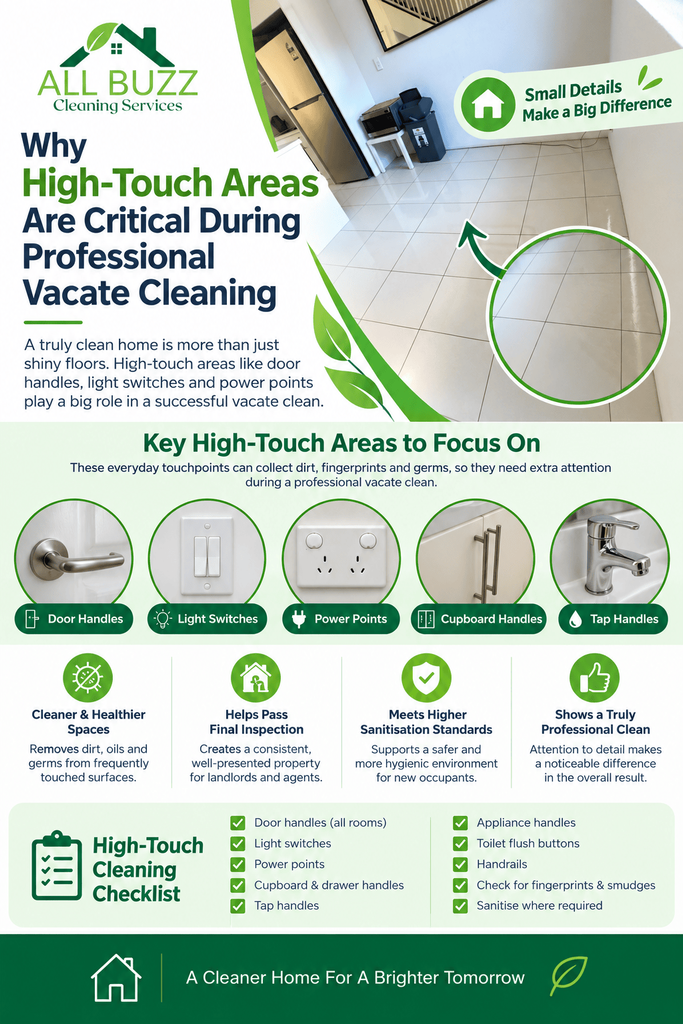
One of the most frequently overlooked details is high-touch areas. Door handles, light switches, power points and cupboard handles may be relatively small, but they are among the surfaces people interact with repeatedly. They can collect fingerprints, skin oils, dust, grime and other residues over time.
This is why experienced cleaners give these areas particular attention during House Vacate Cleaning Perth. A property can have spotless floors and polished bathrooms, yet still look unfinished if commonly touched surfaces are visibly dirty.
For tenants comparing cleaning options, it is also important to understand that cheap vacate cleaning Perth does not necessarily mean choosing the lowest advertised price. The better question is whether the cleaning covers the details that matter during a final inspection.
This guide explains why high-touch areas deserve attention, what professional cleaners look for, common mistakes tenants make and how a thorough vacate clean can leave a property genuinely ready for handover.
What Are High-Touch Areas?
High-touch areas are surfaces that people handle or contact frequently during normal use of a home.
Examples include:
- Door handles and knobs
- Light switches
- Power points and surrounding plates
- Cupboard handles
- Drawer pulls
- Tap handles
- Toilet flush buttons or handles
- Appliance handles
- Remote controls, where included in the cleaning scope
- Stair railings
- Frequently used handrails
These surfaces may not accumulate the same amount of visible dirt as floors or kitchen benches, but repeated contact can leave behind oils, fingerprints, dust and grime.
During a move-out clean, the issue is not simply hygiene. Visible marks on frequently handled surfaces can make a property appear less thoroughly cleaned.
Why High-Touch Areas Matter During House Vacate Cleaning Perth
A vacate clean has a different objective from an ordinary weekly house clean.
Regular cleaning is mainly about maintaining a comfortable living environment. Vacate cleaning is about bringing the property back to a clean, presentable condition after the tenant has removed their belongings.
That changes the cleaner’s priorities.
A professional cleaner assessing a vacant property will often work systematically through each room rather than cleaning only the surfaces that are immediately noticeable.
High-touch points matter for several reasons.
1. They are highly visible during inspections
Property managers frequently move through the property opening doors, cupboards and drawers and switching lights on and off.
That means they naturally interact with many of the surfaces that tenants might overlook.
A cleaner may spend considerable time polishing a kitchen benchtop, but if the cupboard handles still have greasy fingerprints, the overall impression can suffer.
2. They collect oils and residue
Human skin naturally produces oils. Frequent handling transfers those oils to surfaces.
Over time, this can create:
- Smudges
- Sticky areas
- Darkened edges
- Fingerprints
- Dust accumulation
- Greasy residue
This is especially noticeable on stainless steel, glossy finishes, white plastic and painted surfaces.
3. They can reveal rushed cleaning
One of the clearest signs of an incomplete vacate clean is inconsistency.
For example, imagine a vacant kitchen where:
- The benchtop is clean.
- The splashback is polished.
- The floor has been vacuumed and mopped.
- The inside of cupboards has been wiped.
But the cupboard handles remain greasy.
The kitchen may still look as though it has been cleaned quickly rather than thoroughly.
High-Touch Areas That Professional Cleaners Should Not Overlook
Not every property has the same cleaning requirements, but several areas consistently deserve attention during a detailed vacate clean.
Door Handles
Door handles are among the most frequently touched surfaces in a home.
They can accumulate fingerprints, body oils, dust and grime around the edges and mounting points.
During a professional clean, door handles should be checked throughout the property, including:
- Bedroom doors
- Bathroom doors
- Laundry doors
- Pantry doors
- Storage areas
- Internal garage access doors
- Sliding or hinged doors where applicable
The correct cleaning method depends on the handle material and finish. Aggressive chemicals or abrasive pads can damage plated, painted or delicate surfaces.
A good cleaner therefore does not simply spray every handle with the same product. They identify the surface first and use an appropriate cleaning method.
Light Switches
Light switches are another commonly overlooked area.
People touch them several times a day, but because they are small and located on walls, they are easy to miss during general cleaning.
Look closely around switches and you may find:
- Fingerprints
- Dust
- Smudges
- Grease marks
- Marks around the switch plate
Cleaning should be performed carefully because switches are connected to electrical systems.
The aim is to clean the exterior surface safely without introducing excessive moisture around the electrical components.
This is one area where careful technique is more important than simply using more cleaning product.
Power Points
Power points can collect dust around their edges and may show marks from everyday use.
They should be cleaned carefully as part of the final detail stage.
A professional approach generally means:
- Inspecting the condition of the outlet.
- Removing loose dust from the surrounding surface.
- Cleaning the exterior face and surrounding area using a suitable method.
- Avoiding excessive moisture.
- Checking for visible marks after cleaning.
Cleaning products should never be allowed to penetrate electrical openings.
If an outlet is damaged, loose, cracked or otherwise unsafe, cleaning is not a substitute for electrical repair. That situation should be reported to the appropriate person rather than attempting to fix the electrical component during cleaning.
Cupboard Handles
Cupboard handles are particularly important in kitchens and laundries.
Cooking produces grease and airborne residue, while repeated opening and closing transfers skin oils to handles.
Even when cupboard doors appear clean, handles may remain noticeably greasy.
A thorough vacate clean should consider:
- Handle fronts
- Undersides
- Mounting points
- Edges around handles
- Drawer pulls
- Pantry handles
This detail can make a surprisingly large difference to the finished appearance of a kitchen.
Sanitisation Standards and High-Touch Cleaning
Cleaning and sanitisation are related but not identical processes.
Cleaning removes visible dirt, dust, grease and other contaminants from a surface.
Sanitisation involves reducing microorganisms on a surface to a level considered acceptable under the relevant product or procedure.
This distinction matters because people sometimes assume that a surface is automatically sanitised simply because it looks clean.
A professional cleaner should select products and procedures according to the surface, contamination level and intended outcome.
For high-touch areas, a sensible process may involve:
- Removing visible dirt.
- Cleaning the surface appropriately.
- Applying a suitable sanitising or disinfecting product when required.
- Observing the product’s label directions.
- Allowing the required contact time where applicable.
- Following any required ventilation or safety precautions.
More chemical does not automatically mean better cleaning.
Product instructions, surface compatibility and correct application are more important than excessive product use.
Why Cleaning Order Matters
Experienced cleaners know that the order of work can affect the final result.
If high-touch surfaces are cleaned too early and then handled repeatedly during the rest of the cleaning process, they may need to be checked again.
A practical workflow is often:
Remove belongings → dust and clean surfaces → clean larger areas → detail high-touch points → final inspection
The exact sequence can vary according to the property and cleaning system, but the principle is useful: high-touch areas should be checked during the final detailing stage rather than forgotten as an afterthought.
How High-Touch Cleaning Supports an End of Lease Vacate Clean Perth
An End of Lease Vacate Clean Perth is usually expected to cover more than basic surface cleaning.
The property needs to be assessed as a complete space.
Consider a typical bedroom.
A rushed clean might involve:
- Vacuuming the floor
- Wiping the wardrobe
- Dusting visible furniture surfaces
A detailed approach also checks:
- Door handle
- Light switch
- Power point
- Skirting boards
- Wardrobe handles
- Window areas
- Corners and edges
These details help create consistency throughout the room.
The same principle applies to bathrooms, kitchens, laundries, hallways and living areas.
Practical High-Touch Cleaning Checklist
If you are preparing a rental property for handover, walk through the property room by room.
Entry and Hallways
Check:
- Main door handle
- Internal door handles
- Light switches
- Power points
- Handrails
- Security-related touch surfaces where appropriate
Kitchen
Check:
- Cupboard handles
- Drawer handles
- Appliance handles
- Tap handles
- Light switches
- Power point surrounds
- Pantry handles
Bathroom
Check:
- Door handle
- Light switches
- Tap handles
- Shower controls
- Vanity handles
- Toilet flush mechanism
- Cabinet handles
Bedrooms
Check:
- Door handles
- Light switches
- Power points
- Wardrobe handles
- Built-in storage handles
Laundry
Check:
- Door handle
- Cupboard handles
- Appliance handles
- Light switches
- Power points
- Tap handles
This simple walkthrough can identify many of the small details that are otherwise easy to overlook.
When Cheap Vacate Cleaning Perth Can Become a False Economy
Searching for cheap vacate cleaning Perth is understandable, particularly when moving already involves bond payments, removal costs and other expenses.
However, comparing cleaners solely on headline price can be misleading.
A lower price may reflect:
- A smaller cleaning scope
- Fewer included tasks
- Limited time allocated to the property
- Additional charges for certain areas
- Basic rather than detailed cleaning
- Exclusions for ovens, windows or internal cupboards
This does not mean an inexpensive cleaner is automatically poor quality.
Instead, compare what is included for the quoted price.
Ask whether the service covers detailed areas such as:
- Door handles
- Light switches
- Cupboard handles
- Internal cupboards
- Skirting boards
- Bathroom fixtures
- Kitchen appliances
- Floors
- Windows, if required
The cheapest quote can become expensive if important cleaning tasks are treated as extras.
Common High-Touch Cleaning Mistakes
Mistake 1: Cleaning only what is visibly dirty
Some surfaces look clean from a distance but reveal fingerprints or residue up close.
Better approach: inspect high-touch points individually during the final walkthrough.
Mistake 2: Using one chemical on every surface
Different materials respond differently to cleaning products.
Better approach: check the surface and product compatibility before cleaning.
Mistake 3: Using too much moisture around electrical fittings
Light switches and power points require particular care.
Better approach: clean their external surfaces carefully and avoid introducing liquid into electrical openings.
Mistake 4: Forgetting undersides and edges
Cupboard handles and drawer pulls can accumulate residue underneath where they are frequently touched.
Better approach: inspect the complete handle rather than only the front.
Mistake 5: Assuming sanitisation means sterilisation
Ordinary household cleaning does not make a surface sterile.
Better approach: understand whether the requirement is cleaning, sanitising or disinfecting and follow the relevant product instructions.
Mistake 6: Leaving the final inspection until after everything else
Small missed areas are much harder to identify when the cleaner has already packed away equipment.
Better approach: reserve time for a final room-by-room inspection.
Expert Tips for a More Complete Vacate Clean
Start with a room-by-room checklist
Instead of relying on memory, use a consistent checklist.
This reduces the chance of missing small but repetitive tasks.
Use natural light where possible
Fingerprints and streaks can be difficult to see under artificial lighting.
Opening curtains or blinds during the final inspection can reveal marks that otherwise remain hidden.
Look from different angles
A surface may appear clean when viewed straight on but show streaks when light reflects across it.
This is particularly useful for:
- Glossy cabinetry
- Glass
- Stainless steel
- Painted doors
- Polished surfaces
Separate cleaning from maintenance
Cleaning removes dirt. It does not necessarily repair damage.
Examples include:
- Peeling paint
- Broken handles
- Cracked switch plates
- Damaged cabinetry
- Scratched flooring
These issues should be documented or reported rather than concealed through cleaning.
Pay attention to touch frequency
Not every surface requires the same level of attention.
Prioritise areas that are repeatedly touched throughout normal daily use.
Real-World Example: Why Small Details Matter
Consider a three-bedroom rental property being prepared for final inspection.
The cleaner completes the major tasks:
- Floors are vacuumed and mopped.
- Bathroom surfaces are cleaned.
- Kitchen cabinetry is wiped.
- Oven cleaning is completed.
- Windows are cleaned where included.
During the final walkthrough, several cupboard handles still feel slightly greasy.
The cleaner goes back over the handles and checks the drawer pulls, pantry handle and appliance handles.
The difference may seem minor, but the kitchen now feels more consistent.
This is a useful lesson from practical vacate cleaning: the final result is often determined by dozens of small details rather than one dramatic cleaning task.
How Tenants Can Check High-Touch Areas Before Handover
You do not need specialist equipment to conduct a basic final check.
Walk through the property and physically inspect the areas you touch.
Open every major cupboard.
Switch lights on and off.
Open doors.
Check drawers.
Look at the handles from different angles.
Then ask:
- Does the handle feel greasy?
- Is there visible dust around the switch?
- Are there fingerprints on the door?
- Is the power point surround dusty?
- Are kitchen handles free from residue?
- Are there obvious streaks or marks?
This simple process can catch issues before the property manager does.
What Professional Cleaners Should Communicate Clearly
Trustworthy cleaning providers should be transparent about their scope.
Before booking, clarify:
- What rooms are included?
- Are internal cupboards included?
- Are appliance interiors included?
- Are windows included?
- Are high-touch areas specifically detailed?
- Are sanitising treatments included or charged separately?
- Are heavily soiled areas subject to additional fees?
- What happens if the property requires more time than initially estimated?
Clear communication prevents disagreements later.
A good quote should make it reasonably easy to understand what you are paying for.
Conclusion: Small Touchpoints Can Make a Big Difference
A successful vacate clean is not simply about making the largest surfaces look clean. It is about creating a consistent level of cleanliness across the entire property.
High-Touch Areas such as door handles, light switches, power points and cupboard handles deserve particular attention because they experience frequent contact and can retain visible residue even when the surrounding area looks spotless.
For tenants arranging House Vacate Cleaning Perth, understanding these details makes it easier to compare cleaning services realistically and prepare a property for handover. Whether you are considering a full professional service or researching cheap vacate cleaning Perth, look beyond the advertised price and check the actual scope of work.
A thorough final clean is built from many small details. When those details are handled carefully, the property is more likely to look complete, cared for and ready for its next inspection.
Frequently Asked Questions
1. Why are door handles important during vacate cleaning?
Door handles are touched repeatedly and can accumulate fingerprints, skin oils, dust and grime. They are also surfaces that property managers naturally interact with while inspecting rooms. Cleaning them properly helps create a consistent, finished appearance throughout the property.
2. Should light switches and power points be sanitised?
They can be cleaned and, where appropriate, sanitised using a product and method suitable for the surface. However, electrical fittings require care. Excessive moisture should be avoided, and liquid should never be allowed to enter electrical openings. Cleaning should also never be confused with electrical repair.
3. Does an End of Lease Vacate Clean Perth include high-touch areas?
It depends on the individual cleaner’s scope of work. Many detailed vacate cleaning checklists include doors, handles, switches and other frequently touched surfaces, but tenants should confirm the inclusions before booking rather than assuming every provider offers the same service.
4. Is cheap vacate cleaning Perth always lower quality?
No. A lower-priced service is not automatically inferior. The important consideration is what the price includes, how much cleaning time is allocated and whether detailed areas are covered. Comparing cleaning scope, exclusions and additional charges provides a more useful comparison than price alone.
5. What is the best way to check high-touch areas before a final inspection?
Conduct a room-by-room walkthrough and physically test the surfaces people regularly touch. Open cupboards and drawers, check door handles, inspect switches and look for fingerprints or residue under good lighting. A final checklist is useful because repetitive small tasks are among the easiest things to overlook.