


September 2, 2026
The Professional Cleaning Process: From Initial Assessment to Final Inspection
Moving out of a rental property can be deceptively stressful. The furniture may be gone, the boxes may be packed, and the walls may look reasonably clean—but a final inspection can reveal grease around the cooktop, dust on skirting boards, marks on doors, soap residue in the bathroom, or grime in areas that were hidden behind appliances.
This is where Vacate Cleaners Perth can make a practical difference. A proper end-of-lease clean is not simply about making a property look tidy. It involves a structured process designed to address the areas a tenant, property manager, landlord, or final inspector is likely to assess.
For tenants researching affordable vacate cleaning Perth, understanding how professional cleaners actually approach the job can help you compare services more intelligently. Price matters, but so do scope, preparation, attention to detail, inspection procedures, and the cleaner’s ability to identify problem areas before the final handover.
This guide explains the professional cleaning process from the initial Site Assessment through the Cleaning Workflow and Quality Assurance stage, with practical insights into what experienced cleaners look for and why each stage matters.
Why Vacate Cleaning Requires More Than Ordinary House Cleaning
Regular house cleaning and end-of-lease cleaning have different objectives.
Routine cleaning is generally about maintaining acceptable cleanliness over time. You might vacuum the floors, wipe kitchen surfaces, clean the bathroom and remove visible dust. A vacate clean, however, is performed when the property is being returned to the owner or property manager.
That changes the standard.
A vacate cleaning checklist may cover areas that are easily overlooked during normal household cleaning, including:
- Skirting boards and door frames
- Internal doors and handles
- Window sills and accessible window tracks
- Light fittings and switches
- Kitchen cupboards and drawers
- Oven and cooktop surfaces
- Rangehood filters and surrounding areas
- Bathroom grout and shower screens
- Toilets, basins and tapware
- Built-in wardrobes
- Floors beneath furniture
- Cobwebs in corners and ceilings
- Visible dust on vents and ledges
The exact cleaning requirements can vary depending on the property, lease conditions, condition report and expectations of the managing agent.
Experienced Perth Vacate Cleaners therefore do not treat every property identically. They assess the premises first and determine where effort is most needed.
Understanding the Professional Cleaning Process
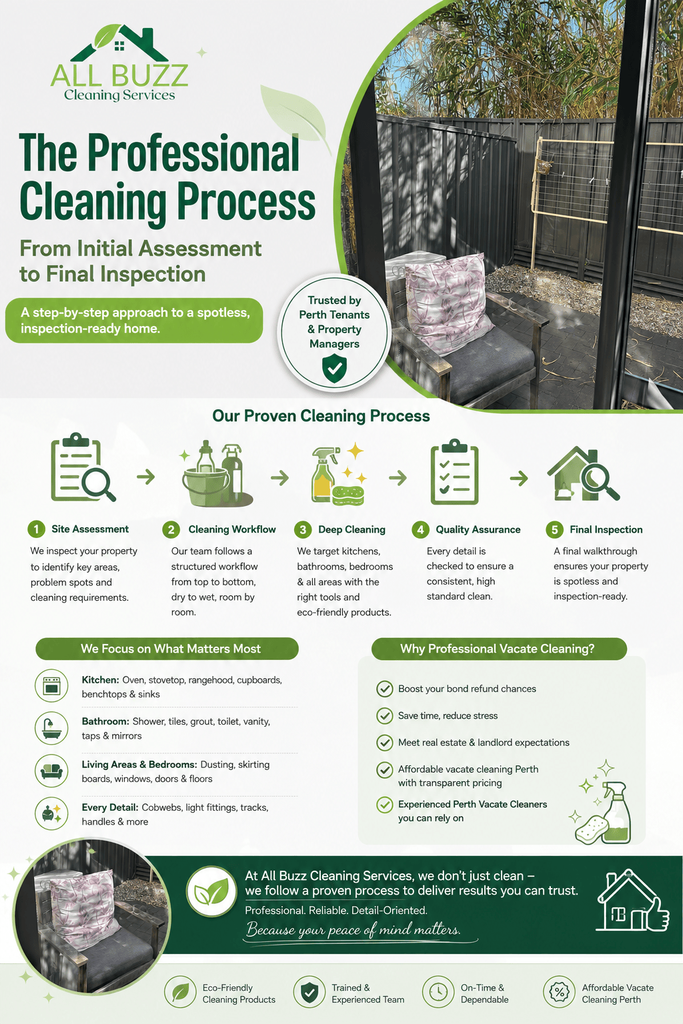
A reliable Professional Cleaning Process usually follows a logical sequence rather than a random room-by-room approach.
The typical stages are:
- Property and condition assessment
- Scope confirmation and preparation
- Cleaning workflow planning
- Detailed cleaning
- Targeted treatment of problem areas
- Self-inspection
- Quality assurance
- Final inspection and touch-ups
The benefit of this approach is consistency. Instead of relying on memory or visual impressions alone, cleaners can work through a defined process and verify that important areas have been addressed.
Site Assessment: The First Step Before Cleaning Begins
A thorough Site Assessment is one of the most valuable parts of a professional vacate clean.
Before cleaning starts, the property should be assessed for its size, condition, surfaces, fixtures and areas requiring additional attention.
What Cleaners Look for During a Site Assessment
An experienced cleaner may identify:
- Heavy grease accumulation in the kitchen
- Soap scum or mineral deposits in bathrooms
- Stubborn marks on walls or doors
- Excessive dust accumulation
- Pet hair in carpets or corners
- Mould-like staining requiring careful treatment
- Built-up grime around taps and fixtures
- Dirty window tracks
- Oven residue
- Heavily soiled flooring
- Damage that cannot reasonably be removed through cleaning
This last point is particularly important.
Cleaning cannot fix every property defect.
For example, a cleaner may be able to remove surface grime from a wall but cannot necessarily repair chipped paint, deep scratches, damaged laminate or permanently discoloured materials.
A trustworthy cleaner should distinguish between dirt that can be cleaned and damage or deterioration that requires repair.
A Practical Example
Consider a tenant who has lived in an apartment for several years. The kitchen appears clean at first glance, but the oven has accumulated baked-on grease and the rangehood has a layer of oil residue.
A quick standard clean might wipe the external surfaces and leave it there.
During a proper assessment, however, these areas would be identified as high-priority tasks. This allows the cleaning team to allocate sufficient time and use appropriate methods rather than discovering the problem at the end of the appointment.
Preparing the Property for an Efficient Cleaning Workflow
Good preparation can significantly influence the quality of the final clean.
Ideally, the property should be empty of personal belongings before the cleaners begin. Boxes, clothing, food, rubbish and miscellaneous items can prevent access to surfaces and make it difficult to determine whether an area has been properly cleaned.
Before the appointment, tenants should consider:
- Removing all personal possessions
- Disposing of unwanted rubbish
- Emptying kitchen cupboards and drawers
- Clearing bathroom cabinets
- Removing food from the refrigerator
- Ensuring appliances are accessible
- Checking that water and electricity are available
- Providing access instructions
- Informing cleaners about specific problem areas
This is especially useful for larger homes where several rooms need attention.
An empty property gives cleaners a much clearer working environment and reduces the chance of hidden areas being missed.
Cleaning Workflow: Why the Order of Work Matters
A professional Cleaning Workflow is more than a checklist. It is the sequence in which cleaning tasks are completed.
A poorly organised workflow can cause unnecessary rework. For example, if a cleaner thoroughly vacuums a room before dusting ceiling vents, particles may fall onto the newly cleaned floor.
A more logical approach generally moves:
top to bottom, dry to wet, and clean areas toward dirtier areas.
1. High-Level Dusting
Cleaning may begin with higher surfaces such as:
- Ceiling corners
- Cobwebs
- Light fittings
- Air vents
- Upper cupboards
- Tops of doors
- High ledges
This prevents dust from settling on surfaces that have already been cleaned.
2. Bedrooms and Living Areas
The team can then address:
- Built-in wardrobes
- Shelving
- Doors and handles
- Skirting boards
- Window sills
- Accessible tracks
- Floors
- Visible marks on appropriate surfaces
If carpets are included in the cleaning scope, their condition should be assessed separately because ordinary vacuuming and professional carpet treatment are different services.
3. Kitchen
The kitchen often receives particularly close attention because grease and food residue can accumulate quickly.
Common tasks include cleaning:
- Benchtops
- Splashbacks
- Cooktops
- Oven interiors
- Oven doors
- Rangehood surfaces
- Cupboards
- Drawers
- Sinks
- Tapware
- Accessible appliances
- Floors
The cleaner should select products according to the surface. Stronger chemicals are not automatically better. Incorrect products can damage stainless steel, stone, painted finishes or delicate coatings.
4. Bathrooms and Toilets
Bathrooms require a combination of cleaning and careful surface treatment.
Areas commonly checked include:
- Shower screens
- Tiles
- Grout
- Baths
- Basins
- Tapware
- Toilets
- Vanity units
- Mirrors
- Floors
- Corners and edges
Mineral deposits can be particularly stubborn. Their removal may require an appropriate descaling method rather than simply wiping the affected area.
5. Floors and Final Surface Cleaning
Once higher-level cleaning has been completed, floors can receive their final treatment.
The appropriate method depends on whether the property contains:
- Tile
- Timber
- Laminate
- Vinyl
- Concrete
- Carpet
- Other specialist flooring
Again, professional cleaning is not about using the strongest available chemical. It is about matching the method to the material.
Problem Areas That Often Need Extra Attention
Not every part of a property becomes equally dirty.
Experienced cleaners know that certain areas repeatedly create problems during final inspections.
Kitchen Grease
Grease can accumulate around cooktops, splashbacks, rangehoods and cabinet edges. A surface may look clean from a distance but still feel greasy when touched.
Bathroom Residue
Soap scum, toothpaste residue, hair and mineral deposits can remain around basins and shower areas.
Skirting Boards
Because skirting boards are low and often hidden behind furniture, they are frequently overlooked during routine cleaning.
Door Handles and Switches
These high-contact surfaces can develop visible marks and grime over time.
Window Tracks
Accessible window tracks can collect dust, insects and debris, particularly when windows remain closed for long periods.
Behind and Under Appliances
Where safe and reasonably accessible, areas behind or beneath appliances can contain significant accumulated dust and food debris.
These areas demonstrate why vacate cleaning requires a systematic approach rather than simply making rooms appear presentable.
Quality Assurance: The Difference Between Cleaning and Checking
Cleaning a property and inspecting the cleaning are two separate tasks.
A strong Quality Assurance process involves reviewing the completed work before considering the job finished.
This final review should ideally be performed using the same perspective as a property manager or landlord.
A Practical Final Inspection Checklist
The cleaner can move through the property and check:
Kitchen
- Are cupboards free from visible debris?
- Is the cooktop free from grease?
- Has the oven been addressed according to the agreed scope?
- Are sinks and taps clean?
- Are splashbacks free from obvious residue?
Bathrooms
- Are mirrors streak-free?
- Are shower surfaces clean?
- Is visible soap residue removed?
- Are toilets and basins clean?
- Are floors free from hair and debris?
Bedrooms and Living Areas
- Are skirting boards visibly clean?
- Are doors and handles wiped?
- Are built-in wardrobes clean?
- Are accessible window areas free from obvious dust?
Whole Property
- Are cobwebs removed?
- Are floors properly cleaned?
- Are obvious fingerprints or marks addressed?
- Are rubbish and cleaning materials removed?
- Has every agreed area been completed?
This final pass is valuable because cleaners can become accustomed to the appearance of a room after working in it for several hours. A deliberate inspection helps identify small omissions that may otherwise go unnoticed.
Why Final Inspection Should Be Done in Good Lighting
Lighting can reveal problems that are difficult to see under dim conditions.
Natural daylight is particularly useful for identifying:
- Streaks on glass
- Dust on dark surfaces
- Fingerprints
- Residue on stainless steel
- Marks on doors
- Hair on bathroom floors
- Dust along skirting boards
A practical tip is to inspect the property from different angles rather than standing directly in front of each surface.
Light reflecting across a surface can reveal streaks or residue that are invisible when viewed straight on.
Affordable Vacate Cleaning Perth: What Should You Actually Compare?
When searching for affordable vacate cleaning Perth, it is tempting to compare companies solely by the advertised price.
That can be misleading.
A lower price may reflect a smaller cleaning scope, fewer included areas, limited time allocation or additional charges for tasks that another provider includes.
Instead, compare:
- What rooms are included?
- Is the oven included?
- Are cupboards and drawers included?
- Are internal windows included?
- Are window tracks included?
- Is carpet cleaning separate?
- Are wall marks included?
- Are difficult stains treated separately?
- How are additional services priced?
- Is there a written checklist?
- Is a final inspection performed?
The cheapest quote is not necessarily the lowest-cost option if important tasks are excluded and need to be arranged separately.
At the same time, a higher price does not automatically mean better cleaning. Transparent scope and realistic expectations are more useful indicators.
Common Vacate Cleaning Mistakes Tenants Make
Mistake 1: Cleaning Before Everything Is Removed
Cleaning around boxes and furniture makes it harder to reach surfaces properly.
Better approach: Remove belongings first wherever possible.
Mistake 2: Assuming “Clean” Means “Damage-Free”
Cleaning cannot repair damaged paint, cracked tiles, scratched flooring or worn fixtures.
Better approach: Separate cleaning requirements from maintenance or repair issues.
Mistake 3: Leaving the Oven Until the Last Minute
Heavy oven grease can require additional time.
Better approach: Identify the oven condition during the initial assessment.
Mistake 4: Ignoring Small Details
A property can look clean overall while still having dusty skirting boards, dirty handles or residue around taps.
Better approach: Use a room-by-room checklist.
Mistake 5: Using Incorrect Cleaning Chemicals
Strong chemicals can damage some surfaces.
Better approach: Use products appropriate for the material and follow manufacturer guidance where available.
Mistake 6: Not Checking the Lease or Condition Report
The expected cleaning standard can depend on the tenancy agreement and documented condition of the property.
Better approach: Review the relevant tenancy documents before arranging cleaning.
Expert Tips for a Smoother Final Inspection
Start With the Condition Report
If you have the property’s original entry condition report, review it before cleaning. It provides useful context about the property’s documented condition when the tenancy began.
The goal is not necessarily to make every old imperfection disappear. Instead, it helps you understand what areas may need attention and what issues may be maintenance-related.
Photograph Completed Areas
Taking clear photographs after cleaning can provide a record of the property’s condition at handover.
Photographs should be well-lit and show relevant areas rather than relying exclusively on close-up images.
Prioritise High-Visibility Areas
If time is limited, focus first on areas that are commonly inspected:
- Kitchen
- Bathrooms
- Floors
- Windows and sills
- Doors
- Skirting boards
- Built-in storage
However, prioritising does not mean permanently ignoring less visible areas if they are part of the agreed cleaning scope.
Allow Time for Corrections
Do not schedule the clean immediately before handing back the keys if you can avoid it.
Allowing some time between cleaning and handover provides an opportunity to identify issues and arrange touch-ups.
What Experienced Perth Vacate Cleaners Do Differently
The most useful difference is usually not a secret cleaning product or complicated technique.
It is process discipline.
Experienced Perth Vacate Cleaners tend to recognise patterns. They know that a property can appear clean while still having residue in corners, dust on horizontal surfaces or grease around kitchen fixtures.
They also understand the limitations of cleaning.
For example, if a cleaner encounters a deeply scratched floor, they should not imply that cleaning will restore the original finish. If a wall has deteriorated paint, they should distinguish that from removable surface dirt.
That transparency is part of professional service.
A trustworthy cleaning process should make it clear:
- What is included
- What is excluded
- What can reasonably be cleaned
- What may require additional treatment
- What is likely to remain because it is damage rather than dirt
These distinctions help set realistic expectations for everyone involved.
When a Professional Vacate Clean Makes the Most Sense
Professional vacate cleaning can be particularly useful when:
- The property is large
- The tenancy lasted several years
- The kitchen has significant grease buildup
- Bathrooms have substantial mineral deposits
- There are many built-in cupboards
- The tenant has limited time before handover
- Multiple people are involved in the move
- A detailed final inspection is expected
- The tenant wants a structured cleaning process
It may be less necessary for a very small property that has been meticulously maintained and where the tenant has sufficient time and equipment to complete the required cleaning themselves.
The important point is to choose based on the property’s condition and your available time—not simply on the assumption that every rental requires the same level of service.
Final Takeaway: A Good Vacate Clean Is a Process, Not a Quick Wipe-Down
A successful end-of-lease clean starts well before the first spray bottle is opened.
The strongest approach combines a careful Site Assessment, a logical Cleaning Workflow, detailed cleaning methods and a final Quality Assurance inspection.
For tenants researching affordable vacate cleaning Perth, understanding this process makes it easier to evaluate quotes, identify missing tasks and set realistic expectations.
Whether you choose to clean the property yourself or hire Vacate Cleaners Perth, the principle remains the same: work systematically, pay attention to commonly overlooked areas, distinguish cleaning from property damage, and inspect the finished property before handover.
A clean-looking property is good. A property that has been methodically assessed, cleaned and checked against a clear scope is much better.
Frequently Asked Questions
1. How early should I book vacate cleaning in Perth?
Ideally, arrange the cleaning several days before your final handover date where your tenancy schedule allows it. This provides a buffer if the property needs additional attention.
Booking early is particularly sensible during busy moving periods because cleaning availability can become limited. Before confirming a booking, provide accurate information about the property’s size, number of bathrooms, flooring types and any unusually dirty areas so the cleaner can allocate an appropriate amount of time.
2. What should I check before the cleaners arrive?
Make sure personal belongings, rubbish and unwanted items have been removed. Empty cupboards and drawers that are included in the cleaning scope, clear access around appliances where appropriate, and ensure electricity and water are available.
It is also useful to identify specific concerns, such as a heavily soiled oven, bathroom mineral deposits or particular areas highlighted in the condition report.
Good preparation prevents cleaners from spending valuable time working around belongings instead of cleaning accessible surfaces.
3. Does vacate cleaning remove every mark from a rental property?
No. A professional cleaner can remove many types of surface dirt, grease and residue, but cleaning cannot guarantee the removal of permanent damage.
Examples include deep scratches, chipped paint, damaged laminate, etched glass or long-term material deterioration. Attempting to remove these aggressively can sometimes cause additional damage.
A responsible cleaner should explain when a mark appears to be beyond normal cleaning rather than promising that every imperfection will disappear.
4. Should I clean the property myself or hire Perth Vacate Cleaners?
It depends on the property’s size, condition, your available time and your confidence in completing a detailed end-of-lease checklist.
DIY cleaning may be practical for a small, well-maintained property when you have sufficient time. Professional cleaners can be useful when the property is larger, heavily soiled or requires a systematic approach across many rooms.
If you hire cleaners, compare the scope of work, not just the headline price.
5. What is the most important part of the professional cleaning process?
There is no single task that guarantees a successful result. The combination of assessment, systematic cleaning and final inspection is what makes the process reliable.
The initial assessment identifies problem areas. The cleaning workflow ensures those areas are addressed in an organised sequence. Quality assurance then provides an opportunity to catch missed details.
That final inspection is particularly valuable because small issues—such as dusty skirting boards, streaked glass or residue around fixtures—can be easy to overlook without a deliberate final check.