

October 15, 2026
Why Consistent Professional Cleaning Protects Rental Properties Throughout Their Lifecycle
A rental property needs more than occasional cleaning to remain presentable and easier to maintain. Dust builds up in corners, moisture collects in bathrooms, grease settles on kitchen surfaces, and dirt gradually works its way into carpets and flooring. Left unattended, these everyday issues can contribute to avoidable maintenance problems and make future cleaning more difficult.
For landlords and property managers, regular cleaning is a practical part of looking after a rental investment. It helps maintain a comfortable living environment, makes it easier to identify visible problems and supports the property’s presentation between tenancies.
Choosing reliable Cleaning Services Perth property owners can work with regularly can make this process more manageable. Rather than treating cleaning as a task that only matters before an inspection or after a tenant moves out, owners can build it into a broader property-care routine.
This guide explains how consistent professional cleaning supports rental properties throughout their lifecycle, which areas deserve particular attention and how to create a sensible cleaning schedule. It also explores how All Buzz Cleaning Services can support property owners who want a more organised approach to long-term property care.
Understanding the Property Lifecycle
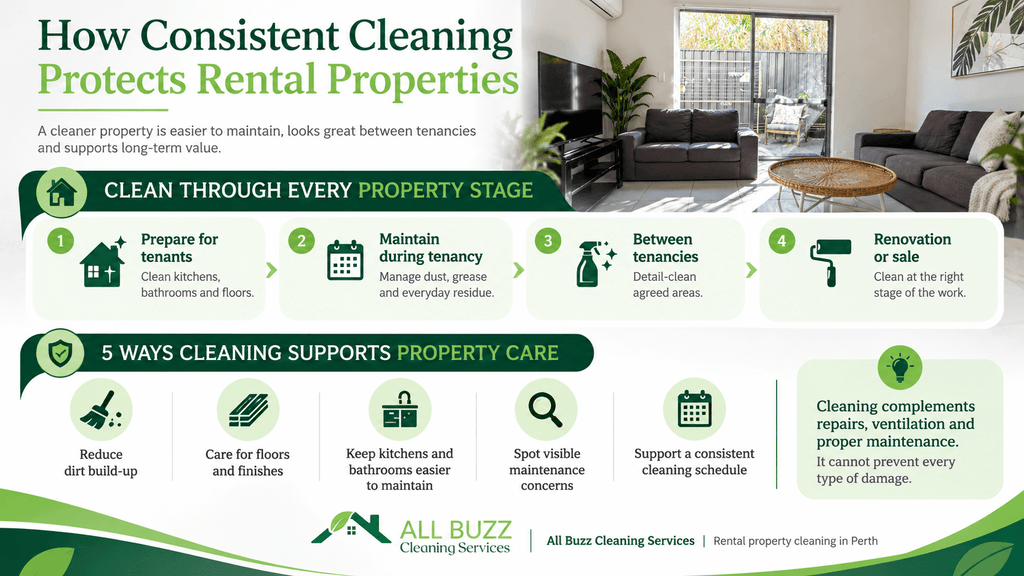
The Property Lifecycle describes the different stages a property passes through, from initial preparation and occupancy to ongoing maintenance, tenant turnover and eventual refurbishment or sale.
Each stage brings different cleaning requirements. A newly prepared rental needs a thorough initial clean. An occupied property may benefit from agreed periodic cleaning of shared or commonly used areas. A vacant property often requires detailed cleaning before new tenants move in.
Understanding these stages helps landlords plan cleaning according to the property’s actual condition rather than relying on a single approach for every situation.
1. Preparing a property for new tenants
Before a tenancy begins, the property should be clean, hygienic and ready for occupation. Kitchens, bathrooms, floors, internal windows and frequently touched surfaces deserve careful attention.
A clean starting point also makes it easier to document the property’s condition. Clear entry-condition reports and dated photographs can help distinguish pre-existing wear from changes that occur during the tenancy.
2. Maintaining the property during a tenancy
During occupation, everyday activities gradually affect different surfaces. Cooking creates grease, bathrooms accumulate soap residue, and high-traffic floors collect dirt.
The appropriate cleaning arrangement depends on the tenancy agreement, the property’s layout and the responsibilities of the landlord and tenant. Regular cleaning of shared areas may be particularly useful in multi-occupancy properties, while other arrangements may focus on periodic professional cleaning of specific areas.
3. Managing the property between tenancies
When tenants leave, a detailed clean helps prepare the property for its next occupants. This may involve cleaning cupboards, removing accumulated residue, addressing visible marks where appropriate and checking often-overlooked areas.
The work should reflect the property’s condition, the agreed scope and any applicable tenancy requirements. Cleaning is not a substitute for repairing damage or correcting maintenance defects.
4. Preparing for renovation, sale or a change in use
Before painting, repairs or refurbishment, cleaning can remove surface dirt and make defects easier to identify. After suitable building work is complete, a separate clean may be required to remove construction dust and other residues.
When a property is being prepared for sale or a new tenancy, a detailed clean can also improve presentation. The appropriate timing depends on the work being completed and the surfaces involved.

How Consistent Cleaning Supports Long-Term Property Care
Cleaning is often treated as a cosmetic task. In reality, it can support a wider maintenance strategy by reducing the build-up of ordinary household residues and making visible changes easier to spot.
However, cleaning does not prevent every form of deterioration. Plumbing leaks, structural movement, defective waterproofing, worn seals and other building issues require suitable inspection and repair.
Reducing the build-up of dirt and residue
Dust, grease, soap scum and other residues become harder to remove when they accumulate over long periods. On some surfaces, aggressive scrubbing may then be necessary, increasing the risk of scratching or damaging the finish.
A suitable cleaning schedule helps address these deposits before they become difficult to manage.
For example, kitchen splashbacks and rangehood exteriors can accumulate cooking residue. Bathrooms may develop soap scum on shower screens and tiles. Regular cleaning using products suitable for each surface can make these areas easier to maintain.
The goal is not to make every surface look new indefinitely. It is to manage routine dirt before it becomes a larger cleaning task.
Protecting flooring and other finishes
Sand and grit carried indoors can act as abrasives underfoot. If repeatedly dragged across a floor, these particles may contribute to scratches or wear, depending on the material and its finish.
Useful preventative measures include:
- Removing loose dirt from entry areas regularly.
- Using suitable mats at entrances.
- Vacuuming carpets with equipment appropriate for the fibre and backing.
- Cleaning hard floors with products recommended for the specific material.
- Avoiding excessive water on timber, laminate and other moisture-sensitive flooring.
These steps can support Asset Protection by reducing avoidable cleaning-related wear. They cannot reverse existing damage or guarantee that a floor will remain in perfect condition.
Professional cleaners can help identify suitable routine methods, while specialist advice may be necessary for delicate finishes, persistent stains or damaged materials.
Keeping bathrooms and kitchens easier to maintain
Bathrooms and kitchens need particular attention because they combine frequent use with moisture, food residue and cleaning-product exposure.
In bathrooms, regular removal of soap residue and surface grime can help maintain shower screens, basins, taps and tiles. In kitchens, cleaning benchtops, splashbacks and accessible cupboard surfaces can reduce grease and food residue.
These routines should be paired with sensible ventilation and prompt attention to plumbing problems. Persistent dampness, mould growth, loose tiles or deteriorating grout may indicate an underlying issue that cleaning alone will not resolve.
The Role of Preventative Cleaning in Rental Property Maintenance
Preventative Cleaning means dealing with routine dirt and residue before they become more difficult to remove. It forms one part of a broader property maintenance plan.
The principle is straightforward: identify which areas collect dirt most quickly, establish an appropriate cleaning frequency and use methods suited to the materials.
Identify high-use areas first
Not every part of a rental property needs the same cleaning frequency. Entryways, kitchens, bathrooms and shared corridors generally experience more frequent use than spare rooms or storage areas.
A practical cleaning plan can prioritise:
- Entryways and high-traffic floors.
- Kitchen benches, splashbacks and accessible surfaces.
- Bathroom fixtures, shower screens and tiles.
- Frequently touched handles and switches, where included in the agreed scope.
- Shared spaces in multi-unit or multi-occupancy properties.
- Internal windows and other areas according to need.
The exact schedule should reflect occupancy, household activity, ventilation, surface type and the property’s condition.
Choose the right cleaning method
Using a strong chemical does not automatically produce a better result. Some products can damage stone, timber finishes, coatings, grout or other sensitive materials.
Before cleaning an unfamiliar surface, check the manufacturer’s guidance and product label. Test a suitable product in an inconspicuous area when appropriate, and never mix cleaning chemicals.
Professional cleaners should also work within an agreed scope and use methods appropriate to the surfaces being treated.
Treat cleaning as part of a wider maintenance routine
A cleaning visit can reveal visible changes that deserve further attention. For instance, a cleaner may notice a recurring water mark under a sink, an unusual odour, deteriorating sealant or persistent mould-like growth.
These observations should be reported to the responsible property manager or owner. The next step may involve a plumber, building professional, mould specialist or another qualified service provider.
Cleaning teams should not be expected to diagnose hidden structural or plumbing problems. Their value lies partly in keeping surfaces maintained and making visible concerns easier to notice.
Property Lifecycle Management and the Value of a Cleaning Schedule
Property Lifecycle Management involves coordinating the care, upkeep and future requirements of a property over time. Cleaning schedules can support this process by making routine tasks more predictable.
Without a clear plan, cleaning may become reactive. Owners might arrange a detailed clean only when an inspection is approaching or a new tenant is about to move in. Although these cleans can be necessary, they do not replace routine care.
Create a property-specific cleaning plan
Start by listing the main areas of the property and noting their materials, usage levels and known cleaning requirements.
A useful schedule may include the following:
| Property area | Routine cleaning focus | What to watch for |
| Kitchen | Benchtops, splashbacks and accessible surfaces | Grease build-up, damaged finishes and recurring water marks |
| Bathroom | Basins, taps, shower screens and tiles | Persistent dampness, deteriorating sealant and recurring mould |
| Floors | Vacuuming or material-appropriate cleaning | Scratches, staining and unusual changes in finish |
| Entryways | Loose dirt, marks and high-traffic surfaces | Grit accumulation and excessive wear |
| Internal windows | Glass and accessible frames | Condensation, damaged seals or visible water marks |
| Shared areas | Frequently used surfaces and floors | Heavy traffic, spills and recurring hygiene concerns |
This table is a planning guide, not a substitute for the manufacturer’s care instructions or a professional building assessment.
Set realistic cleaning intervals
A weekly clean may suit a busy shared property, while a quieter rental may need a different arrangement. Some tasks can be handled through ordinary household routines, with professional cleaning reserved for periodic deep cleaning or specific requirements.
Consider these factors when setting intervals:
- Number of occupants and level of use.
- Presence of pets, where relevant to the cleaning scope.
- Floor and surface materials.
- Ventilation and moisture levels.
- Seasonal dirt, pollen or other local conditions.
- Whether common areas are shared by multiple occupants.
Review the schedule when the property’s use or condition changes. A fixed timetable is useful, but it should not replace sensible judgement.
Keep records of completed cleaning
For landlords and property managers, basic records can help coordinate cleaning and maintenance.
Record the date, areas covered, agreed scope and any issues reported. Photographs may be useful where appropriate, provided they are taken lawfully and with proper regard for tenant privacy.
These records can help answer practical questions, such as whether a bathroom was cleaned before a new tenancy or when a high-traffic carpet was last professionally attended to.
Cleaning records do not prove that a property is free from defects, and they should not be presented as a guarantee of a particular tenancy or inspection outcome.
How Professional Cleaning Helps With Tenant Turnover
Tenant turnover creates a short window in which a property may need cleaning, repairs, inspections and preparation for the next occupant. Organising these tasks early can reduce scheduling pressure.
Professional cleaning can help bring the property to the agreed standard of cleanliness, provided the work is matched to its actual condition and the required scope.
Separate cleaning from repairs
A dirty wall and a damaged wall are different problems. Likewise, soap residue on a shower screen is a cleaning issue, while a leaking shower or failed seal may require repair.
During turnover, identify which tasks involve cleaning and which require maintenance. Completing repairs in the correct order can avoid unnecessary repeat work.
For example, if a maintenance contractor needs to replace damaged fittings, it may be more efficient to complete that work before the final clean. Dust-producing repairs may require a further clean after the work is finished.
Do not assume every tenancy requires the same service
A lightly used property may need less intensive cleaning than one with heavy residue, pet-related staining or neglected surfaces. The service should reflect the condition and agreed requirements rather than a one-size-fits-all package.
For landlords and managers, it is sensible to clarify the scope in advance, including whether internal windows, cupboards, appliances or other specific areas are included.
Tenancy obligations also vary by jurisdiction and agreement. Cleaning requirements should be assessed against the applicable rules rather than assumed to be identical for every rental.
Choosing Professional House Cleaners Perth Property Owners Can Rely On
Selecting a cleaning provider involves more than comparing prices. Landlords and property managers need clarity about what will be cleaned, how the work will be carried out and how any concerns will be communicated.
When evaluating professional house cleaners Perth property owners are considering, look for a provider that can explain its process clearly and match the service to the property.
Questions to ask before booking
Before confirming a service, consider asking:
- Which rooms and surfaces are included in the quoted scope?
- Are inside cupboards, appliances and internal windows included, or are they additional tasks?
- What cleaning products and methods are suitable for the property’s materials?
- How are access arrangements and scheduling managed?
- How will visible maintenance concerns identified during cleaning be communicated?
- What should the owner or manager do if an agreed area has been missed?
Clear answers help prevent misunderstandings and make it easier to compare services on a like-for-like basis.
Why communication matters
Cleaning arrangements can become complicated when access depends on tenants, agents, contractors or key collection. Confirming the appointment, access instructions and scope beforehand reduces avoidable delays.
It is also helpful to agree on the priority areas. If a property has a heavily used kitchen or bathroom, the cleaning plan should reflect that need rather than treating every room as equally demanding.
For owners seeking Cleaners Perth residents and property managers can coordinate with, communication and consistency are practical considerations alongside cleaning quality.
How All Buzz Cleaning Services fits into the process
All Buzz Cleaning Services can be considered as part of a property owner’s cleaning arrangements in Perth. The most appropriate service depends on the property, its current condition and the work required.
Before booking, discuss the areas that need attention, the desired timing and any surface-specific concerns. Confirm the final scope directly with the provider so that expectations are clear.
A well-defined cleaning arrangement can make routine property care easier to organise. It should complement, rather than replace, the landlord’s maintenance responsibilities, the tenant’s obligations and any specialist work the property may require.
Common Cleaning Mistakes That Can Affect Rental Properties
Even regular cleaning can cause problems if the wrong methods are used. A suitable process should protect the surface as well as remove dirt.
Using abrasive products on delicate finishes
Scouring pads and harsh cleaning compounds may scratch glass coatings, polished surfaces and some appliance finishes. Check product instructions before using an abrasive method, particularly on unfamiliar materials.
Using too much water on moisture-sensitive flooring
Excess water can affect some timber, laminate and other flooring systems. Use the cleaning method recommended for the specific product and avoid leaving standing water on vulnerable surfaces.
Treating recurring mould as a simple cleaning task
Cleaning may remove some surface growth, but persistent mould can be associated with ongoing moisture, condensation, leaks or inadequate ventilation. The underlying cause needs attention, and extensive or recurring problems may require specialist assessment.
Ignoring small maintenance warning signs
A recurring water mark, loose fitting or deteriorating seal should not be dismissed simply because the surrounding surface looks clean. Report visible concerns promptly and arrange suitable investigation where necessary.
Leaving all cleaning until the end of a tenancy
A detailed turnover clean remains important, but postponing every cleaning task can allow residues to build up. A sensible combination of routine care, periodic professional cleaning and timely maintenance is generally more manageable.
Expert Tips for Protecting a Rental Property Over Time
A few practical habits can make a cleaning programme more effective without creating unnecessary work.
Start with the property’s condition. Before setting a schedule, assess the floors, kitchen, bathrooms, windows and high-use areas. Existing damage or persistent moisture should be recorded and addressed separately.
Prioritise the areas that need attention most often. Kitchens, bathrooms and entryways usually deserve particular consideration because they collect residue and experience frequent use.
Use cleaning products that suit the surface. Follow manufacturer guidance and avoid assuming that one product is suitable for every material.
Coordinate cleaning with maintenance. Plan around repairs, painting and refurbishment so that cleaning is completed at an appropriate stage. Dust-producing work may require cleaning afterwards.
Keep communication factual. Record the area concerned, the visible issue and when it was noticed. Avoid treating a cleaner’s observation as a confirmed diagnosis of a building defect.
Review the schedule periodically. A property’s needs may change with occupancy, weather, renovations or changes in use. Adjust the cleaning plan when those factors make the existing routine unsuitable.
Set realistic expectations. Professional cleaning supports cleanliness and presentation, but it cannot prevent every stain, repair, material failure or maintenance expense.
These steps help make cleaning a practical component of long-term property care rather than an occasional response to a deadline.
Conclusion: Make Consistent Cleaning Part of Long-Term Property Care
Rental property care works best when cleaning is planned around the property’s lifecycle. Preparing a home for new tenants, maintaining frequently used areas, coordinating turnover cleaning and supporting refurbishment each require a slightly different approach.
Consistent cleaning can help manage everyday residue, maintain presentation and make visible maintenance concerns easier to identify. Its value is greatest when it works alongside appropriate repairs, good ventilation, suitable cleaning methods and clear records.
For landlords and property managers exploring Cleaning Services Perth, the practical starting point is to assess the property, identify priority areas and agree on a realistic cleaning schedule. All Buzz Cleaning Services can be contacted to discuss the cleaning requirements of your property and determine a suitable scope of work.
A property does not need to be treated as a constant cleaning project. It needs a sensible, consistent plan that supports its condition, usability and presentation at every stage of its lifecycle.
Frequently Asked Questions
1. How often should a rental property receive professional cleaning?
There is no single interval that suits every rental property. The right frequency depends on occupancy, usage, the type of surfaces, ventilation and the condition of the premises.
A shared property with busy kitchens and bathrooms may need more frequent attention than a property with lighter use. Some landlords arrange periodic professional cleaning of specific areas, while other tasks remain part of normal household upkeep. Agree on the scope and frequency according to the property’s needs and the relevant tenancy arrangements.
2. Can professional cleaning prevent damage to a rental property?
Professional cleaning can help reduce the build-up of dirt, grease, grit and soap residue. Appropriate methods can also reduce the risk of avoidable cleaning-related damage, such as scratching a finish with an unsuitable abrasive product.
However, cleaning cannot prevent every form of deterioration. Leaks, structural movement, defective waterproofing, worn fittings and other building issues require proper maintenance or repair. Cleaning works best as one part of a wider property-care plan.
3. What areas should receive the most attention between tenancies?
Start with the kitchen, bathrooms, floors, entryways and any areas that show visible dirt or residue. Depending on the agreed scope, internal windows, cupboards, appliance surfaces and other less frequently cleaned areas may also need attention.
The final requirements should reflect the property’s actual condition and the agreed cleaning standard. Documented condition reports can help distinguish cleaning needs from damage or ordinary wear and tear.
4. Does hiring Cleaners Perth property owners use replace regular maintenance?
No. Cleaning and maintenance have different purposes. Cleaning removes dirt and residue from surfaces, while maintenance addresses defects, deterioration and equipment or building problems.
A cleaner may notice a visible water mark, unusual odour or damaged sealant during a visit. Such observations can help prompt further investigation, but the underlying issue may need a plumber, building professional or another qualified specialist.
5. How can landlords choose professional house cleaners Perth providers offer?
Compare the service scope, cleaning methods, scheduling arrangements and communication process. Ask which rooms and surfaces are included, whether extra tasks incur additional charges and how concerns identified during a visit are reported.
It is also sensible to explain any delicate finishes, existing damage or recurring moisture problems before work begins. Confirm the arrangement directly with the provider and avoid relying on vague promises about guaranteed inspection results or damage prevention.