

November 19, 2026
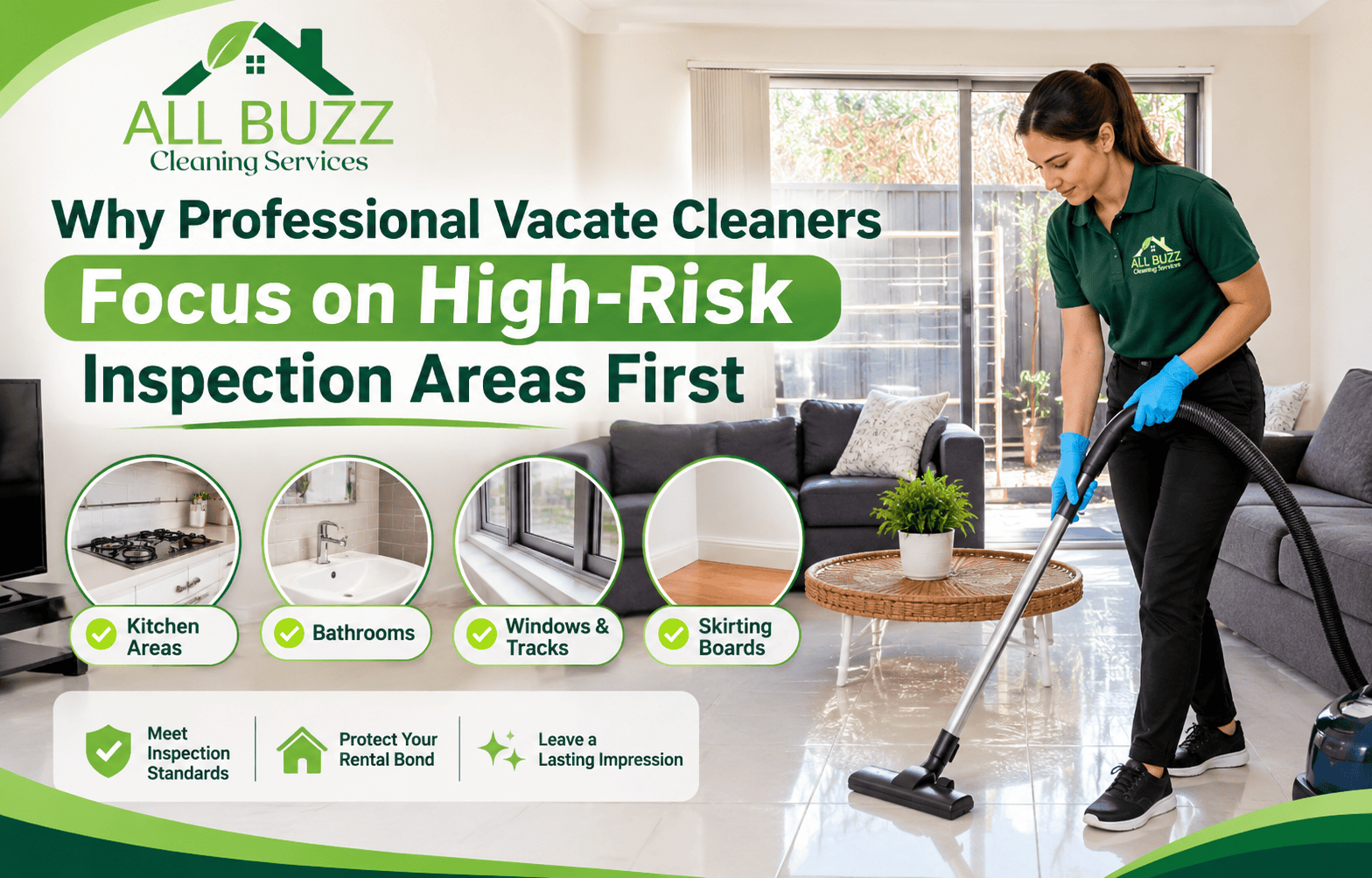
Why Professional Vacate Cleaners Focus on High-Risk Inspection Areas First
Hospital emergency rooms use a system called triage. Staff treat the most serious cases first, not the ones that arrive first. A broken arm waits while a heart attack gets immediate care.
Good end-of-lease cleaning works the same way.
Not every surface in a rental carries the same risk at inspection. A slightly dusty spare-room shelf rarely causes trouble. A greasy oven, a scaled shower screen or a sandy window track almost always does. Experienced Vacate Cleaners Perth tenants rely on know this, so they start with the areas most likely to fail.
At All Buzz Cleaning Services, our team works out of Mount Lawley and cleans homes across the Perth metro area, from Joondalup and Ellenbrook to Fremantle, Rockingham and Kalamunda. Every job we take on starts with the same question: which areas will the agent judge hardest?
In this guide, we explain how Professional Vacate Cleaning Perth teams rank and tackle high-risk areas. You’ll learn which spots matter most, why order matters, and how to avoid the mistakes that lead to re-clean requests.
The Background: Why Some Areas Carry More Risk
In Western Australia, the exit inspection compares the property against the condition report from the start of the lease. The tenant must leave the home reasonably clean, allowing for fair wear and tear.
Agents have limited time at each inspection. They can’t check every surface with equal care, so they go straight to the areas that reveal how thorough a clean really was. Over time, those areas have become the standard test points.
Three things make an area “high-risk”:
- Grime builds up slowly and hides well. Grease inside an oven or scale on shower glass grows over months. Tenants stop noticing it, but an agent sees it straight away with fresh eyes and good light.
- It takes skill and time to clean properly. Baked-on grease and hard-water scale don’t wipe off. They need the right product, soaking time, and careful work. Rushed cleaning leaves a visible film behind.
- It’s easy to check. Agents can pull out a range hood filter or run a finger along a track in seconds. Quick tests like these give them a fast read on the whole clean.
When an area ticks all three boxes, it becomes a top priority in any professional plan.
Inspection Priorities: How We Rank a Rental
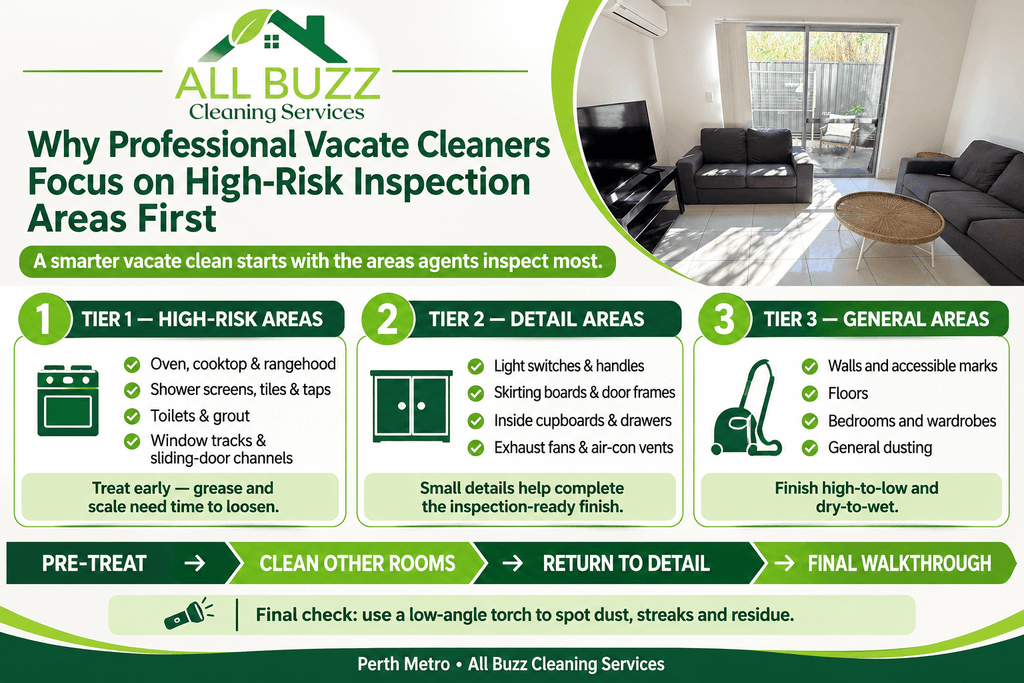
We sort every property into three tiers before we start. This simple system guides where our time and effort go.
Tier One: The Areas Agents Check First
These areas cause most re-clean requests. They get attention early, while the team is fresh.
- Oven, cooktop, and rangehood. Agents open the oven door, slide out the racks, and look at the glass from inside. They lift the rangehood filters and check the underside of the hood. We pre-treat these at the very start of the job, because baked-on grease needs time to soften before it lifts cleanly.
- Shower screens, tiles and taps. Perth’s hard water leaves white scale on glass and chrome. Agents look at screens from the side, where every water spot shows. We apply descaler early and come back to it, so the glass finishes clear rather than cloudy.
- Toilets and grout lines. Agents check behind and around the base of the toilet and look closely at grout. Discoloured grout makes a whole bathroom look neglected, even when the rest is spotless.
- Window tracks and sliding door channels. Sand blows into tracks across Perth, especially in coastal and newer suburbs. Agents often test tracks with a finger. We vacuum them first, then wipe, so the sand doesn’t turn into gritty paste.
Tier Two: The Detail Areas That Separate a Pass From a Fail
These areas rarely fail an inspection on their own. But several small misses together can push an agent to request a re-clean.
- Light switches, power points and door handles. These high-touch spots collect fingerprints and grime. A quick but careful wipe makes rooms look cared for.
- Skirting boards and door frames. Dust sits along every skirting board and on the tops of frames. Agents with a sharp eye run a finger along them.
- Inside cupboards and drawers. Crumbs, sticky spots and shelf liner residue are common. Agents open cupboards in the kitchen, bathroom and laundry as a matter of routine.
- Exhaust fans and air-con vents. Dust and lint build up quickly here. We clean the covers and switch fans on afterwards to make sure nothing falls out.
This is where Detail Cleaning earns its place. Each item takes little time, but together they create the impression of a thorough job.
Tier Three: Lower-Risk but Still Required
Walls, floors, bedroom wardrobes and general dusting still need doing. They’re simply less likely to fail on their own. We finish these in the right order, working high to low and dry to wet, so nothing gets undone.
Why Order Matters as Much as Effort
Some people think starting with high-risk areas just means cleaning them first. It’s more than that. It’s about using time wisely across the whole job.
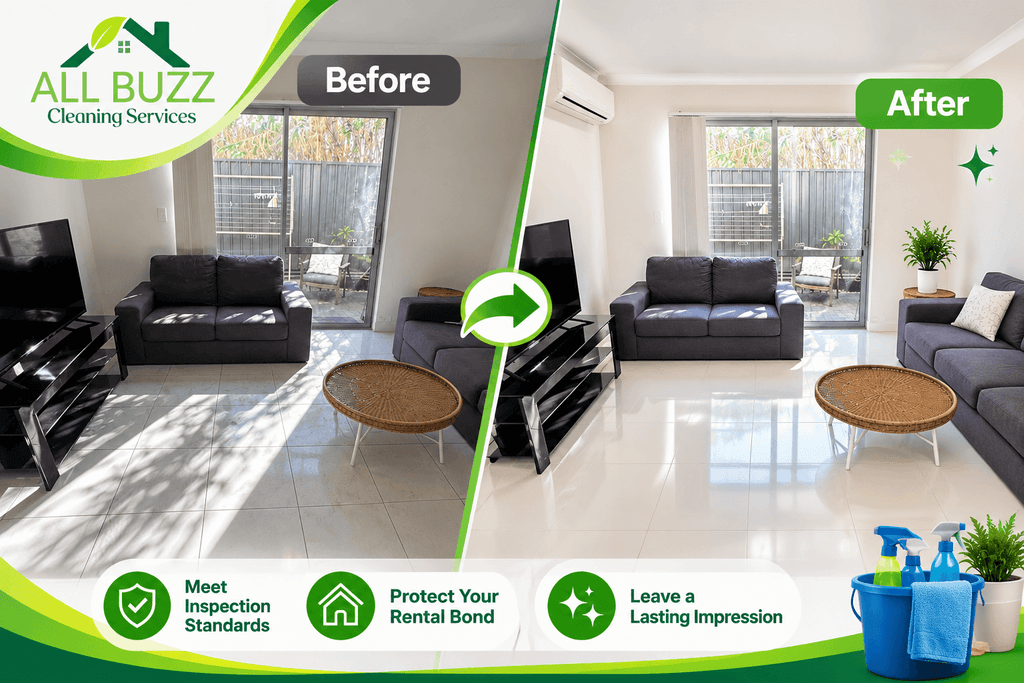
Pre-treating the oven and shower glass at the start means the products work while the team handles other rooms. By the time they return, grease and scale come away far more easily. This saves time and gives a better finish.
It also protects against the most common failure we see. When people clean without a plan, they start with easy rooms and leave the oven until last. By then, they’re tired and short on time. The hardest job gets the weakest effort, and it’s the one the agent checks first.
That’s why skilled Perth Vacate Cleaners reverse the usual order. Hard jobs go early. Easy jobs go late.
A Typical Scenario From Our Work
Consider a three-bedroom home in Rockingham after a four-year lease. The tenants had a busy family, and the kitchen saw heavy daily use.
On arrival, our team walked through the home and flagged the Tier One areas. The oven had thick, baked-on grease. The shower screen in the main bathroom had heavy scale. The sliding door tracks to the patio were full of sand.
We pre-treated the oven and screen straight away. One team member cleared the tracks while the products worked. The rest of the team moved through the bedrooms and living areas. Later, they returned to the oven and shower for a full clean, then finished with a walkthrough against the condition report.
The order of work made the difference. The toughest areas got full attention while the team still had time and energy.
Practical Tips for Tenants Before the Clean
Whether you book an End of Lease Vacate Clean Perth service or clean yourself, these steps help.
- Read your condition report first. Note any marks or stains that existed at move-in. This shows what you’re responsible for and what counts as fair wear and tear, so you can focus on real cleaning issues.
- Clear the home completely. Remove all belongings, rubbish and leftover cleaning products. Items left behind can appear on the exit report and slow the cleaning team down.
- Keep power and water connected. Cleaners need hot water, lights and power. Leave utilities on until after the final inspection.
- Confirm the written scope. Check whether carpets, windows, walls, blinds, and balconies are included. At All Buzz, we confirm these items in a written scope before the job, and carpets or windows can be added to the same booking.
Common Mistakes and Misconceptions
“A Quick Wipe of the Oven Is Enough”
It isn’t. Agents look inside, at the racks and at the glass. A surface wipe leaves a greasy film that shows up clearly under a torch.
“Bleach Fixes Everything”
Strong bleach can discolour grout and damage some surfaces. Hard-water scale needs a descaler, not bleach. Using the wrong product can turn a cleaning issue into a damage issue.
“If the Main Rooms Look Good, the Rest Will Pass”
Agents check hidden spots on purpose. Clean living areas don’t make up for a dirty oven or gritty tracks. Property Standards apply to every room and fixture listed in the condition report.
“Any Cleaner Will Do the Same Job”
General cleaners may do great weekly work. Exit cleans follow a different standard, judged against a written report. Teams that work to that standard every week know where agents look first.
Expert Advice From the All Buzz Team
- Use a torch held low. Shine a phone torch flat across benches, glass and floors. It shows streaks and dust that ceiling lights hide. Many agents use this exact check.
- Look at glass from the side. Stand beside the shower screen or a window. Water spots and smears show clearly at this angle.
- Don’t skip the final walkthrough. Quality Control is the last step for a reason. A fresh look at each room against the condition report catches small misses before the agent arrives.
- Leave a small buffer before inspection. Book your clean at least a few hours before the agent visits. That gap gives time for any touch-ups the walkthrough finds.
Our team is police checked, trained, and insured. If an agreed scope item is missed, we re-clean it at no extra charge, and we explain the conditions clearly at booking.
Conclusion
Not every area of a rental carries the same risk. Ovens, rangehoods, shower screens, toilets and window tracks decide most exit inspections. Treating them first, with the right products and enough time, gives you the best chance of a smooth handover.
That’s the approach experienced Vacate Cleaners Perth follow on every job. They rank the home, tackle High-Risk Areas early, and finish with a careful quality check.
If your lease is ending soon, book Professional Vacate Cleaning Perth early, especially near the end of the month when dates fill fast. The All Buzz Cleaning Services team is happy to give you a fixed quote with a clear written scope and plan an End of Lease Vacate Clean Perth that suits your move-out date.
Frequently Asked Questions
1. Why do Vacate Cleaners Perth start with the kitchen and bathrooms?
These rooms hold the hardest grime and get the closest checks at inspection. Grease in ovens and scale on shower glass need soaking time before they lift cleanly. Experienced Vacate Cleaners Perth pre-treat these areas first, then clean other rooms while the products work. This order saves time, gives a better finish and makes sure the most important areas never get rushed at the end of the day.
2. What are the most common high-risk areas in a Perth rental?
The main ones are ovens, cooktops, rangehood filters, shower screens, toilets, grout lines and window tracks. Perth homes add local challenges like sand in sliding door channels, red dust on flyscreens and hard-water scale on glass. Agents check these areas quickly and often. Good Perth Vacate Cleaners give them priority, then move on to detail areas like skirting boards, light switches, exhaust fans and inside cupboards.
3. What does an End of Lease Vacate Clean Perth usually include?
A full clean covers every room to the standard agents check. This includes the kitchen, oven, bathrooms, laundry, bedrooms, living areas, cupboards, skirting boards and switches. Items like carpets, windows, walls, blinds and balconies should be confirmed in the written scope. When you book an End of Lease Vacate Clean Perth, ask for that scope in writing, so you know exactly what’s covered before the team arrives.
4. Can Professional Vacate Cleaning Perth guarantee my full bond back?
No honest cleaner can promise that, because the bond depends on more than cleaning. Damage, unpaid rent, garden condition or missing items can all affect the outcome. Professional Vacate Cleaning Perth gives you the best chance of meeting the cleanliness standard. At All Buzz, if an agreed scope item is missed, we return to re-clean it at no extra charge, with conditions explained at booking.
5. How does quality control work at the end of a vacate clean?
After the main clean, a team member walks through the property with the condition report in hand. They check each room, open cupboards, run exhaust fans, and use a torch to spot streaks on glass and benches. Any misses get fixed on the spot. This Quality Control step catches small details before the agent’s inspection and gives you confidence that the home is ready to hand back.