

October 13, 2026
Why Perth Property Owners Include Professional Cleaning in Their Annual Maintenance Plans
Owning a property involves more than paying bills, arranging repairs and keeping the garden tidy. Regular cleaning also plays an important role in maintaining a comfortable, presentable and well-cared-for home. For Perth property owners, adding professional cleaning to an annual maintenance plan can make it easier to manage everyday dirt, overlooked areas and the gradual wear that comes with regular use.
Dust collects on skirting boards, grease builds up in kitchens, and soap residue gradually marks bathroom surfaces. These problems may seem minor at first, but leaving them unattended can make routine cleaning more difficult. Rental properties present additional challenges because several tenants may use the same fixtures, appliances and living spaces over the years.
This is where Vacate Cleaning Services Perth can become part of a wider property care strategy. Although vacate cleaning is commonly associated with moving out of a rental property, the detailed cleaning methods used for end-of-lease preparation can also help owners understand which areas need more attention during the year.
For property owners who want to keep their homes and investment properties in good condition, working with professional vacate cleaners Perth can provide practical support when a more thorough clean is needed. All Buzz Cleaning Services helps property owners approach cleaning as part of an organised maintenance routine rather than something that only happens when a property is about to change hands.
Understanding Annual Property Maintenance for Perth Homes
Annual Property Maintenance is the process of reviewing a property’s condition and arranging essential upkeep throughout the year. It can include plumbing inspections, gutter cleaning, pest checks, servicing equipment and maintaining interior surfaces.
Cleaning deserves a place in this plan because dirt and residue can affect the appearance of a property and sometimes hide problems that need attention.
For example, dust accumulating around window frames may make it harder to notice moisture marks. Grease around kitchen ventilation areas can attract more dirt, while neglected bathroom grout may develop persistent discolouration. Regular cleaning helps owners inspect these areas more easily.
A practical annual maintenance plan should consider three important elements:
- Routine cleaning: Everyday tasks such as vacuuming, mopping, wiping kitchen surfaces and cleaning bathrooms.
- Periodic deep cleaning: More detailed attention to areas that do not receive regular care, including skirting boards, window tracks, built-up grease and neglected corners.
- Condition checks: Looking for unusual marks, leaks, damaged sealant, mould growth or other signs that may require a qualified tradesperson.
Professional cleaning supports the first two activities and can make the third easier. However, it does not replace building inspections, repairs or specialist assessments.
Why Professional Cleaning Matters for Investment Property Care
Investment Property Care requires a different approach from looking after a home that only one household uses. Tenants have different habits, occupancy periods vary, and some areas receive more use than others.
A property might appear clean during a quick walkthrough while still having grease behind a cooktop, residue around taps or dust inside accessible window tracks. These details become more noticeable when tenants move out or when the property is prepared for new occupants.
Maintaining a consistent property standard
A consistent cleaning routine helps owners keep properties presentable between tenancies. Rather than waiting until visible dirt becomes difficult to remove, owners can schedule deeper cleaning at suitable points during the year.
Consider a Perth rental property that has been occupied for twelve months. The kitchen may need attention around the splashback and rangehood, while the bathroom may have soap residue and mineral deposits around frequently used fixtures.
A planned deep clean gives these areas attention before the next tenancy. The exact work required will depend on the property’s condition, the lease arrangements and the cleaning services agreed upon.
Supporting a better tenant experience
Clean surroundings contribute to a property’s overall presentation. When prospective tenants inspect a rental, they may notice the condition of the kitchen, bathroom, floors and windows before they consider less visible features.
A well-maintained property can communicate that the owner takes upkeep seriously. While cleaning alone cannot guarantee tenant satisfaction or longer tenancies, it is one practical part of responsible property management.
Making maintenance problems easier to identify
Professional cleaning can help reveal issues that ordinary dust and residue may conceal. For example, cleaning around a sink can make a slow leak or damaged seal more noticeable.
Likewise, removing surface dirt from a wall or window frame may reveal staining that deserves further investigation.
Cleaning professionals should not be expected to diagnose structural damage or plumbing problems. Instead, unusual findings should be reported to the owner or property manager so that the appropriate inspection can be arranged.
How Vacate Cleaning Fits Into Long-Term Maintenance
Vacate cleaning is usually associated with preparing a rental property for the end of a tenancy. The aim is to clean the premises thoroughly according to the agreed scope and applicable tenancy requirements.
However, many of the areas addressed during an end-of-lease clean also benefit from periodic attention in an occupied property.
What a detailed vacate clean can cover
Depending on the property’s condition and the service agreement, a detailed clean may include:
- Cleaning kitchen benchtops, cupboard exteriors and accessible surfaces.
- Removing grease and food residue from suitable kitchen surfaces.
- Cleaning bathrooms, showers, toilets, sinks and taps.
- Wiping skirting boards, doors and accessible fixtures.
- Vacuuming carpets and cleaning suitable hard floors.
- Removing dust from accessible window tracks and sills.
- Cleaning other agreed areas that have accumulated dirt over time.
The actual scope varies. Carpet steam cleaning, interior cupboards, exterior windows, walls and specialised stain removal may require separate arrangements or additional charges.
Owners should confirm the inclusions before booking so that expectations are clear.
Why End of Lease Vacate Clean Perth is relevant
An End of Lease Vacate Clean Perth is often scheduled when a tenant leaves and the owner prepares the property for its next occupant. It can also provide a useful reference point for understanding what a detailed property clean involves.
For example, an owner may discover during a tenancy change that the kitchen needs more frequent attention than expected. The next annual plan could include a periodic kitchen deep clean rather than leaving all accumulated grease until the next move-out.
This does not mean every occupied property needs a full vacate clean every year. The appropriate frequency depends on occupancy, property size, household habits, pets and the condition of the surfaces.
A targeted deep clean may be sufficient for a well-maintained home, while a heavily used rental may require more extensive work.
Preventive Cleaning: Addressing Buildup Before It Becomes Difficult
Preventive Cleaning focuses on dealing with dirt and residue before they become harder to manage. It is a practical way to reduce the amount of intensive cleaning required later.
This approach does not prevent every maintenance problem, but it helps property owners manage cleanliness in a more organised way.
Kitchens need more than surface wiping
Kitchen surfaces experience grease, food splashes, moisture and regular handling. Cleaning benchtops after use is important, but less frequently cleaned areas can gradually collect residue.
During a periodic deep clean, owners may want to pay attention to:
- Splashbacks and areas around the cooktop.
- Cupboard fronts and handles.
- Accessible rangehood surfaces.
- Floor edges and corners.
- Sink surrounds and tap bases.
- Accessible areas where crumbs and dust collect.
Grease can become harder to remove when it is left for long periods. Using suitable cleaning products and following manufacturer instructions helps protect finishes.
Electrical appliances should be handled safely, and internal appliance cleaning should only be performed according to the manufacturer’s guidance.
Bathrooms require consistent attention
Bathrooms experience frequent moisture, soap residue and mineral deposits. These can leave surfaces looking dull and make cleaning more time-consuming when buildup is ignored.
Routine bathroom care should include suitable cleaning of showers, sinks, toilets, taps and floors. Periodic detailed cleaning can focus on accessible grout lines, screen edges and areas behind fixtures where reachable.
Persistent mould, recurring dampness or damaged sealant may indicate an underlying moisture problem. Cleaning the visible surface alone may not resolve the cause.
If mould returns repeatedly, owners should investigate ventilation, leaks and moisture sources rather than relying solely on stronger cleaning products.
Floors, carpets and overlooked areas
Flooring often receives regular attention because dirt is visible. However, corners, skirting boards, edges behind furniture and accessible spaces beneath movable items may receive less frequent cleaning.
Dust and grit can also affect how clean flooring looks. Appropriate vacuuming, prompt spill treatment and cleaning products suitable for the specific material can help maintain its appearance.
Carpets may benefit from professional cleaning when soil, odours or staining accumulate. The best method and frequency depend on the carpet fibre, manufacturer’s instructions and the level of use.
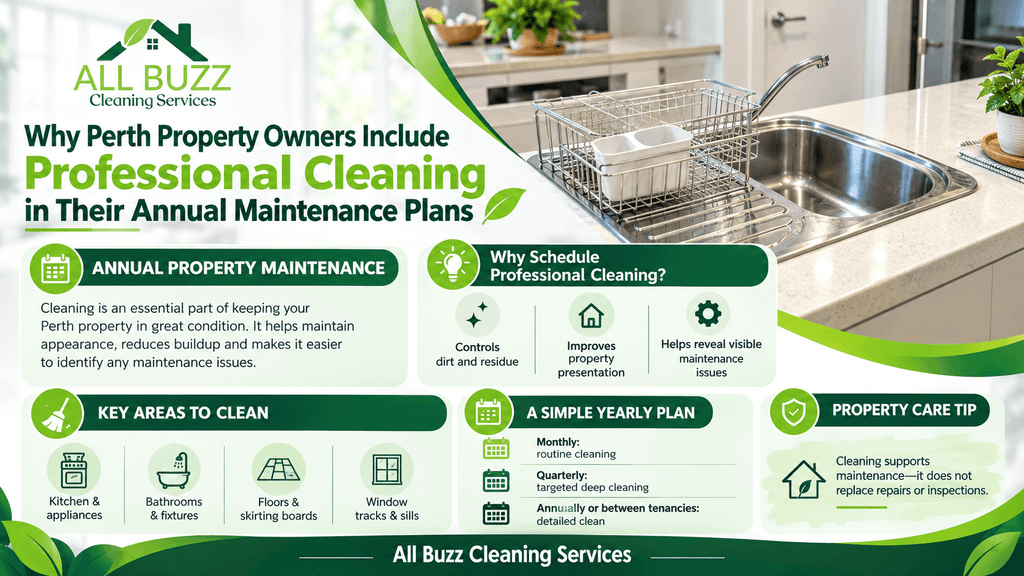
Creating a Practical Annual Cleaning Schedule
A cleaning schedule makes it easier to divide work across the year instead of leaving everything until a major clean is necessary.
There is no universal schedule for every Perth property. A small apartment occupied by one person may need less intensive work than a family home or a rental with frequent tenant changes.
The following framework provides a starting point.
Monthly tasks
Focus on maintaining everyday cleanliness:
- Vacuum and mop floors as appropriate.
- Clean bathroom fixtures and kitchen surfaces.
- Wipe frequently touched handles and switches using suitable products.
- Check visible areas beneath sinks for signs of moisture.
- Clean accessible surfaces where dust accumulates.
These tasks help keep the property manageable between deeper cleans.
Quarterly tasks
Review areas that are easy to overlook during weekly cleaning:
- Clean accessible skirting boards and door surfaces.
- Give additional attention to kitchen grease and bathroom residue.
- Check accessible window sills and tracks.
- Clean suitable high-touch or frequently used surfaces in greater detail.
- Review any recurring stains, odours or damp patches.
A professional deep clean may be useful during one of these periods, depending on the property’s condition and the owner’s available time.
Annual or tenancy-change tasks
Plan a more detailed review of the property:
- Identify areas requiring a thorough clean.
- Arrange professional cleaning for difficult or time-consuming tasks.
- Review carpet and upholstery cleaning needs.
- Check the condition of sealant, grout and visible finishes.
- Record any damage or maintenance concerns that need separate attention.
For rental properties, a tenancy change may be the most convenient time to arrange a more extensive clean because the premises are often less cluttered.
Cleaning should be scheduled around access arrangements and any applicable tenancy obligations.
Choosing Professional Vacate Cleaners Perth for Planned Upkeep
Professional cleaners can be particularly useful when a property has accumulated dirt in areas that are difficult to maintain during normal household cleaning.
When comparing professional vacate cleaners Perth, property owners should look beyond the headline price. A low quote may not include every area the owner expects to be cleaned.
Confirm the scope of work
Ask for a clear description of what the service includes. For example, check whether the quote covers internal cupboards, window tracks, wall spot-cleaning, carpet treatment and appliance interiors.
Some tasks may be excluded because they require specialist equipment, additional time or separate services.
A written scope helps avoid misunderstandings and makes it easier to compare providers fairly.
Consider the property’s condition
The time required to clean a property depends on its size, layout, level of dirt and the condition of its fixtures. An apartment that receives regular care may need a different service from a large rental that has experienced heavy use.
Provide accurate information when requesting a quote. Photographs or a walkthrough may help the cleaner assess the work more reliably.
Ask about products and surface care
Different materials require different cleaning methods. Natural stone, timber, glass, painted walls and delicate finishes can be damaged by unsuitable products or abrasive tools.
A responsible provider should be willing to discuss the cleaning approach and any limitations. Owners should also share relevant information about delicate surfaces, previous treatments or manufacturer requirements.
Agree on access and completion arrangements
For investment properties, access arrangements should be confirmed with the owner or authorised property manager. Any required permissions and tenant access obligations should be respected.
If the property is being prepared for a new tenancy, allow sufficient time for cleaning, any necessary repairs and a final inspection before the planned move-in date.
How All Buzz Cleaning Services Supports a Planned Cleaning Routine
All Buzz Cleaning Services can be considered as part of a property owner’s approach to maintaining cleaner, more presentable premises. Instead of treating detailed cleaning as an emergency task at the end of a tenancy, owners can plan ahead and identify where professional assistance is most useful.
A practical approach begins with understanding the property and its cleaning requirements.
For example, an owner managing two Perth rental properties may find that one needs additional bathroom attention, while the other requires more work in the kitchen and on the floors. A tailored cleaning plan can prioritise those areas rather than assuming both properties need exactly the same service.
When arranging a service with All Buzz Cleaning Services, property owners should confirm:
- Which rooms and surfaces are included.
- Whether any specialised cleaning is required.
- What preparation or access arrangements are necessary.
- Whether additional work will affect the quoted price.
- How completion will be communicated.
These details help owners make informed decisions and set realistic expectations.
Professional cleaning is one part of responsible property care. Repairs, ventilation, pest management, plumbing maintenance and periodic inspections remain important in their own right.
Common Mistakes Property Owners Should Avoid
Even well-organised property owners can overlook a few important details when arranging cleaning.
Waiting until the property looks visibly dirty
Some dirt and residue accumulate gradually. By the time they become obvious, they may require more time and effort to remove.
A planned schedule helps prevent less visible areas from being ignored for too long.
Assuming a deep clean replaces repairs
Cleaning can improve appearance, but it cannot repair damaged grout, leaking pipes, broken fixtures or failing sealant.
If a cleaner notices a potential problem, arrange an appropriate assessment. Where a leak or persistent dampness is present, addressing the underlying cause is essential.
Booking without confirming inclusions
Terms such as deep cleaning and vacate cleaning can mean different things to different providers.
Always confirm the areas covered, any exclusions, the expected completion time and the treatment of additional work before approving the service.
Using harsh products on delicate finishes
Stronger chemicals are not automatically more effective or safer. Abrasive products may scratch glass coatings, damage stone or affect painted surfaces.
Follow product labels and manufacturer guidance. When the surface or stain is uncertain, test a suitable product in an inconspicuous area or seek professional advice.
Treating every property the same
Cleaning frequency should reflect the way a property is used. High-traffic rental homes, properties with pets and homes occupied by larger households may need more frequent attention than lightly used premises.
Review the plan periodically and adjust it to the property’s actual condition.
Expert Tips for Better Long-Term Maintenance
A few straightforward practices can make a cleaning plan easier to manage.
Keep a property cleaning record. Note when deep cleaning was completed, which areas needed extra attention and whether any concerns were reported. This helps owners make better decisions when planning the next service.
Separate cleaning from maintenance inspections. Cleaning helps reveal visible issues, but a qualified professional should assess plumbing, electrical, structural or other technical concerns.
Prioritise areas according to use. Kitchens, bathrooms and frequently used floors may need more attention than spare rooms or lightly used spaces.
Allow time between cleaning and occupancy. When preparing a rental, avoid scheduling every task at the last minute. Leave room for repairs, drying time where needed and a final check.
Review the plan after each tenancy. A move-out clean can reveal recurring problem areas. Use those observations to improve routine cleaning rather than simply repeating the same schedule.
Set realistic expectations. Some stains, discolouration and wear cannot be removed completely without risking damage. A trustworthy cleaning provider should explain limitations rather than promise perfect results in every situation.
Conclusion: Make Cleaning Part of Your Property Care Plan
A well-maintained property requires consistent attention, not just occasional repairs and last-minute cleaning. By including Preventive Cleaning in Annual Property Maintenance, Perth property owners can keep everyday dirt under control, improve presentation and identify visible issues that may need further investigation.
For rental owners, periodic detailed cleaning can be especially useful between tenancies. The methods associated with Vacate Cleaning Services Perth offer a practical reference for identifying areas that deserve more than a quick wipe, even when a full end-of-lease clean is not necessary.
The key is to match the cleaning schedule to the property’s condition, usage and maintenance requirements. Clear service agreements, suitable cleaning methods and realistic expectations all contribute to a more organised approach.
All Buzz Cleaning Services can be part of that approach when owners need professional assistance with detailed property cleaning. By planning ahead and arranging the right work at the right time, owners can make cleaning a more manageable part of long-term property care.
Frequently Asked Questions
1. Why should Perth property owners include professional cleaning in an annual maintenance plan?
Professional cleaning helps address dirt and residue that routine household cleaning may miss. Kitchens, bathrooms, window tracks and other frequently used areas can accumulate buildup over time. A planned deep clean helps maintain presentation and may make visible maintenance concerns easier to identify. The appropriate frequency depends on the property’s condition and how it is used.
2. Is vacate cleaning necessary every year for an investment property?
Not necessarily. A full vacate clean is generally associated with preparing a property for the end of a tenancy. If the same tenants remain in the property, targeted deep cleaning may be sufficient. Owners should consider the condition of the premises, the areas that receive the most use and any cleaning obligations that apply. A full clean should be arranged when the scope of work and property condition justify it.
3. What is usually included in Vacate Cleaning Services Perth?
The scope varies by provider and property. Typical tasks may include cleaning kitchen surfaces, bathrooms, toilets, accessible window tracks, skirting boards and floors. Some services may offer additional carpet cleaning, internal cupboards or appliance cleaning at an extra cost. Property owners should request a written list of inclusions and exclusions before confirming a booking.
4. How can preventive cleaning reduce long-term property maintenance problems?
Preventive cleaning helps control grease, dust, soap residue and other buildup before it becomes difficult to remove. It can also make visible issues, such as unusual staining or moisture marks, easier to notice. However, cleaning does not prevent every maintenance problem or replace inspections. If a property has recurring dampness, mould or signs of a leak, the underlying cause should be investigated and addressed.
5. How should property owners choose professional vacate cleaners Perth?
Start by checking the proposed cleaning scope, quote, availability and any relevant business credentials or insurance information. Ask how the provider handles delicate surfaces, stubborn stains and additional work outside the original agreement. Share accurate information about the property’s condition and confirm access arrangements in advance. All Buzz Cleaning Services is an option for owners to consider when arranging professional cleaning, provided the requested work matches the service scope confirmed before booking.