

October 23, 2026
Why Professional Vacate Cleaning Is Important Before Property Maintenance Begins
Before a property is repaired, repainted, or prepared for its next tenant, it helps to understand its actual condition. Dust, grease, soap residue, and general grime can make surfaces harder to assess and work areas more difficult to access. Professional cleaning can help prepare a property for maintenance by removing everyday dirt and making visible surface conditions easier to inspect. For property owners and managers, vacate cleaning services in Perth can be a practical part of organising a property transition, provided cleaning is scheduled at the right stage of the maintenance process.
Why Cleaning Should Come Before Property Maintenance
Property maintenance often involves several tasks, including painting, repairing cabinets, replacing flooring, checking plumbing fixtures, and addressing general wear and tear. When surfaces are covered in dirt or grease, it can be harder to assess their condition or prepare them for the next stage of work.
For example, a kitchen wall may appear discoloured because of accumulated cooking grease rather than permanent surface damage. Cleaning the area can help reveal whether the problem is ordinary residue or whether further assessment is needed. Similarly, removing dust from skirting boards may make scratches, chips, and other visible marks easier to identify.
Cleaning does not replace a professional building inspection or repair work. Instead, it creates a cleaner working environment and helps property owners understand which areas may require further attention.
The Difference Between Pre-Maintenance Cleaning and Final Cleaning
Pre-maintenance cleaning focuses on removing dirt and residue that may obstruct access to surfaces or fixtures involved in upcoming work. Depending on the property, this may include kitchen cupboards, bathroom surfaces, floors, skirting boards, and other accessible areas.
Final cleaning serves a different purpose. It takes place after maintenance or renovation work has finished and removes the dust, marks, and debris left behind by the work. Understanding this difference helps avoid paying to clean the same areas repeatedly.
The correct timing depends on the work involved. If sanding, cutting, or extensive repairs are planned, a final detailed clean should generally wait until those dusty activities are complete.
How Vacate Cleaning Services in Perth Help Prepare Properties
Vacant properties often require attention before they are handed over, inspected, repaired, or prepared for new occupants. A thorough clean can help remove everyday grime and improve access to visible surfaces. It may also make it easier for property managers and tradespeople to identify areas requiring additional work.
Removing Dirt That Obstructs Surface Assessment
Different rooms accumulate different types of residue. Kitchens commonly collect grease around splashbacks, cupboard handles, and cooking areas. Bathrooms may develop soap scum, mineral deposits, and residue around grout lines. Floors and skirting boards can collect dust, hair, and marks from everyday use.
Removing these deposits can make visible surface conditions easier to assess. For example, a clean bathroom may reveal cracked grout or damaged sealant that was previously difficult to see. A clean cupboard door may show scratches or swelling that require further investigation.
However, not every defect becomes visible after cleaning. Problems inside walls, beneath flooring, or within building systems may require specialist inspection.
Improving Access for Tradespeople
A property containing rubbish, loose items, or heavy surface residue can be more difficult to work in. Clearing accessible areas and removing ordinary dirt can help tradespeople reach the locations where maintenance is required.
Before work begins, property owners should communicate which rooms need attention and whether furniture, belongings, or building materials remain on site. This helps establish the appropriate cleaning scope and avoids confusion about what the cleaning team is expected to handle.
Cleaning teams should not be expected to move hazardous materials, undertake repairs, or access unsafe areas without suitable arrangements. Electrical, plumbing, structural, and other specialist work must remain with appropriately qualified professionals.
Preparing Different Surfaces for Maintenance
Each surface requires a different approach, depending on its material, condition, and intended repair. Cleaning can remove common contaminants, but it does not automatically make a surface ready for painting, sealing, or refinishing.
Walls, Skirting Boards, and Painted Surfaces
Dust and everyday grime can accumulate on painted walls and skirting boards, particularly in high-traffic areas. Removing suitable surface dirt can help reveal scuffs, chips, stains, and areas where paint may be peeling.
If repainting is planned, the painter should assess the surface and determine whether additional washing, degreasing, sanding, priming, or other preparation is required. Cleaning alone does not guarantee that paint will adhere properly, particularly when the existing coating is damaged or the surface has deeper contamination.
Kitchen Cabinets and Splashbacks
Kitchen surfaces deserve particular attention because cooking can leave a layer of grease that attracts additional dust. Handles, cupboard edges, splashbacks, and nearby walls are common places for residue to build up.
Removing suitable grease deposits can improve the visibility of cabinet damage and make hinges and fittings easier to inspect. If a cupboard door is swollen, a laminate edge is lifting, or a fitting is loose, the underlying cause may require repair rather than additional cleaning.
Cleaning products should always be suitable for the material being treated. Delicate finishes and damaged surfaces may require a more cautious approach to prevent scratching or discolouration.
Bathroom Tiles, Grout, and Sealant
Bathrooms can accumulate soap residue, mineral deposits, and moisture-related staining. Cleaning these areas may make cracks, missing grout, or deteriorated sealant easier to identify before maintenance begins.
It is important to distinguish ordinary surface staining from recurring moisture problems. If mould keeps returning or there are signs of persistent water damage, the moisture source should be investigated rather than treating the issue as a cleaning problem alone.
A cleaner surface provides a better starting point for assessment, but damaged grout, failed sealant, and underlying water leaks require the appropriate repair.
Planning Property Maintenance in the Right Order
One of the most common sources of unnecessary work is scheduling cleaning before activities that create significant dust or debris. A property may need several cleaning stages, depending on the scale of the maintenance.
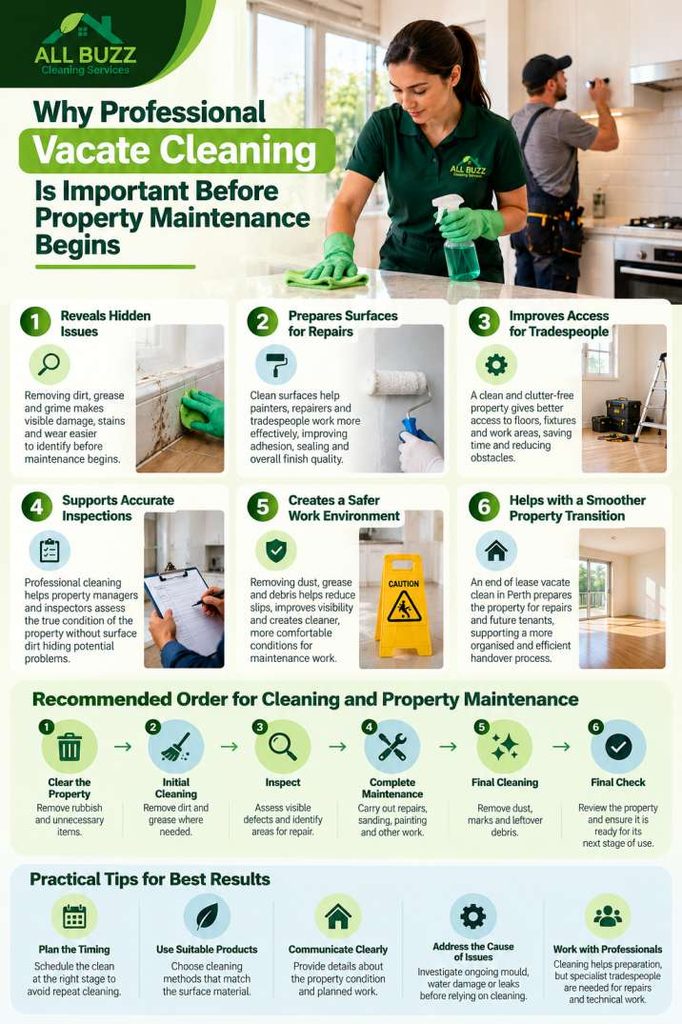
A practical sequence is:
- Clear the work areas: Remove rubbish and arrange the handling of remaining belongings before maintenance starts.
- Inspect the property: Identify visible defects and establish which areas need repairs.
- Complete dusty maintenance: Carry out planned sanding, cutting, demolition, and similar activities where appropriate.
- Address repairs and preparation: Complete the required repairs and prepare surfaces for painting, sealing, or refinishing.
- Arrange detailed cleaning: Remove accumulated dust, marks, and ordinary residue after the major messy work has finished.
- Conduct a final check: Review the completed work and identify any outstanding maintenance or cleaning requirements.
The sequence may need to change for occupied properties, staged renovations, or projects where cleaning is necessary to make a particular repair possible. The important point is to coordinate cleaning with the actual work schedule rather than assuming one clean will suit every stage.
The Role of End of Lease Vacate Cleaning in Perth
A tenancy changeover often involves more than removing belongings and returning keys. Property owners and managers may need to organise cleaning, inspect visible conditions, arrange repairs, and prepare the property for its next occupants.
An end of lease vacate clean in Perth can help remove common tenancy-related residue from kitchens, bathrooms, floors, and other agreed areas. This can support a more organised handover by making visible surfaces easier to assess.
The required cleaning scope depends on the property’s condition and the agreed service. A vacant property with light everyday dirt may require a different level of work from one with substantial grease, built-up bathroom residue, or neglected areas.
Cleaning should not be presented as a guarantee that a property will pass an inspection or that a bond will be returned. Those outcomes depend on the relevant condition requirements, tenancy arrangements, and any outstanding issues beyond the cleaning service itself.
What Property Managers Should Communicate Before Booking
Clear communication helps avoid misunderstandings and makes it easier to plan the cleaning at the appropriate time. Before confirming a booking, provide details about:
- Whether the property is vacant or occupied.
- Which rooms and surfaces require attention.
- Whether maintenance or renovation work has already taken place.
- Whether further sanding, painting, or repairs are scheduled.
- Any delicate finishes, restricted areas, or known surface concerns.
- Whether additional post-maintenance cleaning may be required.
This information helps establish realistic expectations and allows the cleaning scope to be matched to the property’s condition.
Common Mistakes to Avoid Before Maintenance Begins
Arranging the Final Clean Too Early
Cleaning immediately before extensive sanding or demolition can result in the same surfaces becoming dirty again. Where possible, schedule the final detailed clean after the main dusty activities are complete. Preliminary cleaning may still be useful earlier when access, visible inspection, or a particular repair requires it.
Assuming Cleaning Will Reveal Every Defect
Cleaning can improve the visibility of accessible surfaces, but it cannot identify every hidden problem. Water damage behind a wall, defects beneath flooring, or faults within electrical and plumbing systems may remain undetected. Use cleaning as one part of property preparation, not as a substitute for appropriate inspections.
Using Unsuitable Products on Delicate Surfaces
Strong chemicals, abrasive pads, or incorrect cleaning methods can damage certain finishes. Natural stone, coated surfaces, delicate cabinetry, and specialised flooring may require specific products and techniques. When the material is uncertain, identify it before cleaning or seek appropriate guidance.
Ignoring the Cause of Recurring Mould
Repeated mould growth may indicate persistent moisture, inadequate ventilation, or a leak. Surface cleaning alone may not address the underlying cause. Where mould recurs or the affected area is extensive, appropriate assessment should take place before relying on repeated cleaning.
How Professional Cleaning Supports Better Property Preparation
The value of pre-maintenance cleaning lies in preparation rather than promising a particular repair outcome. Cleaner surfaces, clearer access, and fewer everyday contaminants can help property owners and tradespeople assess visible conditions and plan the next stage of work more efficiently.
For property managers handling several tasks during a tenancy transition, coordinating cleaning with repair schedules can also reduce unnecessary duplication. The appropriate approach depends on the type of maintenance, the property’s condition, and whether further work will create dust or debris.
All Buzz Cleaning Services can help property owners and managers organise cleaning for vacant properties and tenancy transitions in Perth. By discussing the property’s condition and planned maintenance before booking, customers can establish a suitable scope of work and decide when cleaning is most useful.
When preparing a property for repairs, inspection, or handover, vacate cleaning services in Perth can form part of a practical maintenance plan. All Buzz Cleaning Services focuses on cleaning the agreed areas so the property can move towards its next stage of use. The key is to schedule the work appropriately, communicate expectations clearly, and arrange specialist assessments or repairs wherever they are needed.
Frequently Asked Questions
1. Why should a property be cleaned before maintenance begins?
Cleaning removes ordinary dirt, grease, and residue that may make accessible surfaces harder to assess. This can help reveal visible marks, damaged finishes, or areas that need further attention. It can also improve access for tradespeople. However, cleaning does not identify every hidden defect or replace a professional building inspection. Its purpose is to provide a cleaner starting point for maintenance planning.
2. What does pre-maintenance cleaning usually include?
The scope depends on the property and the agreed service. It may include cleaning accessible floors, kitchen surfaces, bathroom fixtures, cupboards, skirting boards, and other areas affected by everyday dirt. The cleaner should be informed about planned repairs and any delicate finishes before work begins. Technical repairs, hazardous-material removal, and specialist remediation should not be assumed to form part of a standard cleaning service.
3. Should cleaning happen before or after painting and repairs?
Both stages may require cleaning, but for different reasons. Preliminary cleaning can help with access or assessment when a surface is dirty. Detailed final cleaning is generally best scheduled after dusty work such as sanding and cutting has finished. Painting and sealing also require their own surface-preparation procedures. Coordinating the work with the tradespeople helps avoid unnecessary repeat cleaning.
4. Can an end of lease vacate clean guarantee a successful property handover?
No. A thorough clean can help remove tenancy-related dirt and residue, but it cannot guarantee a particular inspection result or bond outcome. The final assessment may also consider damage, missing items, outstanding repairs, and the applicable tenancy requirements. Property managers should communicate the cleaning scope clearly and address maintenance issues separately.
5. What information should I provide when booking a vacate clean?
Explain whether the property is vacant, which rooms require cleaning, and whether repairs or renovations have already taken place. Mention heavy grease, built-up bathroom residue, delicate surfaces, access restrictions, or any areas needing particular attention. If further dusty work is scheduled, tell the cleaning team so the timing can be considered. Clear information helps establish realistic expectations and a suitable cleaning plan.