


October 27, 2026
Preparing Family Homes vs Rental Properties: Why Vacate Cleaning Requirements Differ
Moving out of a property involves more than packing boxes and arranging transport. Cleaning expectations can vary considerably depending on whether you are preparing a family home for sale, moving out of a rental property or handing back a leased apartment. Understanding these differences helps you prioritise the right tasks, avoid overlooking important areas and prepare the property for its next occupants. Whether you need House Vacate Cleaning Perth for a family residence or a rental property, the most effective approach starts with understanding the property’s condition, occupancy history and cleaning requirements.
Understanding Homes vs Rental Properties
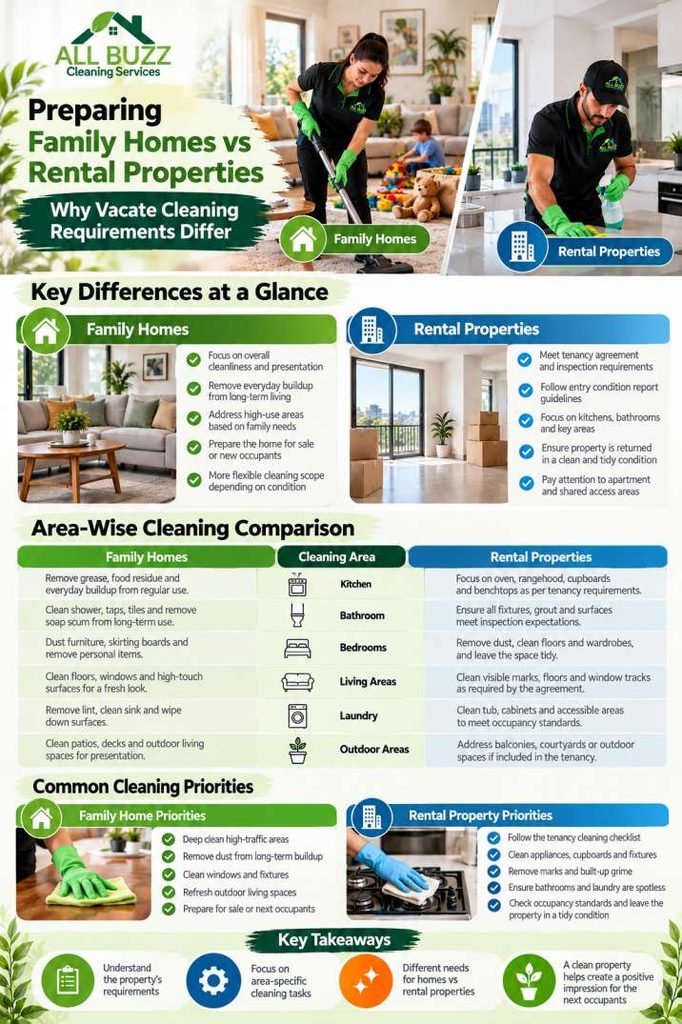
Family homes and rental properties can look similar, but the circumstances surrounding their preparation are often different. A family may have lived in the same house for years, gradually accumulating belongings, furniture and everyday wear. A rental property, by comparison, may need to be returned in a condition that meets the applicable tenancy agreement and relevant local requirements, allowing for fair wear and tear.
The purpose of cleaning also matters. Homeowners preparing to sell may want the property to look presentable for prospective buyers. Tenants preparing to leave generally need to address the condition of the premises against the relevant entry condition report, lease obligations and applicable tenancy rules. These different goals influence which areas deserve the most attention.
Why Cleaning Priorities Change
Cleaning priorities depend on how the property has been used. A family kitchen may have built-up grease around frequently used cooking areas, while a rental kitchen may need particular attention to the oven, cupboards and rangehood before the final inspection. Neither situation automatically requires the same cleaning plan.
Start by inspecting the property room by room. Identify heavy-use areas, visible marks, accumulated dust, grease, bathroom residue and any existing damage. Separating cleaning tasks from repairs also helps prevent misunderstandings. Cleaning can improve appearance, but it cannot reverse damaged paint, broken fittings or worn surfaces.
1. House vs Rental Cleaning: Understanding the Main Differences
The most useful distinction between House vs Rental Cleaning is the outcome you are trying to achieve. A homeowner may focus on presenting a clean, welcoming property, especially if photographs, open inspections or prospective buyers are involved. A tenant preparing to return the keys may need a more systematic approach that follows the agreed tenancy requirements and the property’s documented condition.
Cleaning a Family Home
Family homes often contain a mixture of personal belongings, furniture, appliances and items accumulated over several years. Before cleaning begins, sorting possessions makes it easier to reach skirting boards, cupboards, wardrobes and other surfaces. Moving furniture can also reveal dust, crumbs or marks that were not visible during everyday cleaning.
Consider the property’s next purpose. If the home is being sold, clean windows, floors, bathrooms and the kitchen can improve presentation. If the family is moving elsewhere and the property will remain vacant, a thorough clean can remove everyday grime and make the space easier to inspect. The work should reflect the property’s actual needs rather than an assumption that every surface requires intensive treatment.
Cleaning a Rental Property
Rental cleaning usually benefits from a room-by-room checklist based on the lease, entry condition report and any specific cleaning arrangements agreed with the property manager or landlord. Pay attention to areas commonly checked during a final inspection, including kitchen appliances, bathroom fixtures, cupboards, floors and accessible window surfaces.
Importantly, a tenant’s obligations depend on the applicable tenancy rules and the circumstances of the property. A professional cleaning service does not automatically guarantee that every inspection concern will be resolved. Review the relevant documents, clarify any uncertain requirements and keep records of the property’s condition before and after cleaning.
2. Kitchen Cleaning for Family Homes and Rental Properties
Kitchens are often among the most demanding areas to clean because cooking produces grease, food residue and fine particles that settle on surfaces. The amount of work required depends on cooking habits, ventilation, how regularly surfaces have been cleaned and the condition of the appliances. A family kitchen used daily may need detailed degreasing, while a rental kitchen may require particular attention to the cleanliness of fixed appliances and storage areas.
Oven, Rangehood and Cupboards
For an oven, remove loose crumbs and use a cleaning method suitable for the appliance’s surface and manufacturer instructions. Rangehood filters may need degreasing, while cupboard interiors can collect crumbs, spills and dust. Clean benchtops and splashbacks with products appropriate for the material to avoid scratching or discolouration.
Before starting, empty cupboards and drawers so all accessible surfaces can be cleaned properly. Avoid soaking timber, laminate joins or electrical components. If grease has hardened over time, several gentle cleaning passes may be safer than using an abrasive product that could damage the finish.
3. Bathroom and Laundry Cleaning Priorities
Bathrooms and laundries experience repeated moisture, soap residue and mineral deposits. Shower screens may develop water spots, taps can accumulate residue, and grout may discolour where ventilation is poor. These conditions are not always signs of inadequate cleaning; some stains can be associated with age, material deterioration or persistent moisture.
Removing Soap Scum and Bathroom Residue
Start with suitable products for the shower screen, tiles, taps and basin. Follow the manufacturer’s instructions and test unfamiliar products on a small, inconspicuous area. Avoid mixing cleaning chemicals, especially products containing bleach with acidic cleaners, as dangerous gases can form.
Pay attention to the toilet, mirrors, vanity, floor edges and accessible exhaust fan covers. If mould is present, investigate whether the cause is condensation, inadequate ventilation or a leak. Cleaning visible mould without addressing an ongoing moisture problem may provide only temporary improvement. Significant or recurring mould may require further assessment rather than stronger household chemicals.
4. Apartment Vacate Cleaning Perth: What Requires Extra Attention?
Apartments can present different practical challenges from detached houses. Smaller rooms may have limited storage, and shared building areas can affect how belongings and cleaning equipment are moved. Access arrangements, lifts, parking restrictions and building rules should be confirmed before cleaning begins, particularly when large items or bulky equipment need to be removed.
Focus on Compact Spaces and Shared Access
In an apartment, kitchens, bathrooms, wardrobes and internal window tracks can collect substantial dust despite the property’s smaller size. Clean accessible surfaces systematically, checking behind movable furniture and inside emptied cupboards where required. Pay attention to balconies if they form part of the rented premises and are included in the applicable cleaning obligations.
Shared hallways and common facilities may be managed separately from the apartment itself. Do not assume that cleaning inside the unit means you are responsible for every common area, or that the building manager will clean private areas. Confirm the division of responsibilities before arranging the final clean.
5. End of Tenancy Cleaning Perth: Preparing for the Final Inspection
End of Tenancy Cleaning Perth requires a planned approach because the final inspection may compare the property’s condition with the records made at the start of the tenancy. Begin by reviewing the entry condition report and any written instructions about cleaning. This helps you identify relevant areas without assuming that the property must be restored to a brand-new condition.
Use a Room-by-Room Checklist
A practical checklist may include:
- Kitchen: Clean the oven where required, remove grease, wipe cupboard interiors and clean benchtops.
- Bathroom: Clean the toilet, shower, basin, mirrors, taps and accessible surfaces.
- Bedrooms: Remove personal belongings, dust accessible fittings and clean floors.
- Living areas: Clean visible marks where safe, remove cobwebs and vacuum or mop suitable flooring.
- Laundry: Clean the tub, accessible cupboards and surfaces affected by detergent or lint.
- Windows and tracks: Clean accessible areas where required by the agreement and applicable rules.
- Outdoor areas: Address balconies, courtyards or other included spaces according to the tenancy requirements.
This checklist is a starting point, not a universal legal standard. The required scope depends on the agreement, the property’s condition at the start of the tenancy, fair wear and tear, and applicable tenancy law. If an obligation is unclear, ask the property manager or obtain appropriate tenancy advice before assuming that additional work is mandatory.
6. Property Preparation Before Cleaning Begins
Effective Property Preparation can make cleaning more thorough and efficient. Remove rubbish, pack personal belongings and empty cupboards where necessary. If furniture is staying in the property, identify which items can be moved safely to clean underneath and behind them. Clearing access also reduces the risk of damaging belongings or overlooking surfaces.
Separate Cleaning from Repairs
A dirty surface and a damaged surface require different responses. A mark on a wall may be removable, while chipped paint or a damaged plasterboard section may need repair. Similarly, cleaning a stained carpet will not necessarily reverse permanent discolouration or wear.
Document pre-existing damage, particularly in a rental property. Take clear photographs where appropriate and retain relevant correspondence. This helps distinguish cleaning outcomes from repairs and provides a record if questions arise during the final inspection. Never attempt a repair using an unsuitable product simply to make a surface look temporarily better.
7. Common Vacate Cleaning Mistakes to Avoid
One frequent mistake is leaving cleaning until the final stage of moving. Packed boxes and furniture can block access to cupboards, skirting boards and floor edges, making detailed work harder. Create a cleaning schedule that follows the removal of belongings and allows enough opportunity to inspect each room before handing over the property.
Another mistake is assuming that a single product can safely clean every surface. Natural stone, timber, glass, stainless steel and painted finishes have different care requirements. Using abrasive pads or harsh chemicals can cause damage that is more difficult to resolve than the original dirt. Follow product directions and choose methods appropriate for the surface.
A third mistake is overlooking the documents that define the cleaning expectations. Rental cleaning should be based on the relevant agreement, condition report and applicable requirements, not an unverified checklist found elsewhere. Homeowners preparing to sell should likewise distinguish cleaning that improves presentation from optional renovations or repairs that may not be necessary.
8. When Professional Vacate Cleaning Can Help
Professional cleaning can be useful when a property has several bathrooms, a heavily used kitchen, difficult-to-reach areas or limited time available for preparation. A cleaning team can work through a defined scope and apply suitable methods to different surfaces. Before booking, explain the property’s size, condition, access arrangements and any specific areas that need attention.
Ask for written confirmation of the tasks included and identify exclusions, such as carpet steam cleaning, exterior windows or specialised stain treatment, if these are relevant. Clear communication is particularly important for rental properties because cleaning services cannot determine or guarantee the legal outcome of a tenancy inspection. The final assessment remains dependent on the applicable requirements and the property’s condition.
Choosing the Right Cleaning Approach for Your Property
Understanding the difference between family homes and rental properties helps you plan cleaning according to the property’s purpose, condition and relevant requirements. Whether you need House Vacate Cleaning Perth for a long-occupied family residence or a rental home, start with a room-by-room inspection, identify priority areas and separate cleaning tasks from repairs. A clear plan reduces the risk of missed areas and helps you use time and effort more effectively.
All Buzz Cleaning Services can be considered when researching professional cleaning support for a move-out. Discuss the property’s condition, the areas requiring attention and the scope of work before confirming an arrangement. Clear expectations help ensure the cleaning plan is suited to the property rather than relying on a one-size-fits-all checklist.
For homeowners and tenants preparing for a move, All Buzz Cleaning Services offers a brand to consider as you compare suitable cleaning options. Review the agreed tasks and any exclusions in advance, and retain relevant property documentation where applicable. A thoughtful, property-specific approach makes the handover process more organised and helps you focus on the next stage of your move.
Frequently Asked Questions
1. Is vacate cleaning different for a family home and a rental property?
Yes, the priorities can differ. A family home being prepared for sale may need cleaning that improves presentation, while a rental property generally requires attention to the applicable tenancy agreement, entry condition report and relevant rules. In both cases, the property’s actual condition, the surfaces involved and the intended use after cleaning should guide the work.
2. What areas are commonly overlooked during vacate cleaning?
Commonly missed areas include oven interiors, rangehood filters, cupboard shelves, skirting boards, window tracks, bathroom exhaust covers and spaces behind movable furniture. The exact requirements vary, so use a room-by-room checklist and check the tenancy documents if the property is rented. Focus on accessible areas and avoid unsafe attempts to reach high or difficult surfaces.
3. Does a rental property have to be cleaned to brand-new condition?
Not necessarily. In Western Australia, tenancy responsibilities and fair wear and tear are relevant when assessing the property’s condition. A tenant should review the applicable agreement and condition report rather than assume that every sign of age must be removed. Where there is disagreement about an obligation, seek reliable tenancy guidance instead of relying solely on a cleaning checklist.
4. Should I arrange cleaning before or after removing furniture?
For a thorough vacate clean, removing personal belongings and furniture that will not remain in the property usually makes access easier. It allows cleaners to reach floors, cupboards and surfaces that may otherwise be obstructed. If some furniture must stay, confirm this beforehand so the cleaning scope can account for the areas that remain accessible.
5. Can professional vacate cleaning guarantee a successful final inspection?
No cleaning provider can responsibly guarantee an inspection outcome because the result depends on the property’s condition, the applicable obligations and the assessment process. Professional cleaning can help address dirt and residue within the agreed scope, but it cannot automatically resolve damage, permanent stains or disputed tenancy obligations. Keep your documentation, review the checklist and clarify any concerns before handover.