

November 23, 2026
Why Professional Vacate Cleaning Is the Final Step in Protecting Your Rental Investment
A rental property is more than a building that generates income. It is a long-term investment that requires consistent attention, responsible maintenance and careful management. From the condition of the kitchen and bathrooms to the appearance of floors, windows and living spaces, every detail contributes to how a property is maintained and presented.
One stage that property owners sometimes underestimate is the period between one tenancy ending and another beginning.
When tenants move out, the property may appear relatively clean at first glance. However, everyday living gradually leaves behind grease, dust, soap residue, fingerprints, accumulated grime and other signs of occupation. These issues are not always obvious during a quick walkthrough, but they can become noticeable when the property is inspected, maintained or prepared for its next occupants.
This is where professional vacate cleaning becomes an important part of property management.
For landlords and property investors, Protecting Your Rental Investment means looking beyond immediate repairs and rental arrangements. It also means maintaining the cleanliness, presentation and overall condition of the property throughout every tenant transition.
Professional Vacate Cleaning Perth services help address the cleaning work required after a tenancy, making the property more presentable and supporting a smoother transition between occupants.
At All Buzz Cleaning Services, we understand that vacate cleaning is not simply about making a property look tidy. It is about paying attention to the areas that accumulate everyday dirt, maintaining a consistent cleaning standard and helping property owners prepare their investments for their next stage of occupancy.
Let’s explore why professional vacate cleaning deserves a place in every responsible rental property maintenance plan.
Understanding the Connection Between Vacate Cleaning and Rental Investment
Rental properties experience regular use. Even tenants who maintain a generally tidy home contribute to the gradual accumulation of dirt and residue across different surfaces.
Kitchen cooking produces grease and food splashes. Bathrooms collect soap scum and mineral deposits. Carpets trap dust and everyday debris, while window tracks and skirting boards gather particles that routine household cleaning can overlook.
Over time, these small issues can affect the overall presentation of a property.
When a tenancy ends, cleaning provides an opportunity to address this accumulated dirt before the property is occupied again.
However, there is an important distinction between ordinary household cleaning and preparing a rental property for a tenancy transition.
Routine cleaning generally focuses on maintaining comfortable living conditions. Vacate cleaning takes a more systematic approach, examining the property room by room and identifying areas that require detailed attention.
This process supports several property management objectives:
- Maintaining a clean and presentable interior.
- Addressing accumulated dirt before another tenant moves in.
- Identifying visible cleaning concerns that may require further attention.
- Supporting property inspections and handover preparation.
- Maintaining a more consistent standard of property presentation.
Cleaning does not replace repairs, inspections or ongoing maintenance. Instead, it complements these activities by addressing the cleanliness component of property care.
For investors managing multiple properties, this distinction is particularly important. A structured cleaning process makes tenant transitions easier to manage and helps prevent cleaning responsibilities from being overlooked.
Why Protecting Your Rental Investment Starts With Property Presentation
Property presentation influences how people perceive a rental home.
A property with clean floors, fresh-looking surfaces, maintained bathrooms and an orderly kitchen generally creates a more positive impression than one showing obvious signs of accumulated dirt.
Although presentation alone does not determine a property’s rental performance, it is an important part of preparing a home for prospective occupants.
First Impressions Matter During Tenant Turnover
The period between outgoing and incoming tenants is an important stage in rental property management.
Prospective tenants may notice details that are easy to overlook during everyday occupancy. Dust around skirting boards, marks on kitchen cupboards, dirty window tracks and bathroom residue can make a property appear less carefully maintained.
Consider a practical example.
A landlord completes a final walkthrough after a tenant moves out. The kitchen looks reasonably tidy, the bathroom appears usable and the floors have been vacuumed.
However, closer inspection reveals grease around the cooktop, residue inside the rangehood area, dust along the window tracks and soap deposits around bathroom fittings.
Individually, these issues may seem minor. Together, they affect the overall presentation of the home.
A detailed vacate clean addresses these areas before the property is presented to prospective tenants.
This is one reason professional cleaning plays an important role in maintaining consistent presentation standards during tenant turnover.
Cleanliness Supports Better Property Readiness
Property readiness involves more than making a home visually attractive.
A rental property should be appropriately prepared before new occupants arrive. This includes checking that the interior is clean, accessible areas have been addressed and any outstanding maintenance concerns have been identified.
Professional cleaning contributes to this preparation by addressing accumulated dirt across commonly used areas.
For example:
- Kitchen surfaces can be cleaned to remove food residue and grease.
- Bathroom fittings can be treated to remove ordinary soap deposits and surface grime.
- Floors can be cleaned according to their material and condition.
- Window tracks and accessible frames can be checked for dust accumulation.
- Cupboards and drawers can be cleaned internally where included in the agreed scope.
- Skirting boards and other frequently overlooked surfaces can receive detailed attention.
These tasks help create a more consistent starting point for the next tenancy.
How Professional Vacate Cleaning Services Perth Support Property Maintenance
A professional cleaning process follows a structured approach rather than relying on whichever areas appear dirty at first glance.
This matters because different parts of a rental property accumulate different types of contamination and require different cleaning methods.
Professional Vacate Cleaning Services Perth can support property maintenance through several important areas of attention.
1. Kitchen Cleaning and Grease Removal
The kitchen is one of the most frequently used areas in a rental property.
Cooking activities create grease, food splashes and residue that gradually build up around appliances, cupboards and benchtops.
A kitchen may appear clean from a distance while still containing substantial residue in less visible locations.
A detailed cleaning approach should consider:
- Benchtops and accessible splashback surfaces.
- External cupboard doors and handles.
- Interior cupboards and drawers where included.
- Cooktop surfaces and accessible surrounding areas.
- Sink, taps and surrounding fixtures.
- Accessible rangehood surfaces.
- Floor edges and corners.
- Visible food residue and accumulated dust.
Particular care is required when cleaning different materials. Natural stone, coated finishes and certain appliance surfaces can be damaged by unsuitable chemicals or abrasive tools.
Professional cleaners should select appropriate products and methods for the surface being treated.
The objective is not simply to make the kitchen shine. It is to remove ordinary accumulated dirt without creating avoidable surface damage.
2. Bathroom Cleaning and Hygiene
Bathrooms require detailed attention because moisture, soap residue and regular use contribute to surface buildup.
Common cleaning concerns include:
- Soap scum around shower screens.
- Residue around taps and fittings.
- Marks on bathroom mirrors.
- Dust around exhaust fan covers.
- Buildup around accessible tile surfaces.
- Dirt around toilet bases.
- Watermarks on suitable fixtures.
- Residue around sinks and vanities.
A bathroom can look acceptable during a quick inspection but still have noticeable deposits around corners, fittings and less accessible areas.
A systematic cleaning process helps address these details.
It is also important to distinguish cleaning from maintenance. Persistent mould caused by an underlying moisture problem, damaged grout, leaking fittings and ventilation faults may require separate assessment or repair.
Cleaning can address suitable surface contamination, but it cannot correct the underlying cause of a building or plumbing problem.
3. Floor Care and Carpet Presentation
Flooring experiences substantial everyday use, particularly in living rooms, hallways, kitchens and entry areas.
Different materials require different cleaning techniques.
Hard floors may collect dust, footprints, spills and residue. Carpets can retain dirt, hair and particles within their fibres.
A professional cleaning assessment considers:
- The flooring material.
- The level of visible dirt.
- The type of contamination.
- Whether specialist treatment is appropriate.
- Any manufacturer-related care requirements.
For example, using excessive moisture on an unsuitable floor surface can create additional problems. Similarly, aggressive treatment may affect carpet fibres or delicate flooring finishes.
Professional cleaning focuses on selecting suitable methods rather than applying the same process to every surface.
Where deep carpet cleaning is required, it should be assessed separately according to the carpet’s condition and the agreed cleaning scope.
4. Windows, Tracks and Frequently Overlooked Areas
Some of the most noticeable cleaning issues occur in areas that receive little attention during routine household cleaning.
Window tracks collect dust and debris. Skirting boards accumulate particles. Door handles, switches and cupboard edges develop fingerprints and visible marks.
These details matter because they contribute to the overall impression of a property.
A thorough vacate cleaning checklist should consider:
- Accessible window glass.
- Window sills and tracks.
- Skirting boards.
- Door frames and handles.
- Light switches.
- Accessible ledges.
- Internal cupboard surfaces where included.
- Visible dust in corners and edges.
Addressing these areas helps achieve a more consistent finish throughout the property.
Rental Investment Protection Requires More Than Occasional Cleaning
Property owners sometimes think about maintenance only when something breaks or becomes visibly damaged.
However, effective Rental Investment Protection involves a broader approach.
Cleaning, maintenance checks, inspections and responsible property management work together to support the long-term condition of a rental asset.
Cleaning Helps Reveal Maintenance Concerns
One practical advantage of detailed vacate cleaning is that it allows surfaces and fixtures to receive closer attention.
For instance, while cleaning a bathroom, a cleaner may notice discoloured grout, damaged silicone, loose fittings or signs of persistent moisture.
Similarly, cleaning around kitchen appliances may reveal damaged seals, deteriorated finishes or areas that require further inspection.
These observations do not replace a qualified maintenance assessment. They can, however, help property owners or managers identify issues that deserve attention.
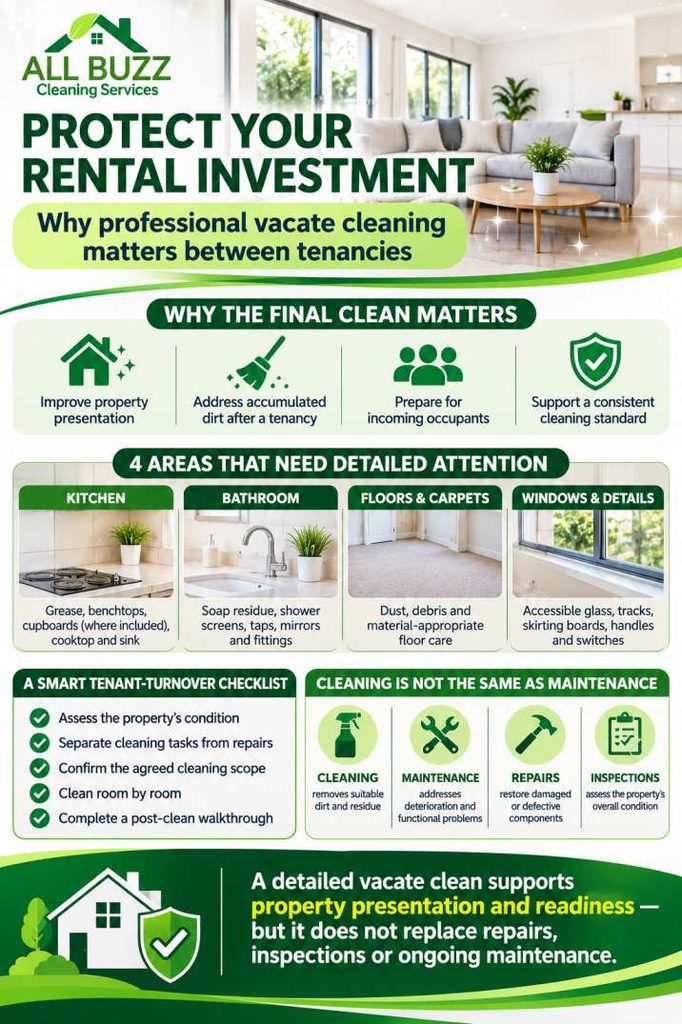
The distinction is important:
- Cleaning removes suitable dirt and residue.
- Maintenance addresses deterioration and functional problems.
- Repairs restore damaged or defective components.
- Inspections assess the property’s overall condition.
Treating these responsibilities as separate but complementary activities creates a more organised approach to property care.
Consistent Cleaning Helps Maintain Property Standards
A property that is cleaned systematically at every tenancy transition is easier to assess than one where cleaning standards vary considerably.
Consistency is particularly useful for landlords with multiple rental properties.
A repeatable process helps establish:
- Which rooms require detailed attention.
- Which surfaces need specialist care.
- Which cleaning tasks are included.
- Which issues need separate maintenance.
- Whether the property is ready for the next stage of occupancy.
This approach supports better communication between property owners, managers and cleaning professionals.
The Role of Professional Property Care During Tenant Turnover
Tenant turnover involves several responsibilities.
Outgoing occupants move their belongings, the property is inspected, cleaning is arranged, maintenance issues are assessed and preparations are made for incoming residents.
When these responsibilities are not coordinated, small oversights can affect the entire transition.
Professional Property Care helps bring greater structure to this process.
Why a Systematic Cleaning Checklist Matters
A checklist reduces reliance on memory and makes it easier to assess whether all agreed cleaning tasks have been completed.
Rather than concentrating only on the obvious areas, a room-by-room checklist encourages attention to less visible surfaces.
A useful vacate cleaning checklist can include:
Kitchen
- Benchtops and splashbacks.
- Cupboards and drawers, where included.
- Sink and taps.
- Cooktop and accessible appliance surfaces.
- Floors and edges.
Bathrooms
- Shower screens.
- Toilets and basins.
- Mirrors.
- Taps and fixtures.
- Accessible tiled surfaces.
- Floors and corners.
Bedrooms and Living Areas
- Floors and carpets.
- Skirting boards.
- Accessible window surfaces.
- Cupboards, where included.
- Visible marks on suitable surfaces.
- Dust on accessible ledges.
General Areas
- Entryways and hallways.
- Internal doors and handles.
- Accessible switches.
- Window tracks.
- Other agreed cleaning areas.
The checklist should always reflect the actual property, its condition and the services agreed with the cleaning provider.
Communication Between Property Owners and Cleaning Professionals
Clear communication is essential for achieving the intended cleaning outcome.
Property owners should explain any specific requirements before cleaning begins.
For example, a furnished property may require different attention from an empty rental. A property with extensive tiled flooring may need a different approach from one with carpeted bedrooms.
Likewise, older fixtures or delicate finishes may require additional care.
Providing relevant information helps the cleaning team plan the work appropriately.
At All Buzz Cleaning Services, the focus is on understanding the property’s cleaning requirements and approaching the work with attention to detail.
This practical approach supports a more organised tenant transition and reduces the likelihood of important cleaning areas being overlooked.
Why Professional Vacate Cleaning Is Different From Regular Household Cleaning
Regular household cleaning and vacate cleaning have different objectives.
Routine cleaning maintains a comfortable living environment while people continue using the property.
Vacate cleaning focuses on preparing the property after occupancy has ended.
The difference becomes clearer when examining the level of attention required.
| Cleaning Area | Regular Household Cleaning | Vacate Cleaning |
|---|---|---|
| Kitchen | Everyday surface cleaning | Detailed cleaning of agreed kitchen areas |
| Bathrooms | Routine cleaning | More thorough attention to fittings, residue and surfaces |
| Floors | Regular vacuuming or mopping | Detailed floor cleaning based on material and condition |
| Cupboards | Occasional maintenance | Internal cleaning where included in scope |
| Windows | Routine visible cleaning | Attention to agreed accessible glass, tracks and frames |
| Skirting boards | Often occasional | Specific attention to accumulated dust and marks |
| General presentation | Maintains daily cleanliness | Prepares the property for its next occupancy |
Neither approach replaces specialist restoration or repairs.
However, professional vacate cleaning provides a more comprehensive cleaning focus at a particularly important point in the property’s occupancy cycle.
This is why landlords often consider professional cleaners when preparing an investment property for a new tenant.
Common Mistakes That Can Affect Rental Property Readiness
Even well-maintained properties can experience avoidable cleaning problems during tenant transitions.
Understanding these common mistakes helps property owners make better decisions.
Mistake 1: Judging Cleanliness Only From a Quick Walkthrough
A property can look tidy without being thoroughly clean.
Grease behind accessible kitchen surfaces, dust inside window tracks and residue around bathroom fittings may remain unnoticed during a quick visual assessment.
A room-by-room inspection provides a more reliable picture of the property’s cleaning condition.
Mistake 2: Ignoring High-Use Areas
Kitchens, bathrooms, entryways and living areas generally experience frequent use.
These spaces deserve particular attention because dirt and residue accumulate more quickly.
A cleaning plan should prioritise areas according to their use and actual condition rather than distributing effort equally across every surface.
Mistake 3: Using Unsuitable Cleaning Products
Not every cleaning product is suitable for every surface.
Harsh chemicals, abrasive pads and inappropriate cleaning solutions can damage delicate finishes.
For example, certain stone surfaces require specialised care, while some coated fittings can become scratched or discoloured through aggressive cleaning.
Using material-appropriate products is an important part of responsible property care.
Mistake 4: Confusing Cleaning With Repair Work
Cleaning cannot repair damaged flooring, leaking taps, broken fixtures or deteriorated silicone.
These issues should be identified and handled through the appropriate maintenance process.
Expecting a cleaning service to correct structural or functional problems can lead to misunderstandings and unrealistic expectations.
Mistake 5: Overlooking the Agreed Cleaning Scope
Not every vacate cleaning service automatically includes every possible task.
Carpet extraction, exterior window cleaning, wall washing, specialist stain treatment and other additional work may need separate discussion.
Property owners should clarify the scope before work begins.
This helps ensure that expectations are realistic and that important requirements are not missed.
Expert Advice: Building a Better Investment Property Maintenance Routine
Professional cleaning delivers greater value when it forms part of a wider maintenance strategy.
For landlords, the following practices can help create a more consistent approach.
Maintain Property Condition Records
Keep organised records of the property’s condition throughout each tenancy.
Condition reports and photographs can help document existing issues and distinguish cleaning concerns from damage or ordinary wear.
Records also make it easier to communicate maintenance requirements.
Inspect Before Arranging Cleaning
A preliminary property walkthrough helps identify the work required.
Check the condition of:
- Kitchen surfaces and appliances.
- Bathroom fittings and tiles.
- Floors and carpets.
- Windows and accessible tracks.
- Cupboards and storage areas.
- Visible fixtures and fittings.
This assessment allows the cleaning requirements to be discussed clearly.
Separate Cleaning Tasks From Maintenance Tasks
Prepare two lists rather than treating every property issue as a cleaning responsibility.
The first should cover cleaning requirements, such as grease removal, dusting, bathroom cleaning and floor care.
The second should identify maintenance concerns, such as damaged fixtures, leaking taps, broken handles and persistent moisture problems.
This separation helps prevent important repairs from being overlooked.
Request Clarity About the Cleaning Process
Before engaging a cleaning provider, discuss the areas included in the service and any property-specific concerns.
Useful questions include:
- Which rooms and surfaces are covered?
- Are internal cupboards included?
- How are delicate surfaces handled?
- Are carpets included in the agreed work?
- How are additional cleaning requirements assessed?
- Can completion be confirmed once the agreed tasks are finished?
Clear answers help property owners understand what to expect.
Consider the Next Occupant’s Experience
A useful way to evaluate property readiness is to consider the experience of someone entering the home for the first time.
Are the kitchen surfaces clean? Are the bathroom fittings presentable? Are the floors free from visible dirt? Have accessible window tracks and commonly overlooked areas received attention?
Thinking from the incoming tenant’s perspective encourages a more practical and complete approach to cleaning.
How All Buzz Cleaning Services Supports Rental Property Readiness
At All Buzz Cleaning Services, we recognise that rental property cleaning requires attention to more than the visible surfaces.
Every property has different cleaning requirements depending on its size, layout, materials, occupancy history and general condition.
Our approach to professional vacate cleaning focuses on understanding these requirements and addressing the agreed cleaning areas systematically.
We aim to support property owners and landlords through:
- Detailed attention to kitchens and bathrooms.
- Cleaning of accessible surfaces and commonly overlooked areas.
- Appropriate care for different flooring and surface materials.
- A structured approach to room-by-room cleaning.
- Attention to property presentation during tenant transitions.
- Clear communication about cleaning requirements and service scope.
Our goal is to help property owners prepare their rental properties with greater confidence while maintaining realistic expectations about what professional cleaning can achieve.
Professional Vacate Cleaning Perth is an important consideration for landlords who want to maintain consistent property presentation between tenancies.
However, we also recognise that cleaning is only one part of responsible investment property management. Repairs, inspections and ongoing maintenance remain essential.
By combining professional cleaning with appropriate property care, landlords can create a more organised approach to managing their rental assets.
Conclusion:
Protecting a rental property requires consistent attention throughout its occupancy cycle. While repairs and ongoing maintenance are essential, the cleanliness of the property during tenant transitions should not be overlooked.
A detailed vacate clean helps address accumulated dirt, improves presentation and prepares the property for its next occupants. It also provides an opportunity to identify visible issues that may require separate maintenance or further inspection.
For landlords and property investors, Protecting Your Rental Investment means taking a proactive approach rather than waiting until small concerns become more noticeable.
Professional vacate cleaning is not a replacement for property maintenance, but it is an important final step in preparing a rental home after a tenancy.
At All Buzz Cleaning Services, we believe that professional cleaning should be systematic, practical and focused on the actual requirements of each property.
If you want to maintain consistent cleanliness standards and prepare your rental property more effectively between tenancies, choosing a professional cleaning approach can make a meaningful difference.
A well-maintained property begins with consistent care, and every tenant transition is another opportunity to protect the condition and presentation of your investment.
Frequently Asked Questions
1. Why is professional vacate cleaning important for protecting a rental investment?
Professional vacate cleaning helps remove accumulated dirt, grease, dust and residue after a tenancy ends. It supports the property’s presentation and prepares commonly used areas for the next occupants.
For property investors, this is important because tenant transitions provide an opportunity to assess cleanliness and identify visible maintenance concerns.
A systematic clean also helps establish a consistent standard between tenancies. Although cleaning cannot prevent every form of property deterioration or guarantee a particular rental outcome, it is a practical part of responsible property maintenance.
2. What areas should landlords prioritise when arranging vacate cleaning?
Landlords should pay particular attention to kitchens, bathrooms, floors, carpets, accessible windows, window tracks, cupboards and frequently overlooked surfaces.
Kitchens often contain accumulated grease around cooking areas and cupboards. Bathrooms may have soap residue, watermarks and dirt around fittings. Floors and carpets can retain dust and debris from everyday use.
The exact cleaning requirements depend on the property’s condition and the agreed service scope.
A room-by-room assessment is generally more effective than concentrating only on areas that are immediately visible.
3. Can vacate cleaning help prepare a property for new tenants?
Yes. Professional vacate cleaning can help prepare a property by addressing accumulated dirt and improving the presentation of its interior.
For example, cleaning kitchen surfaces, bathroom fittings, floors and accessible window areas creates a more organised starting point before incoming occupants move in.
However, property readiness also depends on other responsibilities, including necessary repairs, safety checks, functioning fixtures and appropriate property inspections.
Cleaning should therefore be treated as one important component of the wider tenant transition process.
4. Does professional vacate cleaning guarantee that a property will pass its final inspection?
No. Professional cleaning cannot guarantee a successful property inspection or a particular bond outcome.
An inspection may consider several factors, including cleanliness, property condition, damage, outstanding maintenance and the original condition of the premises.
In Western Australia, tenancy responsibilities should be assessed in accordance with the applicable rental agreement and relevant tenancy requirements. Ordinary fair wear and tear should also be distinguished from damage and cleaning concerns.
Professional cleaning can help address agreed cleaning requirements, but it cannot resolve unrelated maintenance problems or replace an inspection.
5. How can landlords make vacate cleaning more effective during tenant turnover?
The most effective approach starts with preparation and clear communication.
Landlords should first assess the property’s condition, identify the areas requiring attention and separate cleaning tasks from repair requirements.
They should then communicate specific cleaning expectations to the provider, including any delicate surfaces, heavily used areas or additional requirements.
A room-by-room checklist can help confirm that agreed tasks have been addressed.
Finally, a post-clean walkthrough provides an opportunity to review the completed work and identify anything that may need further attention.
This organised approach helps make tenant transitions more manageable and supports consistent property presentation.