

October 26, 2026
Why Experienced Vacate Cleaners Follow Room-Specific Cleaning Standards
Moving out of a rental property involves more than packing boxes, returning keys and arranging a final inspection. The property also needs to be left in a clean and presentable condition, with particular attention to the areas that landlords and property managers commonly inspect. Kitchens, bathrooms, floors, windows and cupboards can all require different cleaning methods, and overlooking one small area may mean spending extra time correcting the problem later.
This is why experienced Vacate Cleaners Perth residents rely on room-specific cleaning standards rather than treating the entire property as one large cleaning task. Each room has its own surfaces, cleaning challenges and areas where dust, grease, soap residue or other marks can accumulate.
For tenants, understanding this approach makes it easier to prepare for a final rental inspection. It also explains why professional vacate cleaning Perth services use structured checklists, suitable cleaning products and a consistent process to work through the property.
At All Buzz Cleaning Services, a room-by-room approach provides a practical framework for tackling the different cleaning requirements of a rental property. Instead of rushing through visible surfaces, the focus is on identifying what needs attention, cleaning it appropriately and checking the results before the job is considered complete.
This guide explains how room-specific cleaning works, why it matters during a rental handover and how tenants can make better decisions when arranging an end-of-lease clean.
What Are Room-Specific Cleaning Standards?
Room-specific cleaning standards are a structured way of cleaning a property according to the needs of each individual space. Rather than using the same method everywhere, cleaners identify the surfaces, fixtures and areas that need attention in each room.
For example, a kitchen may require degreasing around the cooktop and rangehood, while a bathroom needs careful removal of soap residue and attention to shower screens, taps and grout. A bedroom may need more work on built-up dust, wardrobes, skirting boards and flooring.
These differences matter because dirt does not accumulate in the same way throughout a home.
A practical room-by-room cleaning plan typically considers:
- Surface type: Glass, stainless steel, ceramic tiles, timber and painted surfaces may require different cleaning methods.
- Type of dirt: Grease, dust, soap scum and mineral deposits do not respond to the same products.
- Areas that are easy to overlook: Door tracks, cupboard interiors, corners, light fittings and the edges of fixtures can collect dirt.
- Property condition: The amount of cleaning required depends on how the property has been used and maintained.
- Inspection requirements: The agreed cleaning scope and the condition of the property at the beginning of the tenancy help determine what needs to be addressed.
Experienced Perth Vacate Cleaners use these considerations to organise their work and reduce the chance of missing important areas.
Room-specific standards do not mean every rental property needs an identical cleaning procedure. A furnished apartment, an unfurnished unit and a large family home can have very different requirements. The cleaning plan should reflect the actual property, its condition and the agreed scope of work.
Why Room-by-Room Cleaning Matters During a Rental Handover
A property can look clean at first glance and still have areas that need attention. Kitchen cupboard shelves may contain crumbs, shower screens may have water marks, or dust may remain along skirting boards. These details are easy to miss when cleaning without a clear plan.
For tenants, a systematic approach offers several practical benefits.
1. It reduces the chance of overlooked areas
When cleaners follow a room-specific checklist, they can work through each space methodically. This is particularly useful in larger properties, where it is easy to forget a cupboard, bathroom fixture or storage area after several hours of cleaning.
For example, a tenant may clean a bedroom thoroughly but forget the wardrobe shelves or the inside of a built-in cupboard. A room-specific checklist makes those tasks visible rather than leaving them to memory.
2. It matches cleaning methods to the surface
Different materials respond differently to cleaning products and techniques. A product that works well on a ceramic tile may be unsuitable for natural stone or a delicate timber finish.
Experienced cleaners consider the surface before choosing a cleaning method. This helps reduce the risk of streaking, discolouration or other avoidable damage.
3. It supports more consistent results
A structured cleaning process gives cleaners a repeatable method for completing similar tasks across different properties. Consistency does not mean every property will look exactly the same. It means that the agreed cleaning tasks are approached systematically and checked rather than completed randomly.
4. It makes the final inspection easier to prepare for
Property managers may examine different areas separately during a final inspection. A clean kitchen does not compensate for a dirty bathroom, and spotless floors do not eliminate the need to check cupboards or window tracks.
By addressing each room individually, tenants and cleaning professionals can review the property in a more organised way.
Room-Specific Cleaning: What Each Area of a Property Needs
The following sections explain the practical differences between cleaning individual rooms and the details that deserve attention before a rental handover.
Cleaning requirements vary according to the property, its condition, the agreed service scope and any applicable tenancy requirements.
Kitchen Cleaning Standards
The kitchen often requires detailed work because cooking creates grease, food residue and splashes that can accumulate gradually. Even a kitchen that looks tidy may have dirt in less visible areas.
A thorough kitchen clean may include:
- Cleaning benchtops and splashbacks with products suitable for the surface.
- Removing accessible food residue and grease from the cooktop.
- Cleaning the oven interior where included in the agreed service.
- Wiping cupboard doors, handles and accessible cupboard interiors.
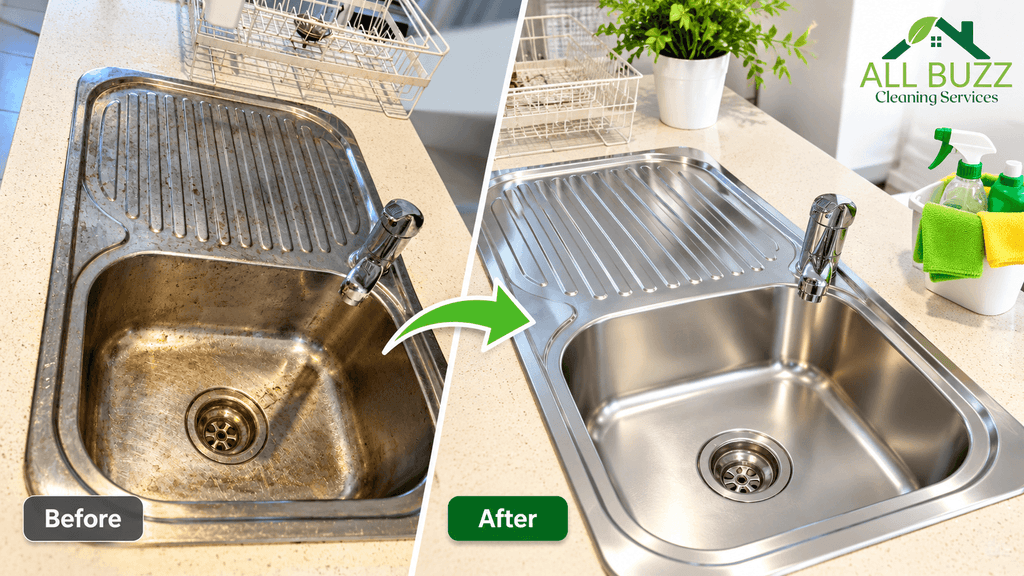
- Cleaning the sink, taps and surrounding surfaces.
- Removing crumbs and dirt from accessible corners and floor edges.
- Cleaning the rangehood exterior and applicable accessible components.
- Checking the floor for sticky marks, grease and remaining debris.
Practical example: A tenant may wipe the kitchen benchtop every day but rarely clean the cupboard handles or the area around the cooktop. Over several months, grease and fingerprints can become more noticeable. During a vacate clean, these areas deserve attention alongside the main work surfaces.
Oven cleaning also needs a considered approach. Some ovens have special coatings or manufacturer-specific cleaning instructions. Abrasive products and unsuitable chemicals can damage these finishes, so the cleaning method should be selected accordingly.
Where an appliance requires dismantling, specialist treatment or work outside the agreed scope, this should be clarified rather than assumed to be included.
Bathroom and Toilet Cleaning Standards
Bathrooms require a different approach because moisture, soap residue and mineral deposits tend to accumulate around wet areas.
A room-specific bathroom checklist may include:
- Cleaning the toilet bowl, seat, exterior and surrounding accessible surfaces.
- Removing ordinary soap residue from shower screens and tiles.
- Cleaning the vanity, basin and taps.
- Wiping mirrors without leaving visible streaks.
- Cleaning accessible shelves and storage surfaces.
- Removing hair and debris from accessible floor areas.
- Checking corners, fittings and the base of fixtures.
- Mopping the floor using a method suitable for the flooring material.
A common mistake is assuming that spraying a bathroom cleaner onto every surface will produce the same result. In practice, mineral deposits, soap scum and general grime may require different treatment.
Practical example: A shower screen can look reasonably clear when wet but reveal cloudy marks once it dries. Checking the screen under good lighting after cleaning helps identify whether additional treatment is necessary.
Grout and silicone seals also require care. Heavy scrubbing, strong acids or inappropriate chemicals may damage these materials. Existing mould, damaged grout and deteriorated seals may require specialist attention rather than routine cleaning alone.
Good bathroom cleaning should improve cleanliness without creating new surface damage.
Bedroom Cleaning Standards
Bedrooms generally have fewer grease-related cleaning challenges than kitchens, but they can contain dust in areas that are easy to overlook.
Important tasks may include:
- Dusting accessible shelves and surfaces.
- Wiping wardrobe doors, handles and accessible interiors.
- Cleaning skirting boards and door frames.
- Removing cobwebs from accessible areas.
- Cleaning mirrors and accessible glass surfaces.
- Vacuuming carpets or cleaning hard floors appropriately.
- Checking corners and the areas behind accessible doors.
- Removing remaining dust and debris from the room.
Wardrobes deserve particular attention after tenants remove their belongings. Items stored on shelves can leave dust, small pieces of paper or other debris behind.
If a wardrobe has been empty for only a short period, it may still require a proper wipe-down and inspection.
Carpets need separate consideration. Vacuuming removes loose dirt, but it does not necessarily remove embedded stains, odours or all ground-in soil. Steam cleaning or other specialist carpet treatment should be discussed separately if required by the tenancy agreement or requested as part of the service.
Living Rooms and Common Areas
Living rooms, dining areas, hallways and other common spaces can accumulate dust, fingerprints and everyday marks. Because these spaces are used frequently, the amount of cleaning required can vary considerably.
Typical tasks include:
- Dusting accessible ledges, shelves and surfaces.
- Wiping door handles and suitable touchpoints.
- Cleaning skirting boards and accessible door frames.
- Removing cobwebs from accessible corners.
- Cleaning accessible window sills and tracks where included.
- Vacuuming carpets or sweeping and mopping hard floors.
- Checking corners and spaces around fixed fixtures.
Open-plan homes need a coordinated approach because the living room, dining area and kitchen may share one continuous floor. Cleaning should follow a logical sequence so that dust and debris are not repeatedly transferred to areas that have already been finished.
For example, dusting shelves after vacuuming may cause debris to fall onto the floor again. Completing higher surfaces before the final floor clean helps reduce unnecessary repeat work.
Laundry and Utility Areas
Laundry rooms and utility spaces are sometimes overlooked because they are smaller than kitchens and bathrooms. However, washing machines, laundry tubs and storage surfaces can collect detergent residue, lint and general grime.
A suitable checklist may cover:
- Wiping the laundry tub and taps.
- Cleaning accessible benchtops and shelves.
- Removing lint and loose debris from accessible surfaces.
- Wiping the exterior of appliances.
- Cleaning accessible cupboard interiors where included.
- Removing dirt from the floor and skirting boards.
- Checking around the washing machine and dryer where safely accessible.
Appliances should not be moved if doing so creates a risk of injury, damages connections or falls outside the agreed service. Internal appliance cleaning, dryer duct cleaning and specialist maintenance should not automatically be treated as part of a standard vacate clean.
The objective is to leave the accessible area clean without interfering with plumbing, electrical connections or appliance components.
Windows, Glass and Window Tracks
Windows and glass surfaces can make a property look noticeably cleaner, but they require a careful approach.
Fingerprints, dust and water marks may be visible in natural light even when glass looks clean under indoor lighting.
Depending on the agreed scope, window cleaning may involve accessible interior glass, sills and tracks. Exterior windows, high windows, difficult access and detailed track cleaning may require additional arrangements.
For better results:
- Use a cleaning method appropriate for the glass and surrounding frames.
- Avoid abrasive tools that may scratch glass or damage coatings.
- Remove loose dust from tracks before wiping them.
- Check the finished glass from different angles.
- Confirm whether flyscreens and exterior surfaces are included.
Tenants should not assume that every window surface is covered by a standard cleaning service. Clarifying the scope in advance helps avoid confusion during the handover.
How Professional Cleaning Protocols Improve Quality
A room-by-room process is most useful when supported by clear cleaning protocols. These protocols explain how work is organised, how products are selected and how completed areas are checked.
For All Buzz Cleaning Services, this approach provides a useful framework for discussing the scope of a vacate clean and identifying the areas that need attention.
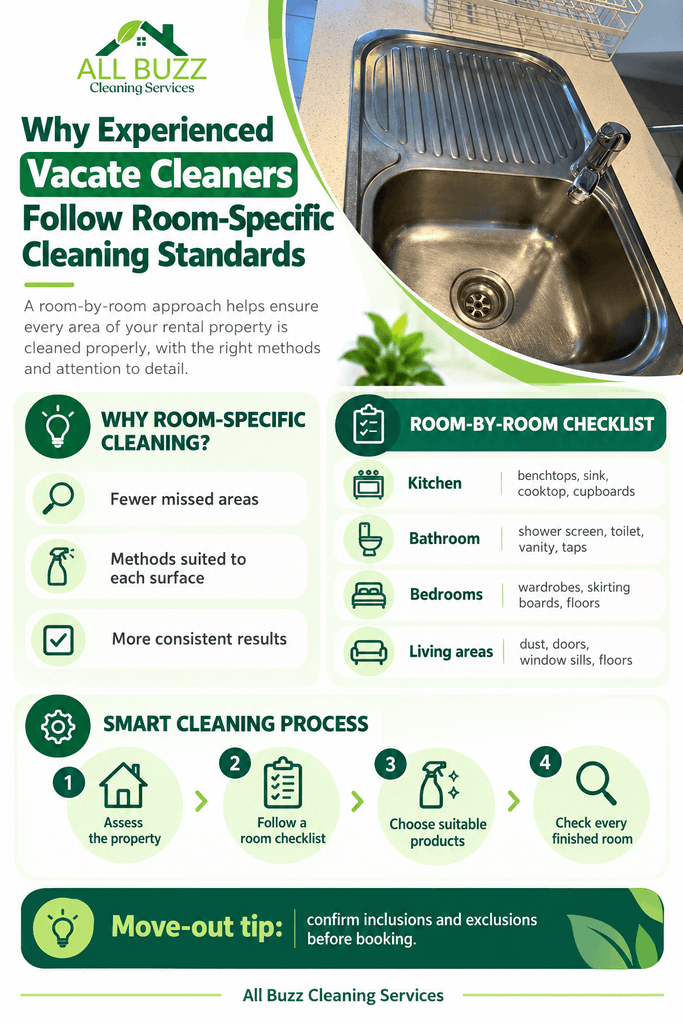
Step 1: Assess the property before cleaning
The cleaning process should begin with an understanding of the property’s size, layout, condition and specific requirements.
A small apartment that has been maintained regularly may need less intensive work than a large home with built-up grease, neglected bathrooms or heavily soiled flooring.
A preliminary assessment can identify:
- The number and type of rooms.
- Areas that need extra attention.
- Surface materials requiring careful treatment.
- Any existing damage or maintenance issues.
- Tasks that fall outside the agreed cleaning scope.
This helps establish realistic expectations before work begins.
Step 2: Prepare a room-specific checklist
A checklist turns a broad instruction such as “clean the whole property” into a set of identifiable tasks.
For instance, the kitchen checklist can separately identify the cooktop, sink, cupboard fronts, accessible interiors and floor. The bathroom checklist can cover the toilet, shower, vanity, mirror and floor.
This level of detail makes it easier to allocate time and confirm that each agreed task has been completed.
Step 3: Select suitable cleaning products
Cleaning products should match the material and type of residue being treated.
Before applying a product, cleaners should consider its instructions, dilution requirements, surface compatibility and any necessary safety precautions.
Mixing cleaning chemicals is particularly dangerous. Products containing bleach should never be mixed with acids, ammonia or other incompatible cleaners because hazardous gases or reactions may occur.
Good Cleaning Protocols prioritise safe product use as well as visible cleanliness.
Step 4: Work in a logical sequence
A consistent sequence helps reduce duplicated effort. In many rooms, it is practical to remove loose dust first, clean higher surfaces, work through fixtures and finish with the floor.
However, the precise sequence should reflect the room, the cleaning product instructions and any cross-contamination risks.
Bathrooms and toilets require appropriate cloths and equipment that are not reused indiscriminately in food preparation areas. Equipment should be cleaned or changed as needed to prevent dirt from spreading between rooms.
Step 5: Inspect completed areas
Cleaning should not finish as soon as the last task is completed. A final review helps identify missed marks, remaining debris and areas that need additional attention.
The inspection should follow the same room-by-room structure used during cleaning. This makes it easier to compare the completed work with the original checklist.
Professional Standards and Consistent Results
A professional approach to vacate cleaning involves more than using commercial cleaning products or working quickly. It requires a clear understanding of the task, appropriate techniques, realistic expectations and a process for checking completed work.
Why experience makes a difference
Experienced cleaners are more likely to recognise the difference between ordinary dirt, stubborn residue and a surface problem that cleaning alone may not resolve.
For example, a cloudy mark on a shower screen could be caused by soap residue or mineral deposits. A mark on a painted wall could be surface dirt, but it could also be damaged paint. Treating both problems with the same aggressive method may create more work or cause damage.
Experience helps cleaners make informed decisions about when to clean, when to test a product on a discreet area and when to explain that a mark may not be removable through routine cleaning.
This does not mean experience guarantees that every stain can be removed. Some marks are permanent, and certain surfaces require specialist restoration.
What quality assurance should involve
Quality Assurance is the process of checking that agreed tasks have been completed to an appropriate standard.
A useful final review should include:
- Checking visible surfaces for remaining dirt or residue.
- Confirming that accessible cupboards and storage areas have been addressed where included.
- Inspecting kitchen and bathroom fixtures.
- Looking for dust along skirting boards and in accessible corners.
- Checking floors for visible debris and missed areas.
- Confirming that the agreed scope has been followed.
- Recording any limitations, pre-existing damage or issues that require separate attention.
A checklist cannot guarantee a particular bond outcome, but it provides a practical way to identify omissions before the cleaner leaves the property.
How All Buzz Cleaning Services approaches the process
For tenants considering All Buzz Cleaning Services, the value of a structured approach is that it provides a clear basis for discussing the property, the tasks required and any special cleaning concerns.
Before booking, tenants should clarify the rooms to be cleaned, the treatment of appliances, whether interior windows are included and whether any specialist services need to be arranged separately.
Clear communication helps avoid assumptions about what a vacate clean covers. It also gives the cleaning team a better understanding of the property’s condition and the tenant’s expectations.
The aim should be to deliver careful, consistent cleaning within the agreed scope, while being transparent about limitations and any additional work that may be needed.
Common Vacate Cleaning Mistakes to Avoid
Even when tenants understand the importance of a clean property, a few common mistakes can make the process more difficult.
Cleaning only what is immediately visible
Benchtops and floors are easy to notice, but cupboards, door frames, window tracks and other accessible details can be overlooked.
Better approach: Use a written checklist for each room and inspect areas that are not immediately obvious.
Using one product on every surface
A strong cleaner may remove grease but damage a delicate finish. Abrasive pads can scratch some glass, stainless steel or coated surfaces.
Better approach: Read product instructions, check material compatibility and test an inconspicuous area when appropriate.
Leaving the floor until the entire property is finished without a plan
Dust and debris can fall onto floors during later cleaning, forcing the same area to be cleaned again.
Better approach: Complete dusting and higher surfaces first, then perform the final floor clean. Adjust the sequence where hygiene or safety requirements demand it.
Assuming every stain can be removed
Permanent discolouration, damaged paint, worn flooring, mould-related damage and mineral etching may not respond to standard cleaning.
Better approach: Identify existing damage before cleaning and avoid aggressive treatment that could make the condition worse.
Forgetting the agreed scope
A tenant may expect an oven interior, exterior windows or carpet steam cleaning to be included even when these tasks were not part of the booking.
Better approach: Confirm inclusions and exclusions in writing before the service begins.
Treating a clean property as a guaranteed bond refund
A thorough clean can help tenants meet their cleaning obligations, but the bond outcome may depend on other matters, including property condition, damage, outstanding rent and the applicable tenancy process.
Better approach: Review the tenancy agreement, condition report and relevant Western Australian guidance rather than relying on cleaning alone to determine the outcome.
Practical Strategies for Tenants Preparing to Move Out
A successful vacate clean begins before the cleaning products come out. A little preparation can make the process more efficient and reduce the chance of missed tasks.
Compare the final condition with the entry report
Review the original property condition report and any relevant photographs. This helps you understand the property’s documented starting condition and identify areas that may need particular attention.
The report is a useful reference, but it does not mean every mark or defect is automatically a cleaning issue.
Remove belongings before the clean
Where practical, arrange for furniture, personal items and rubbish to be removed before the cleaning appointment. Empty rooms and cupboards are easier to inspect, and cleaners can access surfaces that would otherwise remain obstructed.
If furniture or belongings must remain, clarify how this affects the cleaning scope.
Check for maintenance issues separately
A leaking tap, damaged silicone seal, broken fixture or deteriorating wall surface may require maintenance rather than cleaning.
Report these issues through the appropriate property management process. Do not assume a cleaning service will repair them.
Allow enough time for inspection
Avoid scheduling the clean so close to key handover that there is no time to inspect the property or address an overlooked task.
Where possible, arrange cleaning after belongings have been removed and before the final inspection. The timing should also account for access arrangements and any work being carried out by other trades.
Keep the booking details accessible
Retain the booking confirmation, agreed scope, payment records and any relevant communication. These records help clarify what was requested and what was completed if a question arises later.
Expert Tips for Better Vacate Cleaning Results
The following practical habits can improve the process without relying on harsh chemicals or unnecessary repeat work.
Inspect surfaces in natural light
Natural light can reveal fingerprints, streaks and missed dust that are less obvious under artificial lighting. Check glass, mirrors and benchtops from more than one angle.
Use appropriate cloths and equipment
Clean equipment and suitable cloths help reduce streaking and prevent dirt from spreading between rooms. Keep toilet and bathroom equipment separate from kitchen cleaning equipment.
Avoid aggressive scrubbing
More force does not always mean better cleaning. Gentle, surface-appropriate methods can prevent scratches and protect finishes while still addressing ordinary dirt.
Finish with a room-by-room walk-through
Compare each completed room with the checklist. Check corners, accessible storage areas, fixtures and floors before considering the job finished.
These habits reflect the purpose of professional vacate cleaning Perth services: to approach the property methodically, use appropriate cleaning techniques and give attention to the details that can easily be missed during a rushed move.
Conclusion: Better Vacate Cleaning Starts With the Right Standards
A successful end-of-lease clean is not simply about making a property look tidy. It involves understanding the different cleaning requirements of each room, choosing suitable products, working in a logical order and checking that the agreed tasks have been completed.
Room-specific cleaning standards help address the details that are often overlooked during a rushed move. From kitchen grease and bathroom residue to bedroom dust and window tracks, every area benefits from a method suited to its surfaces and condition.
For tenants looking for Vacate Cleaners Perth, the most useful questions are not just about price. Consider how the work will be organised, what the service includes, how quality will be checked and whether any specialist tasks need to be arranged separately.
All Buzz Cleaning Services takes a structured, room-by-room approach as a practical basis for discussing vacate cleaning requirements. If you are preparing to move out, clarify your priorities, review the agreed scope and arrange the cleaning with enough time for a final inspection.
A careful process, realistic expectations and clear communication can make the transition from one property to the next more organised and less stressful.
Frequently Asked Questions About Vacate Cleaning in Perth
1. Why do Vacate Cleaners Perth use room-specific cleaning standards?
Room-specific standards help cleaners identify the tasks required in each area and choose appropriate cleaning methods. Kitchens need attention to grease and food residue, while bathrooms often require treatment for soap scum and mineral deposits. Bedrooms and living areas usually need careful dust removal and floor cleaning. A room-by-room checklist also makes it easier to review completed work and identify anything that may have been missed.
2. What should tenants check before booking Perth Vacate Cleaners?
Tenants should confirm the property’s size, the number of rooms, its current condition and the cleaning tasks included in the quote. Ask whether oven interiors, cupboard interiors, window tracks and carpet cleaning are included or charged separately. It is also helpful to discuss existing stains, delicate surfaces, access arrangements and the expected completion time. Written confirmation reduces misunderstandings and helps ensure the service matches the property’s actual requirements.
3. Does professional vacate cleaning guarantee a full bond refund in Western Australia?
No. Professional cleaning can help tenants meet their cleaning obligations, but it cannot guarantee a full bond refund. Bond outcomes can also depend on the property’s condition, damage, outstanding payments and any disagreement between the parties. Tenants should review their entry condition report, tenancy agreement and applicable Western Australian tenancy guidance. If a dispute arises, the relevant tenancy resolution process may be necessary.
4. How can tenants tell whether a vacate clean has been completed properly?
Start with a room-by-room inspection under good lighting. Look for visible dirt, remaining grease, soap residue, dust on accessible surfaces and debris on floors. Check kitchen and bathroom fixtures, accessible cupboard interiors and other areas covered by the booking. Compare the results against the agreed cleaning scope rather than assuming that every possible task was included. Photographing the completed rooms can also help keep a useful record of the property’s condition at handover.
5. How does All Buzz Cleaning Services benefit from a room-by-room cleaning approach?
A structured approach gives All Buzz Cleaning Services a practical framework for organising tasks, addressing room-specific cleaning needs and reviewing completed work. It also helps the team communicate clearly with tenants about what is included in the service and which tasks may require separate arrangements. For customers, this creates a clearer understanding of the work being requested. Actual results depend on the property’s condition, access, surface materials and agreed scope, so expectations should be discussed before the booking.