

October 16, 2026
Why Professional Vacate Cleaning Is Important Before Property Maintenance Begins
Before a vacant property is repainted, repaired or prepared for its next tenant, there is one practical question worth asking: can the people carrying out the work properly access and assess the areas they need to maintain?
Dust-covered skirting boards, greasy kitchen surfaces, soap residue in bathrooms and cluttered floors can make property maintenance more difficult to organise. While cleaning will not identify every defect or replace a professional building inspection, it can help make visible surfaces easier to assess and work areas more accessible.
This is where Why Professional Vacate Cleaning Is Important becomes relevant. A well-planned clean can support property readiness by removing everyday dirt and tenancy residue before selected maintenance tasks begin. However, timing matters. Cleaning too early, before sanding or other dusty work, can mean that the same areas need to be cleaned again.
For landlords, property managers and property owners, understanding the relationship between Vacate Cleaning, maintenance scheduling and renovation preparation can help avoid unnecessary duplication and establish a more organised workflow.
This guide explains when pre-maintenance cleaning is useful, which areas deserve attention, how to coordinate cleaning with tradespeople and what to consider when arranging Vacate Cleaning Services Perth.
Why Professional Vacate Cleaning Is Important Before Property Maintenance
Vacate cleaning is commonly associated with preparing a rental property for handover. However, it can also be relevant when a property becomes vacant before repairs, painting, flooring work or other maintenance activities.
A thorough clean helps remove accumulated dirt and residue from accessible surfaces. This can make it easier to see existing marks, inspect visible fittings and prepare suitable areas for the next stage of work.
Consider a vacant rental property where the kitchen cupboards have grease around their handles, the bathroom has soap deposits around the shower and dust has collected along the skirting boards. A maintenance professional may need to assess cabinet fittings, grout, sealant or painted surfaces.
Cleaning these areas can improve visibility, but it does not establish whether a fitting is structurally sound or whether a wall needs specialist treatment. Those decisions remain with the relevant tradesperson or inspector.
Professional vacate cleaning can therefore contribute to three practical objectives:
- Improved access: Removing loose dirt and clearing agreed work areas can help tradespeople reach the surfaces or fittings they need.
- Clearer visual assessment: Cleaning can make existing marks, wear and surface damage easier to distinguish from accumulated grime.
- Better scheduling: Planning cleaning around maintenance can reduce avoidable repeat work.
The benefit depends on the property’s condition, the type of maintenance planned and when the cleaning takes place. It should not be treated as a guarantee of faster repairs, lower costs or successful maintenance outcomes.
What Is Pre-Maintenance Cleaning?
Pre-Maintenance Cleaning is cleaning carried out before selected inspection, repair or maintenance activities to improve access and remove dirt that may interfere with visual assessment or surface preparation.
It is not necessarily the same as a complete vacate clean or a final post-renovation clean. The appropriate scope depends on what needs to happen at the property.
For example, a preliminary clean might be useful when heavy kitchen grease makes cabinet surfaces difficult to assess. A more detailed final clean, however, is generally better scheduled after dusty work such as sanding has finished.
Pre-maintenance cleaning versus final cleaning
| Cleaning stage | Main purpose | Typical timing |
|---|---|---|
| Initial or targeted cleaning | Remove dirt or residue that obstructs access or visual assessment | Before selected inspections or maintenance tasks, where needed |
| Task-specific surface cleaning | Prepare an area for the next maintenance step | As directed by the relevant tradesperson or product instructions |
| Final cleaning | Remove accumulated dust, debris and cleaning residues after work | After major dusty or messy work is complete |
Not every property needs all three stages. The sequence should be agreed with the property manager or tradespeople according to the work planned.
For example, a painter may need a wall cleaned and degreased before applying a coating. That does not mean the entire property needs a final vacate clean before painting begins. Similarly, a flooring contractor may need a clear, suitable work area, but the required preparation will depend on the flooring system and manufacturer’s instructions.
How Vacate Cleaning Supports Property Maintenance
Property maintenance involves more than repairing visible damage. It also requires appropriate access, assessment and preparation before work begins.
A property that has recently become vacant may contain ordinary household residue, dust, grease or marks that accumulated during the tenancy. Addressing these conditions can help owners and tradespeople distinguish cleaning requirements from maintenance issues.
1. Preparing walls and painted surfaces
Kitchen walls and splashbacks can collect cooking grease, while other painted surfaces may have fingerprints, dust or everyday marks.
Cleaning compatible surfaces can help reveal their visible condition. However, cleaning does not replace the painter’s assessment of whether sanding, filling, priming or another preparation method is necessary.
Practical example: If a wall has dark marks around a kitchen work area, cleaning may help establish whether the marks are removable surface residue or whether further preparation is required. The painter should assess the surface before choosing the appropriate treatment.
2. Making kitchen cabinets easier to assess
Kitchen cabinets can accumulate grease around handles, edges and frequently touched areas. Dust and residue may also collect on accessible shelves and cupboard fronts.
Cleaning these areas can make it easier to inspect visible hinges, handles, door edges and cabinet surfaces.
However, a clean cabinet does not automatically indicate that the hinges, fixings or internal components are in good condition. A joiner or cabinet repair professional should assess suspected faults.
3. Improving bathroom inspection visibility
Bathrooms experience regular exposure to moisture, soap and mineral deposits. These can build up around shower screens, taps, tile grout and sealant.
A suitable clean can help make visible cracks, discolouration or worn sealant easier to identify. It may also help distinguish ordinary surface deposits from issues that need further assessment.
For example, removing soap residue from a shower area may make a damaged grout line more noticeable. Cleaning cannot establish whether moisture has penetrated behind the tiles, so suspected leaks or recurring dampness should be investigated appropriately.
4. Clearing floors and accessible work areas
Loose dirt, household debris and clutter can obstruct access to flooring, skirting boards and lower wall surfaces.
Before arranging maintenance, confirm which areas need to be cleared and whether the cleaning team is expected to move any items. Heavy furniture, hazardous materials and building debris may require separate arrangements.
The aim is to create suitable working conditions without assuming that a cleaner will carry out removal, repairs or technical tasks outside the agreed service.
Which Areas Should Be Prioritised Before Maintenance?
The best approach is to focus on the areas affected by the planned work rather than automatically deep-cleaning every room at the same time.
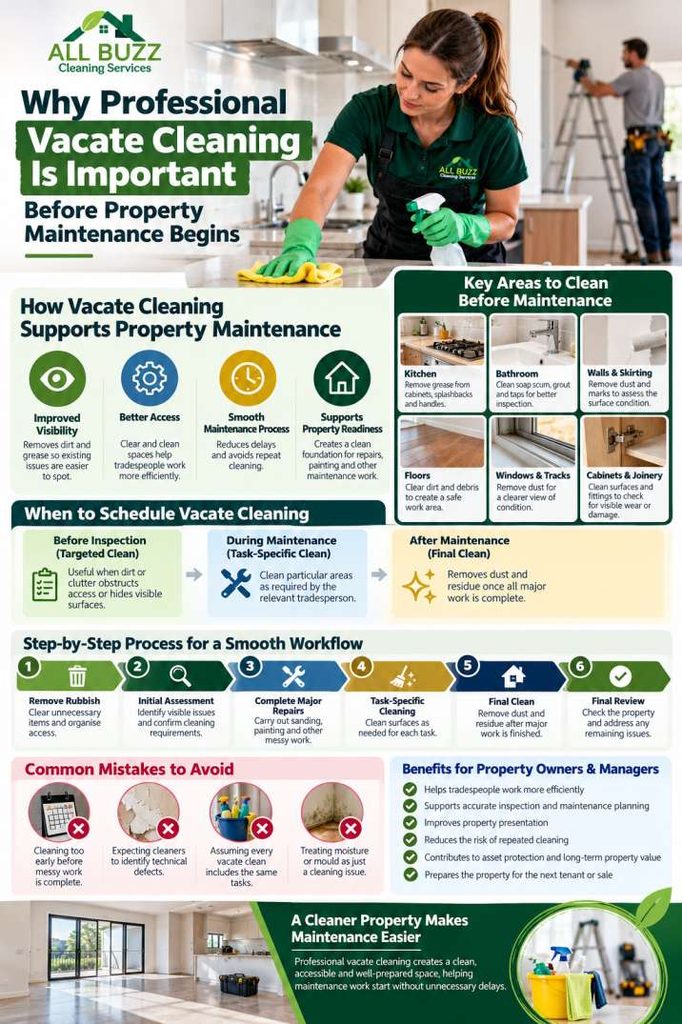
| Property area | What to check or clean | Why it matters |
|---|---|---|
| Kitchen | Accessible cupboard fronts, handles, splashbacks and grease-prone surfaces | Helps make visible wear and fittings easier to assess |
| Bathroom | Compatible tile surfaces, shower screens, taps and accessible grout | Helps reveal visible residue, cracks and sealant deterioration |
| Walls and skirting boards | Dust and removable surface marks | Supports visual assessment and task-specific preparation |
| Floors | Loose dirt and debris in accessible work areas | Improves access for flooring or repair work |
| Windows and tracks | Accessible dust and ordinary dirt | Helps make visible surface condition easier to assess |
| Cabinets and joinery | Accessible edges, handles and fittings | Helps identify visible wear or damage requiring further attention |
This checklist is a starting point, not a technical inspection procedure. The relevant tradesperson should determine what preparation is needed for their particular task.
Renovation Preparation: Getting the Timing Right
One of the most common planning mistakes is arranging a detailed clean before the messiest maintenance work has finished.
Sanding can produce fine dust. Drilling, cutting and demolition can generate debris. Painting and repair work may also leave residues that require another clean.
If the property receives a complete final clean before these activities, some of the work may need to be repeated.
A practical property maintenance sequence
Step 1: Remove rubbish and organise access.
Arrange the removal of unwanted belongings, household rubbish and any materials that obstruct the planned work. Confirm who is responsible for waste removal.
Step 2: Carry out an initial assessment.
The property owner, manager or relevant professional can identify visible issues and determine whether targeted cleaning is needed before inspecting particular surfaces.
Step 3: Complete major repairs and dusty work.
Where appropriate, arrange sanding, cutting, drilling, painting preparation and other messy activities before the final clean. The order of individual trades should be coordinated according to their requirements.
Step 4: Complete task-specific cleaning and preparation.
Some repairs require surfaces to be cleaned or treated at a particular stage. Follow the relevant tradesperson’s instructions and any applicable product requirements.
Step 5: Arrange the final clean.
Once the major dusty and messy work is complete, a final clean can address accumulated dust, residue and ordinary dirt within the agreed scope.
Step 6: Conduct the final review.
Check the completed work, visible surfaces and remaining cleaning requirements. Any defects should be referred to the appropriate professional.
This sequence can help avoid unnecessary duplication, although the ideal order will vary with the property and the work being undertaken.
Property Readiness and Asset Protection
For landlords and property managers, Property Readiness means preparing a property for its next intended use. This may involve maintenance, cleaning, inspections and coordination between different service providers.
Cleaning can support this process, but it is only one component of effective property management.
Why asset protection requires more than cleaning
Asset Protection involves looking after the property’s condition through suitable maintenance, timely repairs and appropriate management decisions.
Cleaning may help make visible wear easier to identify, but it cannot prevent every form of deterioration or establish that a building is free from defects.
For example:
- Removing residue may make a damaged cabinet edge easier to see.
- Cleaning a bathroom surface may help reveal cracked grout or deteriorated sealant.
- Clearing a floor may improve access for a flooring contractor.
- Removing dust from an accessible surface may make it easier to assess its visible condition.
These are practical benefits, not guarantees that damage will be detected or prevented.
Owners should document existing concerns, arrange appropriate inspections where necessary and keep records of completed maintenance. Where a defect may involve plumbing, electrical systems, structural components or concealed moisture, consult a suitably qualified professional.
Common Mistakes to Avoid Before Booking Vacate Cleaning
A well-organised plan can prevent confusion between cleaning and maintenance responsibilities.
Mistake 1: Booking the final clean too early
If sanding, painting preparation or other dusty activities are still scheduled, a final clean may need to be repeated.
Better approach: Ask the property manager or tradespeople when the major messy work is expected to finish, then arrange final cleaning accordingly.
Mistake 2: Expecting cleaners to identify technical defects
Cleaners may notice visible damage, but cleaning is not a substitute for a building inspection, electrical assessment or plumbing diagnosis.
Better approach: Treat cleaning as preparation and refer suspected defects to the appropriate professional.
Mistake 3: Assuming every vacate clean includes the same tasks
Service scopes can differ. Some bookings may include accessible kitchen and bathroom surfaces, floors and general fixtures, while other tasks may be excluded or quoted separately.
Better approach: Confirm the checklist, exclusions, property condition requirements and any additional charges before the appointment.
Mistake 4: Using unsuitable products on maintenance surfaces
A product suitable for one surface may damage another. Natural stone, delicate finishes and certain coatings can require specific cleaning methods.
Better approach: Follow the manufacturer’s care guidance and confirm whether a surface needs special treatment before cleaning.
Mistake 5: Treating recurring dampness as a cleaning problem
A musty smell, recurring mould or persistent moisture may indicate a leak, ventilation issue or another underlying problem.
Better approach: Arrange an appropriate assessment of the moisture source. Cleaning should not be presented as a substitute for resolving the underlying cause.
How to Coordinate Cleaners and Tradespeople Effectively
Good coordination starts with clear communication. Before booking a clean, make a list of the maintenance tasks planned and identify which areas will be affected.
Useful questions include:
- Which rooms or surfaces need to be accessible before maintenance begins?
- Is an initial targeted clean necessary, or can the work proceed without it?
- Which tasks will generate dust or debris?
- Does a tradesperson require a particular surface-preparation method?
- When should the final clean take place?
- Are rubbish removal, internal appliance cleaning or work around heavy furniture included?
Share relevant information about the property’s condition and any known hazards. If tradespeople are already booked, ask them what access and preparation they require rather than assuming a general clean will meet their needs.
This approach makes responsibilities clearer and helps avoid paying for work that must immediately be repeated.
What to Consider When Choosing Vacate Cleaning Services Perth
When comparing Vacate Cleaning Services Perth, look beyond the headline price. The property’s condition, the agreed checklist and the timing of the service all affect whether the clean suits your maintenance plan.
Consider the following factors:
Scope of work: Ask which rooms, fixtures and accessible surfaces are included. Confirm any exclusions before booking.
Property condition: Explain whether the property is furnished or vacant, how much residue has accumulated and whether any maintenance work has already taken place.
Scheduling: Confirm whether the booking is intended as an initial clean, a targeted pre-maintenance clean or a final clean after repairs.
Surface requirements: Tell the cleaner about delicate finishes, known damage or areas that require special care.
Communication: Establish who will provide access, whether utilities are available if needed and who will review the property after cleaning.
An End of Lease Vacate Clean Perth booking may be suitable for a rental property transitioning between occupants, but the required scope depends on the property’s condition and the agreed service. It should not be assumed that a tenancy clean automatically includes specialist renovation cleanup or technical preparation for every trade.
For All Buzz Cleaning Services, the important principle is to describe the agreed cleaning service accurately and help customers understand what it can and cannot achieve.
Conclusion:
Why Professional Vacate Cleaning Is Important comes down to preparation, access and realistic expectations. Cleaning can help remove accumulated dirt, improve the visibility of accessible surfaces and support a more organised maintenance process.
The most effective approach is not always to clean everything immediately. Where dirt obstructs an inspection, targeted cleaning may be appropriate. Where sanding, painting or other dusty work is planned, a final clean is generally better scheduled after those activities are finished.
For property owners and managers arranging Vacate Cleaning Services Perth, clear communication between the cleaner, property manager and tradespeople can help establish the right scope and timing.
All Buzz Cleaning Services can be considered for cleaning requirements that fall within its confirmed service offering. Discuss the property’s condition, the planned maintenance and the cleaning checklist before booking, so the work can be organised around the property’s actual needs.
Frequently Asked Questions
1. Why is professional vacate cleaning important before property maintenance?
Professional vacate cleaning can remove ordinary dirt, grease and residue that may obstruct access or make visible surfaces harder to assess. It can be particularly useful when a vacant property needs attention in kitchens, bathrooms, floors or other accessible areas before selected maintenance tasks.
However, cleaning does not replace technical inspections or repairs. The timing also matters: targeted cleaning may be useful before some inspections, while a detailed final clean is generally better scheduled after major dusty work has finished.
2. Should vacate cleaning happen before or after repairs?
It depends on the work planned. An initial or targeted clean may be appropriate before an inspection if dirt or clutter prevents access or obscures visible surfaces. However, sanding, drilling, cutting and other dusty activities can make surfaces dirty again.
For this reason, the final clean is usually best scheduled after major messy work is complete. Ask the tradespeople and property manager to coordinate the sequence, particularly when several contractors are working at the same property.
3. Does an end of lease vacate clean in Perth include renovation cleaning?
Not necessarily. An end-of-lease clean and post-renovation cleaning can involve different tasks and levels of debris. A standard vacate clean may focus on ordinary household dirt and tenancy residue, while renovation cleanup may involve construction dust or materials requiring separate arrangements.
Confirm the cleaning scope before booking and disclose whether sanding, painting, flooring work or other renovation activities have taken place. Do not assume that construction waste or specialist cleanup is included unless the provider confirms it.
4. Can vacate cleaning reveal property damage?
Cleaning can sometimes make visible marks, cracks, worn surfaces or damaged fittings easier to notice because accumulated dirt and grease have been removed. For example, cleaning a shower area may make deteriorated grout more apparent, while removing kitchen residue may improve visibility around cabinet edges.
However, cleaning cannot reveal every concealed defect or establish the cause or seriousness of damage. Suspected structural, plumbing, electrical or moisture-related issues should be assessed by an appropriate professional.
5. What should I tell a cleaning company before booking?
Explain whether the property is vacant, what maintenance has been completed, which work is still planned and which areas need particular attention. Mention delicate surfaces, visible damage, heavy residue and any known hazards.