
October 9, 2026
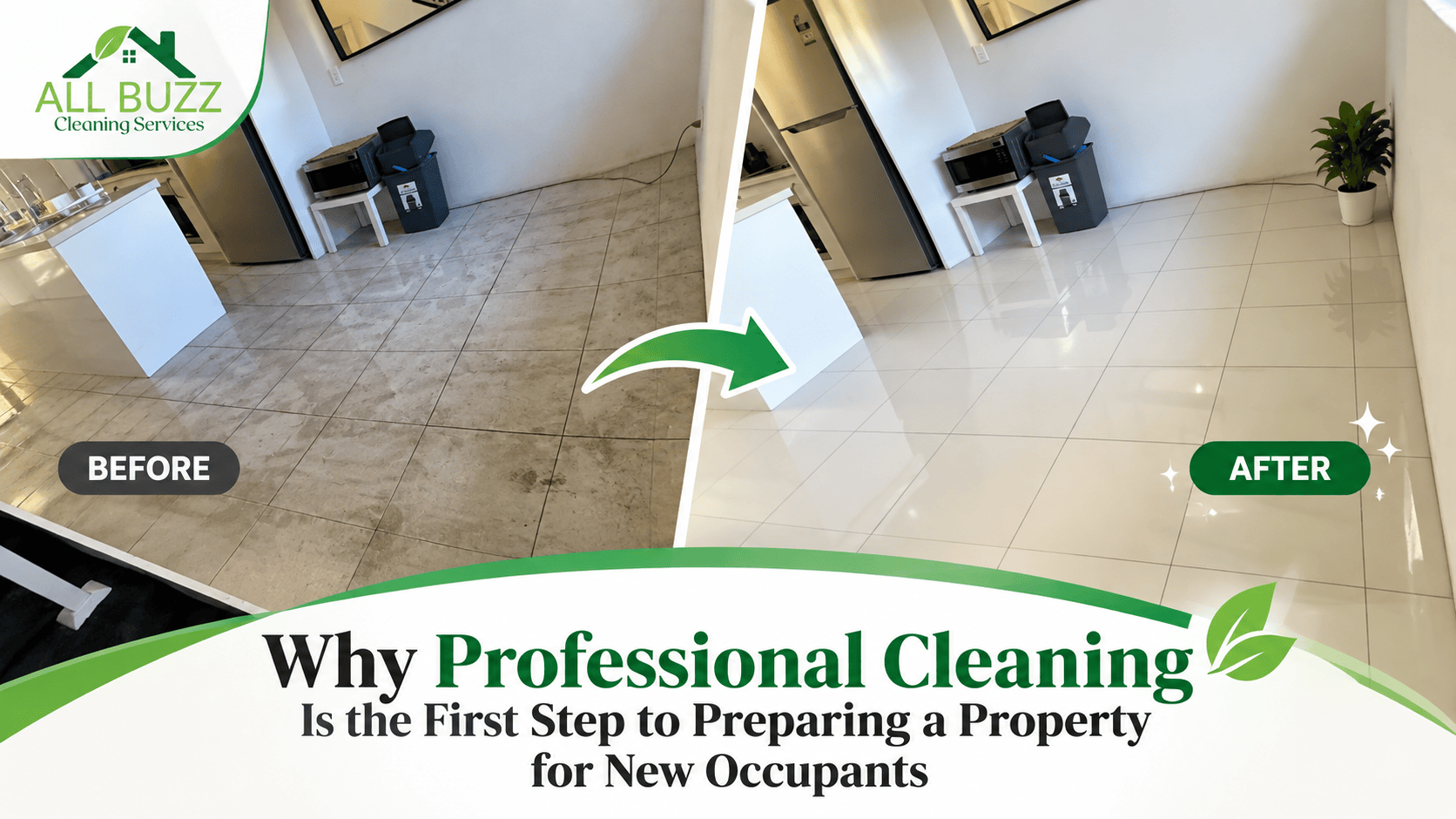
Why Professional Cleaning Is the First Step to Preparing a Property for New Occupants
Moving out of a property is more than packing boxes and handing over the keys. The condition in which a home is left can affect how quickly it is ready for its next occupants, how well it presents during an inspection, and whether small cleaning issues become larger problems.
A thorough clean creates a clear starting point for the next stage of the property’s life. It removes everyday build-up, improves property hygiene, and helps make the space feel genuinely ready for someone new.
For homeowners, landlords, property managers and tenants in Perth, House Vacate Cleaning Perth is often an important part of that process. A properly planned clean can address areas that ordinary weekly cleaning rarely covers, from accumulated dust on skirting boards to kitchen grease, bathroom residue and marks around frequently used surfaces.
Professional cleaning also brings a useful level of consistency. Rather than simply making rooms look tidy, the aim is to bring the property to a clean, presentable condition that supports occupancy readiness.
This guide explains why cleaning should be treated as the first practical step in preparing a property for new occupants, what areas deserve attention, common mistakes to avoid, and how professional vacate cleaning Perth can fit into a sensible move-out or property preparation plan.
Why Cleaning Matters Before New Occupants Arrive
A property can look reasonably clean at first glance while still needing significant attention.
Consider a kitchen that has been used for several years. The benchtops may look clean, but grease can collect around the cooktop, residue may sit behind appliances, and dust can settle inside cupboards. Bathrooms can have similar hidden build-up around taps, shower screens, grout and ventilation areas.
These details matter because new occupants experience the property differently from someone who has lived there for months or years.
A clean property helps create:
- A fresher first impression
- Better overall property hygiene
- Cleaner frequently touched surfaces
- Reduced visible dust and residue
- A more comfortable starting environment
- Greater consistency with expected residential cleaning standards
- Easier preparation for inspection or handover
The goal is not to make a property look artificially perfect. It is to remove accumulated dirt and everyday residue so the home is genuinely ready for its next stage.
Move-In Preparation Starts With a Clean Foundation
Move-In Preparation is often associated with furniture delivery, utility connections and unpacking. Cleaning deserves to be considered part of that process.
When a property is thoroughly cleaned before occupation, the new resident does not have to work around someone else’s leftover dust, grease or bathroom residue.
This is particularly useful when a property has been vacant for a period. Dust can settle on floors, window ledges and other surfaces even when nobody is living there.
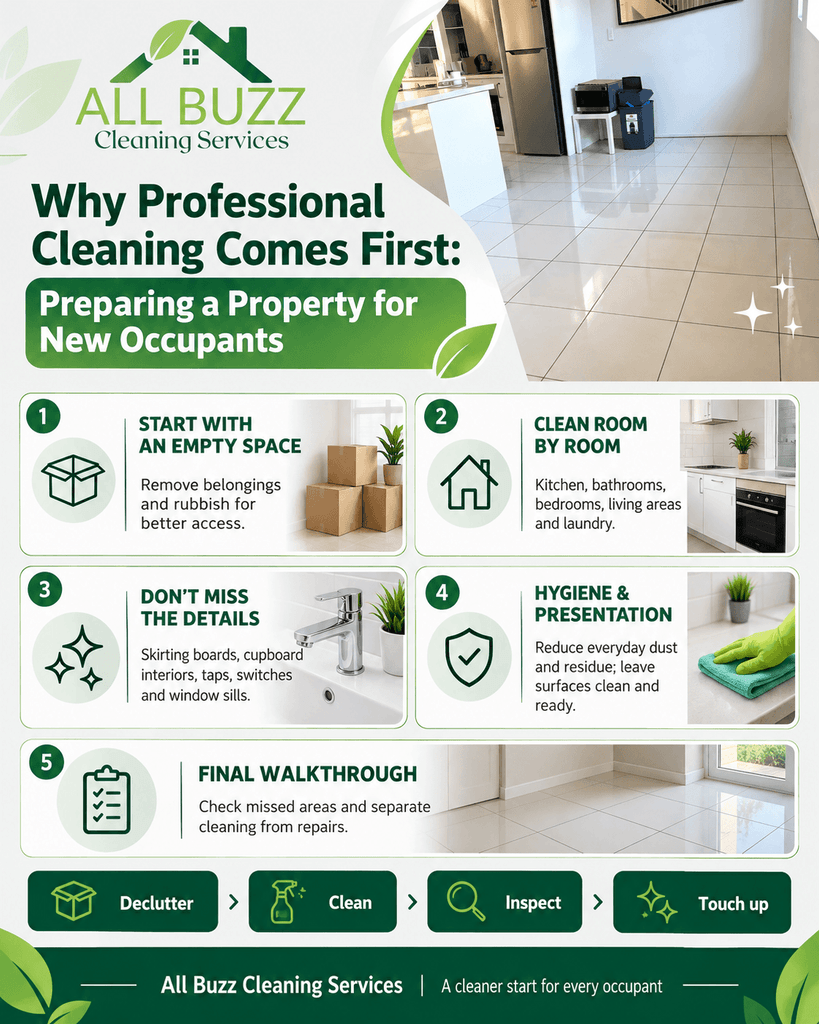
A practical preparation sequence is:
- Remove unwanted belongings and rubbish.
- Complete necessary repairs or maintenance.
- Carry out detailed cleaning.
- Check rooms systematically.
- Complete final touch-ups.
- Confirm the property is ready for occupation.
Cleaning before the final inspection also makes it easier to notice issues that may otherwise be hidden by clutter.
For example, once a room is empty and the floors are cleaned, a scuff mark on a wall or damaged fitting becomes much easier to identify.
What Professional Vacate Cleaning Actually Covers
A detailed vacate clean should go beyond basic vacuuming and mopping.
The exact requirements vary according to the property, its condition and the agreed scope of work. However, experienced cleaners typically assess the property room by room rather than treating every surface in exactly the same way.
Kitchen Cleaning
Kitchens usually require more attention than an ordinary maintenance clean.
Common areas include:
- Benchtops
- Splashbacks
- Cooktops
- Rangehood exteriors
- Cabinet doors
- Cupboard interiors where included
- Sink and taps
- Floors
- Appliance surfaces
- Areas around frequently used equipment
Grease deserves particular attention. A light layer may not be obvious until it has accumulated over time, especially around cooking areas.
The practical approach is to identify the type of residue first and then use an appropriate cleaning method rather than applying excessive force.
Bathroom and Laundry Cleaning
Bathrooms need detailed attention because moisture, soap residue and mineral deposits can build up quickly.
Important areas include:
- Shower screens
- Shower fixtures
- Basins
- Taps
- Toilets
- Mirrors
- Tiles
- Accessible grout
- Vanity surfaces
- Floors
- Laundry sinks and surrounding surfaces
Hard-water deposits can be particularly noticeable on glass and taps. Not every mark, however, can be safely removed with aggressive products.
A responsible cleaning approach considers the surface before choosing a product. Natural stone, delicate finishes and certain fixtures may be damaged by unsuitable chemicals.
That is one reason professional cleaning should not simply mean “using stronger products.”
Bedrooms and Living Areas Need More Than a Quick Vacuum
Bedrooms and living spaces generally collect dust in places that are easy to overlook during routine cleaning.
A detailed clean may include:
- Skirting boards
- Door frames
- Accessible ledges
- Light fittings and switches
- Built-in storage
- Window sills
- Floors
- Corners
- Cobweb removal
- Accessible surface dusting
Furniture can hide a surprising amount of dust. Once rooms are empty, previously inaccessible areas become much easier to clean.
This is one of the practical advantages of arranging cleaning after belongings have been removed.
An experienced cleaner can also work systematically through the property instead of repeatedly moving between rooms.
Property Hygiene Is About the Details
Property hygiene is not simply about whether floors look clean.
It involves the condition of surfaces and areas that occupants regularly interact with.
Think about:
- Door handles
- Light switches
- Tap handles
- Kitchen handles
- Bathroom fixtures
- Bench surfaces
- Frequently touched doors
- Appliance handles
These areas receive repeated contact and can accumulate oils, dust and everyday residue.
A detailed vacate clean gives these surfaces deliberate attention rather than treating them as an afterthought.
At the same time, cleaning should be realistic. A professional cleaner should not make unsupported claims that cleaning can eliminate every microorganism or create a medically sterile environment. Normal residential cleaning is about maintaining a clean and hygienic living environment, not sterilising a house.
Why Empty Properties Are Easier to Clean Properly
One of the biggest practical differences between ordinary house cleaning and vacate cleaning is access.
When furniture, boxes and personal possessions remain inside, many areas cannot be reached properly.
Once the property is empty, cleaners can access:
- Floor edges
- Skirting boards
- Empty cupboards
- Corners behind furniture locations
- Open wardrobes
- Previously covered flooring
- Clear wall areas
This does not mean every surface should automatically receive intensive treatment. It means the cleaner has a better opportunity to identify areas that need attention.
For tenants, this can also make the final inspection easier because there are fewer belongings obscuring the property’s condition.
Apartment Vacate Cleaning Perth Requires a Different Approach
An apartment is not simply a smaller house.
Access, parking, lifts, shared corridors, building rules and limited working space can all affect the cleaning process.
With Apartment Vacate Cleaning Perth, practical planning matters.
For example, cleaners may need to consider:
- Lift access
- Building access times
- Parking restrictions
- Security arrangements
- Apartment size and layout
- Balcony access
- Shared-area rules
- Waste disposal requirements
The cleaning itself should still focus on the apartment’s internal condition, but logistical planning can make the process considerably smoother.
A useful tip is to confirm building access arrangements before the cleaning appointment. A cleaner arriving at a building without suitable access can lose valuable time before work even begins.
How Perth Vacate Cleaning Services Can Support Property Turnover
Property turnover often involves several tasks happening within a narrow timeframe.
A landlord or property manager may need to coordinate:
- Cleaning
- Maintenance
- Painting
- Repairs
- Safety checks
- Photography
- Advertising
- New occupant preparation
Cleaning should therefore be considered part of the wider turnover sequence.
In practical terms, Perth Vacate Cleaning Services can help by taking the detailed cleaning component off the property preparation list.
However, cleaning should not be treated as a substitute for repairs or maintenance.
For example, a cracked tile, leaking tap or damaged wall requires appropriate repair work. Cleaning may improve the appearance of the area, but it does not correct the underlying defect.
This distinction is important for maintaining honest expectations.
Residential Cleaning Standards: What Should You Check?
There is no single cleaning checklist that fits every property. Expectations can vary depending on the property type, tenancy agreement, owner requirements and condition of the premises.
Still, a practical final check should consider the major areas of the home.
General Areas
Check:
- Floors
- Skirting boards
- Doors
- Handles
- Switches
- Accessible ledges
- Windows and sills where included
- Visible dust and cobwebs
Kitchen
Check:
- Benchtops
- Sink
- Taps
- Cooktop
- Splashback
- Cabinet fronts
- Relevant internal cupboards
- Appliance exteriors
- Floor
Bathroom
Check:
- Toilet
- Shower
- Shower screen
- Basin
- Taps
- Mirrors
- Tiles
- Vanity
- Floor
Laundry
Check:
- Sink
- Cabinet surfaces
- Floor
- Accessible walls and fittings
The purpose of the checklist is not to create an unrealistic standard. It provides a consistent way to identify missed areas before the property is handed over.
Real-World Example: Why the Final Inspection Can Reveal More Than Expected
Imagine a three-bedroom Perth property that has just been emptied.
At first glance, the home appears ready. The furniture is gone, rubbish has been removed and the floors have been vacuumed.
During a detailed clean, however, several issues become visible:
- Dust along the skirting boards
- Grease around the kitchen cooktop
- Finger marks on cupboard doors
- Residue on the bathroom shower screen
- Dust inside empty wardrobes
- Build-up around tap bases
None of these issues necessarily means the property was badly maintained. They are simply the kinds of details that become more noticeable once the property is empty.
Cleaning them before new occupants arrive improves the presentation of the entire property.
This is where experience matters. A person who cleans their home regularly may focus naturally on visible areas. A professional cleaner is more likely to work from a systematic checklist and consider surfaces that are commonly overlooked.
Common Vacate Cleaning Mistakes to Avoid
Cleaning Too Early
If cleaning is completed while boxes and furniture are still being removed, dust and dirt can be introduced again.
Better approach: Complete most detailed cleaning after belongings have left the property.
Focusing Only on Floors
Clean floors can make a room look better, but they do not compensate for dirty cupboards, doors, bathrooms or kitchen surfaces.
Better approach: Work room by room and clean from higher surfaces down toward the floor.
Using the Same Product Everywhere
Different surfaces have different cleaning requirements.
Better approach: Check surface compatibility before using strong or acidic products.
Ignoring High-Touch Areas
Door handles and switches can be overlooked because they are small.
Better approach: Include frequently touched surfaces in the cleaning checklist.
Expecting Cleaning to Fix Damage
Cleaning cannot repair chipped paint, broken fixtures or damaged flooring.
Better approach: Separate cleaning, maintenance and repair tasks.
Leaving Cleaning Until the Last Minute
A rushed clean can result in missed areas and creates little time for corrections.
Better approach: Schedule cleaning with enough time for a final property check.
Expert Tips for a Smoother Property Handover
1. Declutter Before Cleaning
The fewer items remaining inside, the easier it is to clean thoroughly.
2. Start From the Top
Dust and debris naturally fall downward. Cleaning higher surfaces first reduces the chance of dirtying already-cleaned areas.
3. Use a Room-by-Room Checklist
A checklist prevents small areas from being forgotten.
4. Photograph the Finished Condition
Photos can provide a useful record of the property’s condition after cleaning. They should be clear, dated where appropriate, and used honestly rather than selectively to create a misleading impression.
5. Allow Time for Touch-Ups
A final walkthrough may reveal a missed mark or dusty corner. Allowing time for small corrections makes the overall process less stressful.
6. Separate Cleaning From Repairs
Make a simple list with two columns: “cleaning” and “maintenance/repair.” This keeps expectations realistic.
Choosing Professional Vacate Cleaning Perth for Your Property
If you are considering professional vacate cleaning Perth, look beyond promises of a “perfect” clean.
A reliable cleaning provider should be clear about:
- What the service includes
- Which areas require special treatment
- Whether the property is furnished or empty
- Which cleaning products are used
- Any exclusions
- Additional charges, if applicable
- Access requirements
- Expected completion time
Transparency is more useful than exaggerated claims.
It is also worth checking whether the cleaner understands different surfaces and residential environments. A good cleaning process should be thorough without being unnecessarily harsh.
For a brand such as HIRO, the focus should remain on helping customers make sensible decisions about maintaining clean, ready-to-occupy properties and using products appropriately. Product recommendations should always be based on their intended use and manufacturer guidance rather than unsupported claims.
How HIRO Fits Into a People-First Cleaning Approach
HIRO’s role should be centred on practical solutions that help people maintain cleaner, more comfortable living spaces.
That means avoiding exaggerated promises and focusing on useful information: where cleaning matters, how to approach different surfaces, what to expect from a cleaning routine, and when professional assistance may be appropriate.
For property preparation, the same principle applies.
A clean home is not about creating an unrealistic showroom appearance. It is about giving the next occupant a property that feels cared for, orderly and ready for everyday life.
Whether the property is a family home, rental property or apartment, thoughtful cleaning can make the transition between occupants considerably smoother.
Final Thoughts
Preparing a property for new occupants starts with creating a clean foundation.
House Vacate Cleaning Perth can play an important role in that process because an empty property provides an opportunity to address the dust, residue and overlooked areas that accumulate during everyday living.
The most effective approach is not simply to clean quickly. It is to work systematically, understand different surfaces, separate cleaning from repairs, and allow enough time for a final inspection.
For homeowners, landlords and tenants, professional vacate cleaning Perth can make property turnover more organised and predictable when the scope is clearly defined and expectations remain realistic.
Most importantly, good cleaning supports Move-In Preparation, property hygiene and occupancy readiness without relying on exaggerated claims. When a property is clean, accessible, well-presented and honestly assessed, the next occupant gets what matters most: a comfortable and practical place to begin.
Frequently Asked Questions
1. When should vacate cleaning be completed?
Ideally, detailed vacate cleaning should take place after personal belongings, furniture and rubbish have been removed. This gives cleaners better access to floors, cupboards, skirting boards and other previously obstructed areas.
If repairs or painting are also required, it is generally sensible to complete dusty or messy maintenance work before the final clean. Otherwise, the property may need to be cleaned twice.
2. Is professional cleaning necessary before new occupants move in?
Not every property requires professional cleaning. A well-maintained home may be manageable with a thorough DIY clean.
Professional assistance becomes more useful when the property is large, heavily used, time-sensitive, difficult to access, or requires detailed cleaning across many rooms. The key benefit is usually consistency and time rather than the assumption that professional cleaning is automatically superior in every situation.
3. What is the difference between regular cleaning and vacate cleaning?
Regular cleaning is generally designed to maintain a property while it is occupied. Vacate cleaning is performed when the property is being emptied and prepared for handover or its next stage of occupancy.
Because furniture and personal belongings are removed, vacate cleaning can address areas that routine cleaning may not reach regularly, such as empty cupboards, exposed skirting boards and previously covered floor areas.
4. How can I prepare my property before a cleaner arrives?
Remove personal belongings, rubbish and unnecessary items first. If possible, disconnect or relocate items that prevent access to relevant surfaces.
Also communicate important information about the property, including access arrangements, delicate surfaces and areas requiring special attention.
A short checklist can help identify priorities before the cleaner starts.
5. Can cleaning remove every stain or mark?
No. Cleaning results depend on the material, age and type of stain, previous treatments and condition of the surface.
Some marks may be permanent damage rather than removable dirt. Aggressive cleaning can sometimes cause more damage, particularly on delicate finishes.
A responsible cleaner should explain limitations rather than guarantee that every stain or imperfection will disappear.